
The practice of treating used water so it can be reused involves a sequence of mechanical, biological and advanced physical-chemical operations. These stages aim to remove solids, reduce organic matter and control pathogens and nutrients so that effluent can meet intended reuse objectives. Typical systems combine preliminary screening, settling, biological processes, tertiary filtration and disinfection, with monitoring and sludge handling integrated throughout. The specific arrangement and intensity of treatment are matched to the source of the wastewater, the target water quality, and regulatory or operational constraints.
In operational terms, the workflow begins with capturing and coarse screening to protect downstream equipment, proceeds through primary settling to remove settleable material, and then uses biologically based reactors to break down dissolved organics. Secondary clarification separates biomass from treated liquor; tertiary steps polish the effluent to remove residual suspended solids, nutrients or micro-pollutants. Final disinfection addresses microbial quality before storage or distribution for reuse. Parallel processes for sludge management and routine monitoring support system reliability and compliance.
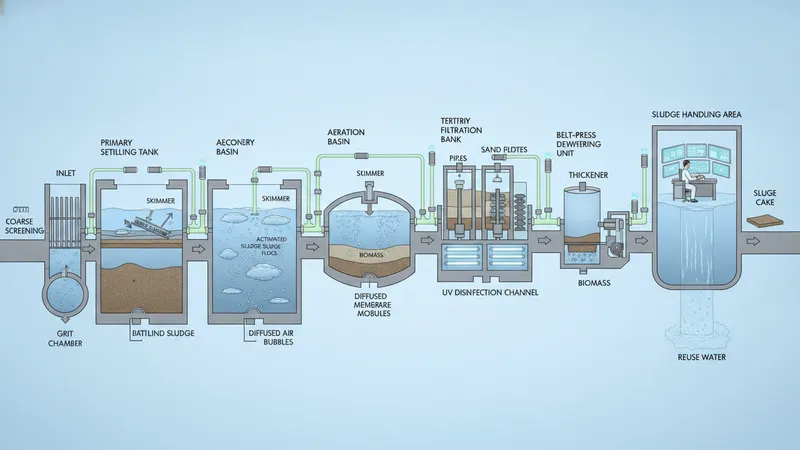
Mechanical front-end processes commonly precede biological stages to limit abrasion and clogging. Screens and grit removal can often capture most large debris and heavy particles, reducing maintenance downstream. Flow equalization basins may be included to moderate hydraulic and organic load swings, which can improve biological performance. Design choices here are typically influenced by catchment characteristics, expected peak flows, and the availability of operator expertise to manage equipment such as bar screens and grit classifiers.
Primary sedimentation units are usually designed to settle heavier particulates while biological reactors target soluble and colloidal organics. Selection between activated sludge, biofilm reactors or hybrid systems often depends on space, energy considerations and nutrient removal needs. For nitrogen control, processes may incorporate aerobic nitrification followed by anoxic denitrification, which typically requires control of dissolved oxygen and retention times. Each biological approach may respond differently to temperature and influent variability, so operational flexibility is often incorporated.
Tertiary and advanced treatment steps are applied when higher-quality effluent is required for specific reuse applications. Filtration, chemical coagulation, nutrient removal and membrane separation can reduce turbidity, phosphorus, and micropollutants. Membrane systems may offer compact footprints but commonly require attention to fouling control and periodic cleaning. Disinfection methods such as ultraviolet irradiation or chlorine-based approaches are selected based on target microbial metrics and potential by-product considerations.
Effective reuse systems typically integrate water quality monitoring and a sludge management strategy. Monitoring programs frequently track parameters such as biochemical oxygen demand (BOD), total suspended solids (TSS), turbidity, nutrient concentrations and indicator organisms to verify performance. Sludge handling often involves thickening, stabilization (for example, anaerobic digestion), dewatering and further treatment or disposal. Decisions about sludge pathways may reflect local regulations, available infrastructure and resource recovery goals such as biogas production.
Overall, a treated-effluent reuse program is a sequence of complementary stages that together determine the suitability of reclaimed water for a range of applications. Trade-offs among capital cost, energy consumption, operational complexity and the intended reuse purpose are typically evaluated during planning and design. The next sections examine practical components and considerations in more detail.
Collection systems and initial mechanical operations form the foundation for subsequent treatment performance. Gravity sewers, pumping stations and preliminary screening equipment concentrate and direct influent to the treatment plant. Screens may be coarse or fine and are often accompanied by grit removal devices that protect pumps and prevent abrasion. Flow equalization or buffering tanks can be used to attenuate short-term peaks in flow and organic loading, which typically improves the stability of downstream biological units. Considerations at this stage include ease of access for routine maintenance and the potential for odors or vector issues at lift stations.
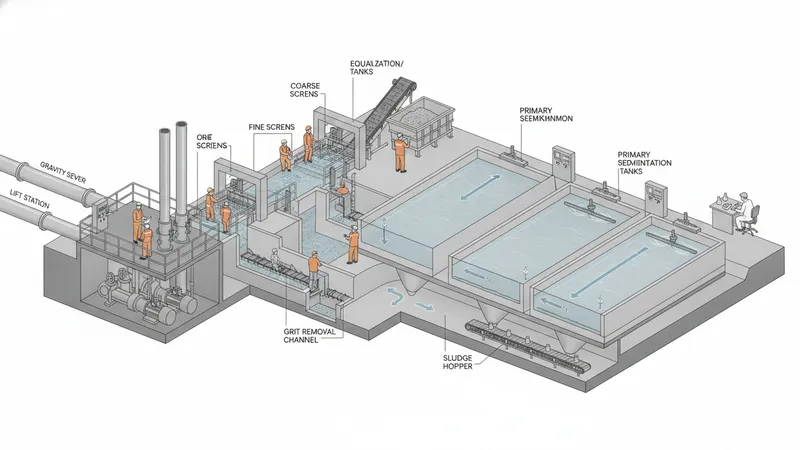
Primary treatment commonly involves sedimentation basins where settleable solids are removed by gravity. The extent of primary removal influences downstream loads: extensive primary settling can lower solids and reduce organic load to biological systems but may increase the organic content remaining in sludge. Detention time and basin geometry are design variables that may be adjusted to local influent characteristics. Operators often monitor settled solids and scum removal efficiency as part of routine checks to maintain consistent primary removal performance.
Operational tips for front-end processes often emphasize maintenance frequency and simple instrumentation. Regular raking or mechanical cleaning of screens reduces blockages and the risk of bypass events. Grit chambers usually require periodic removal of accumulated grit to preserve hydraulic capacity. Designers commonly allow for redundant screening trains to enable servicing without interrupting influent flow. These considerations can help sustain reliability, especially in systems subject to variable industrial discharges or storm inflow.
Planning for collection and primary stages should anticipate the interface with sludge handling. Sludge captured in screening and primary basins will require transport, thickening, and stabilization. Integrating grit separation and primary solids handling with sludge lines may reduce transfer costs and simplify operational sequencing. Early-stage decisions therefore influence the volume and character of solids managed in later stages, and designers often model these flows to inform equipment sizing and polymer dosing strategies for dewatering.
Biological treatment is commonly the core component for reducing dissolved organic matter and, where required, removing nitrogen and phosphorus. Suspended-growth systems such as conventional activated sludge rely on a mixed liquor of microorganisms that metabolize organics; control parameters such as sludge age (solids retention time) and dissolved oxygen are routinely adjusted to balance treatment and energy consumption. Attached-growth systems use surfaces for biofilm development and may be preferred where lower operational complexity or resilience to shock loads is important. Hybrid systems combine features of both approaches.
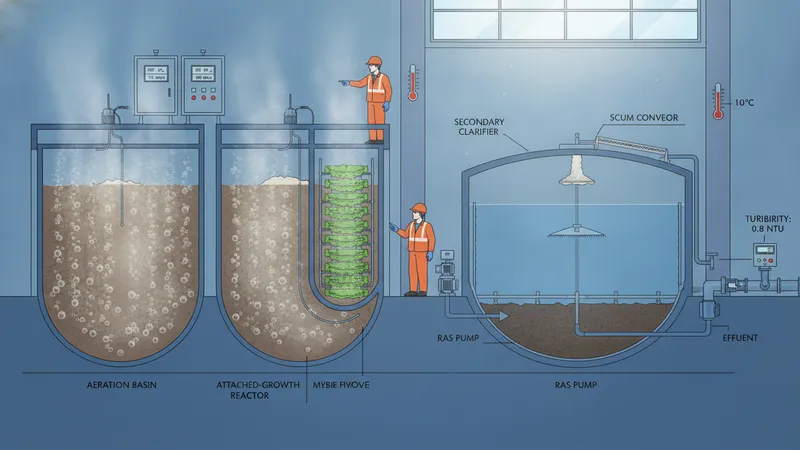
Secondary clarification follows biological reactors to separate treated water from biomass. Clarifier performance is influenced by sludge settling characteristics and return-activated sludge strategies. Poor settling can cause carryover of solids and impact tertiary treatment. Operators often monitor mixed liquor suspended solids and effluent turbidity as indicators of process health. Clarifiers may include mechanisms for scum removal and solids scraping; design should account for potential seasonal shifts in settling behaviour due to temperature or influent composition changes.
Nutrient removal within biological stages typically relies on sequencing aerobic and anoxic zones or on specialized processes such as anammox for nitrogen. Phosphorus removal can be biological (enhanced biological phosphorus removal) or chemical via coagulant addition. Each approach may affect sludge characteristics and downstream dewatering needs. During design, planners often assess trade-offs between chemical dosing rates, reactor volumes and energy demands to meet targeted nutrient limits under expected climatic and loading ranges.
Operational considerations often highlight the need for robust instrumentation and adaptive control. Monitoring of dissolved oxygen, pH, oxidation-reduction potential and ammonia concentrations can enable process optimization and early detection of upset conditions. For plants aiming at water reuse, secondary effluent quality sets the baseline for tertiary requirements and monitoring plans may be more stringent to ensure consistent performance. Staff training in biological process control can reduce the frequency of excursions and support long-term reliability.
Tertiary treatment and advanced polishing steps are applied when reuse applications demand lower suspended solids, reduced nutrients or removal of micropollutants. Filtration options include sand or multimedia filters and cartridge systems for particulate reduction. Chemical coagulation and flocculation are often paired with filtration to target colloidal material. When very high-quality effluent is required, membrane processes such as microfiltration, ultrafiltration, nanofiltration or reverse osmosis may be used to achieve fine particle and dissolved constituent separation. Membranes require careful attention to pretreatment and cleaning protocols to manage fouling.
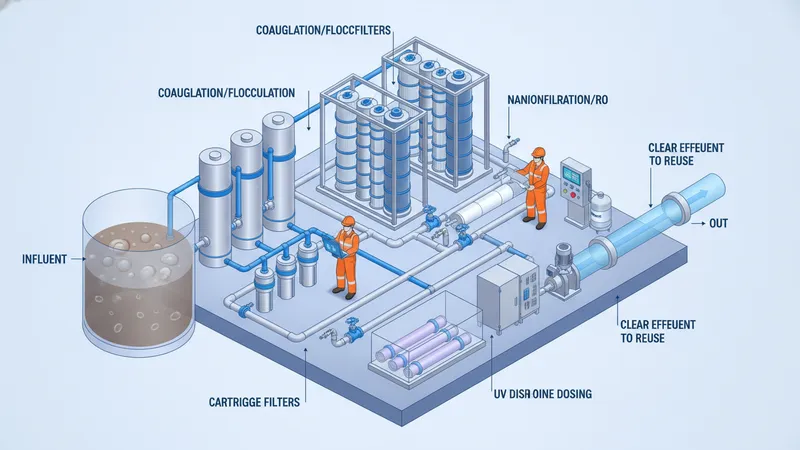
Disinfection is typically applied after tertiary polishing to control pathogens before distribution or reuse. Common methods include ultraviolet irradiation, chlorination and, in some systems, ozone. The selection among these often considers efficacy against target organisms, formation of disinfection by-products and operational complexity. For example, ultraviolet systems may avoid chemical residuals but require control of turbidity and regular lamp maintenance. Chlorination provides a residual that can protect distribution networks but may form regulated by-products under certain water chemistries.
Membrane systems and advanced oxidation approaches bring specific operational considerations. Membrane fouling can be mitigated by enhanced pretreatment, periodic backwashing and chemical cleaning; energy consumption and concentrate management also factor into lifecycle costs. Advanced oxidation processes may be used to degrade micropollutants and are typically energy- and reagent-intensive. When specifying tertiary and advanced units, designers commonly evaluate lifecycle implications including energy use, chemical handling and safe disposal or reuse of brine or spent chemicals.
Quality assurance for these stages commonly involves continuous or grab sampling of turbidity, particle counts, residual disinfectant and specific micropollutants depending on reuse intent. Inline monitoring tools can provide rapid detection of performance lapses, enabling operators to isolate faults or trigger corrective actions. Planning for redundancy in critical polishing steps may reduce the risk of accidental discharge of inadequately treated effluent to reuse systems.
Water quality monitoring is central to any reuse program and typically targets parameters linked to the intended application. Common measures include biochemical oxygen demand (BOD) or chemical oxygen demand (COD), total suspended solids (TSS), turbidity, nutrient concentrations, specific conductance, and indicators of microbial presence such as fecal coliforms or E. coli. Analytical frequency and limits are usually set according to regulatory frameworks or user requirements. Data from monitoring programs can inform operational adjustments and demonstrate ongoing compliance for reuse stakeholders.
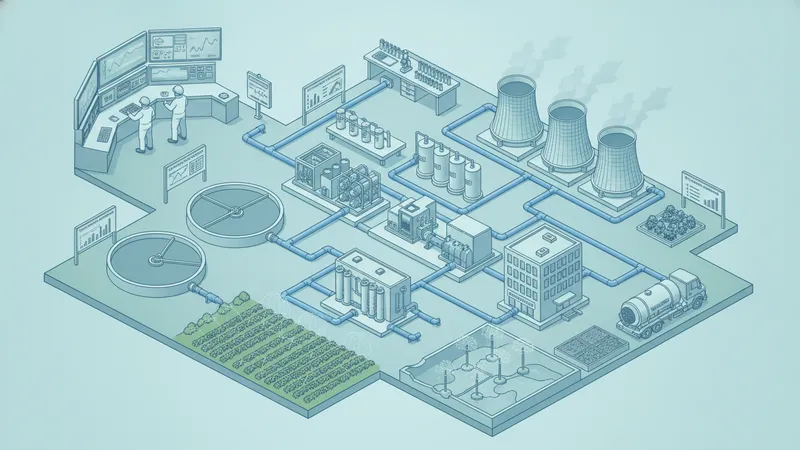
Reuse applications commonly fall into categories such as landscape irrigation, agricultural reuse, industrial process water, toilet flushing, and managed aquifer recharge. Each application generally carries different quality expectations; for example, irrigation may tolerate higher nutrient levels while potable reuse requires extensive multi-barrier treatment and monitoring. Planning professionals often match treatment trains to reuse end-points, evaluating trade-offs between treatment cost, resource recovery potential and regulatory constraints. Risk management and public health safeguards are typically central considerations in these assessments.
Sludge or biosolids management is an integral component of the recycling lifecycle. Dewatering, stabilization (aerobic or anaerobic digestion), composting and thermal processes are among the options used to reduce volume and stabilize organics. Many systems consider energy recovery from anaerobic digestion as a means to offset operational energy demands, and drying or pelletizing can facilitate beneficial reuse where regulations and market conditions permit. Selection among sludge pathways often reflects local disposal options, regulatory requirements and potential for resource recovery.
Final system design and operation commonly emphasize adaptability and monitoring-driven decision making. Seasonal variability, changes in influent composition and evolving reuse needs may necessitate operational changes or phased upgrades. Embedding robust monitoring, routine maintenance schedules and contingency planning into project implementation can support long-term serviceability. Careful documentation of performance and transparent reporting are often used to maintain stakeholder confidence and meet regulatory expectations for reclaimed water use.