
A graduate-level online program that concentrates on marketing within a business management curriculum typically combines theory, quantitative methods, and applied digital skills. Such programs are structured to cover consumer behavior, market research methods, brand strategy, digital channels, analytics, and leadership concepts delivered through asynchronous lectures, case studies, and project work. The emphasis is on developing analytical judgment about markets and on managing marketing initiatives using contemporary digital tools. Course formats may include core management modules alongside specialized marketing courses that connect strategy to execution in an online learning environment.
In this instructional framework, students often encounter modules that integrate data-driven decision making with creative planning. Topics may include segmentation and targeting, product and brand positioning, pricing considerations, and integrated marketing communications across digital and offline channels. Assessment commonly uses applied projects, campaign simulations, and data analysis assignments rather than only examinations. The learning pathway can be designed to help learners develop competencies for evaluating market opportunities, interpreting performance metrics, and coordinating cross-functional marketing efforts within organizations.

Curriculum design for a marketing-focused online MBA may typically balance managerial theory and applied technical skills. Core management subjects such as finance, operations, and organizational behavior are often presented to provide context for marketing decisions. Specialized marketing modules may then introduce frameworks for market analysis and customer insight. Programs often sequence learning so that foundational topics appear first, followed by elective concentrations and a capstone project intended to integrate analytics, strategy, and execution in a simulated or real marketing initiative.
Skills developed in these programs frequently include quantitative analysis, strategic planning, and communication for stakeholders. Students may practice interpreting market research outputs, constructing forecasts, and designing performance dashboards. Soft skills such as cross-team leadership and client communication can be woven into group projects and presentations. Practical assignments often require combining qualitative consumer insight with quantitative performance data to form recommendations that are operationally and financially informed.
Assessment formats may often prioritize applied work that mirrors workplace tasks. Project-based assessments can include campaign briefs, market entry analyses, and performance optimization reports. These tasks typically require use of digital tools for audience segmentation, bid management, and analytics interpretation. Faculty feedback and peer review components may be integrated to support iterative improvement. This applied orientation is intended to help learners practice the translation of analytic findings into actionable marketing plans.
Programs that emphasize learning outcomes related to digital marketing and broader management competence often list measurable objectives such as the ability to design integrated marketing plans, to analyze campaign performance, and to make resource-allocation decisions informed by data. Outcomes may also include improved capability in presenting marketing strategy to non-marketing executives and in aligning campaigns with organizational goals. Program descriptions typically frame these outcomes as skills graduates can expect to exercise rather than guaranteed proficiency levels.
To summarize, an online graduate program with a marketing concentration typically integrates core management knowledge, specialized marketing courses, and practical tool-based training to develop analytical and managerial capabilities. Coursework, projects, and assessments are often structured to bridge consumer insight, digital execution, and strategic planning. The next sections examine practical components and considerations in more detail.

Course structures in such programs may vary but often include core management courses, marketing specialization modules, and a capstone requirement. Core courses commonly cover organizational behavior and managerial finance to provide decision-making context. Marketing specialization modules typically address consumer behavior, branding, digital channels, and analytics. Electives can allow deeper study in areas such as international marketing or product management. Programs may quantify credit requirements differently and may offer part-time or accelerated pacing; prospective learners frequently review syllabi and module descriptions to understand how coursework aligns with intended skills development.
Instructional methods frequently combine recorded lectures, live seminars, and project-based assignments. Live sessions may be used for case discussions, guest lectures, or team coordination, while recorded materials support flexible study. Projects often simulate real marketing problems requiring data analysis, campaign design, and budget planning. Many programs incorporate peer review and mentor feedback to foster applied skill growth. This mixed-method approach aims to reinforce both conceptual frameworks and technical proficiencies such as analytics and campaign measurement.
Assessment strategies often emphasize applied deliverables over high-stakes testing. Typical assessments can include market research reports, campaign performance analyses, and strategic plans accompanied by budgets and implementation timelines. Rubrics may evaluate analytical rigor, clarity of recommendations, and alignment with business objectives. Where available, internships or consultancy projects may provide additional experiential learning. These assessment types are intended to demonstrate the ability to translate classroom frameworks into actionable marketing decisions.
When comparing program variants, students often consider the depth of analytics instruction, the availability of electives in digital media, and the presence of a practical capstone. Some programs may offer certificates in specific toolsets or analytics methods as part of the curriculum. Review of course modules and sample assignments can help assess how well a program aligns with desired learning outcomes, while understanding sequencing and time commitment provides clarity about the pace of skill acquisition.

Practical training in marketing-focused graduate programs often centers on a set of commonly used digital tools and analytic techniques. Instruction may include hands-on exercises with web analytics, basic SQL or data manipulation, dashboard creation in spreadsheets or BI tools, and simulated ad campaign setup. Faculty may present frameworks for attribution, A/B testing, and customer lifetime-value estimation that are then practiced using anonymized datasets. This skills-oriented training is typically intended to improve a learner’s ability to interpret performance data and to adjust marketing tactics accordingly.
Tool exposure may be balanced with methodology teaching so that technical competencies are grounded in marketing strategy. For example, learning to configure a conversion tracking setup commonly accompanies lessons on funnel optimization and user experience. Data visualization and reporting skills may be paired with interpretation frameworks to ensure that dashboards support strategic decisions. Programs may encourage reproducible analysis practices, version control for code or datasets, and documentation standards relevant to professional marketing teams.
Soft skill development is often integrated into practical training through team projects, presentations, and client-simulation exercises. Students may practice translating analytic findings into concise briefings for stakeholders, developing persuasive narratives while remaining evidence-based. Collaboration tools and project management methods are sometimes taught to help learners coordinate multichannel campaigns. These experiences can help bridge the gap between individual technical capability and leading marketing initiatives in cross-functional settings.
When evaluating the practical skills emphasis, learners may consider the extent of tool access provided, opportunities for supervised project work, and the level of industry case integration. Programs that include applied capstones or partnerships may allow more direct exposure to realistic datasets or campaign constraints. Understanding the balance between theoretical instruction and hands-on practice can guide expectations about the likely trajectory of skill development during the program.

Learning outcomes are typically stated as competencies such as the ability to design an integrated marketing plan, to interpret campaign analytics, and to justify resource allocation decisions. Assessment of these outcomes may use competency rubrics that address analytical accuracy, strategic coherence, and communication clarity. Programs sometimes map assignments to specific learning objectives so that students and faculty can track progress across domains like analytics, strategic planning, and leadership. This mapping can clarify which coursework contributes most to particular skill areas.
Competencies commonly overlap between marketing and broader management domains; for example, financial literacy may be assessed through budget planning exercises for campaigns. Communication competency can be evaluated through written briefs, presentations, and stakeholder simulations. Leadership and collaboration skills may be assessed via group project roles and peer evaluations. Such multi-dimensional assessment approaches can provide a more holistic view of a learner’s readiness to manage marketing initiatives within organizational contexts.
Institutions may report typical outcomes such as the kinds of capstone projects completed or representative metrics students work with, while avoiding guaranteed career results. Some programs provide anonymized examples of student projects or sample capstone briefs to illustrate applied outcomes. Prospective learners often review such materials to understand the complexity and scope of work associated with program learning outcomes and to identify areas where supplemental self-study might be helpful.
Considerations for interpreting reported outcomes include cohort composition, elective choices, and prior work experience of participants; these factors can influence the depth of competence achieved in particular areas. Reviewing sample assignments, syllabi, and alumni project summaries may help learners form realistic expectations about the specific skills they may develop and how those skills align with their professional aims.
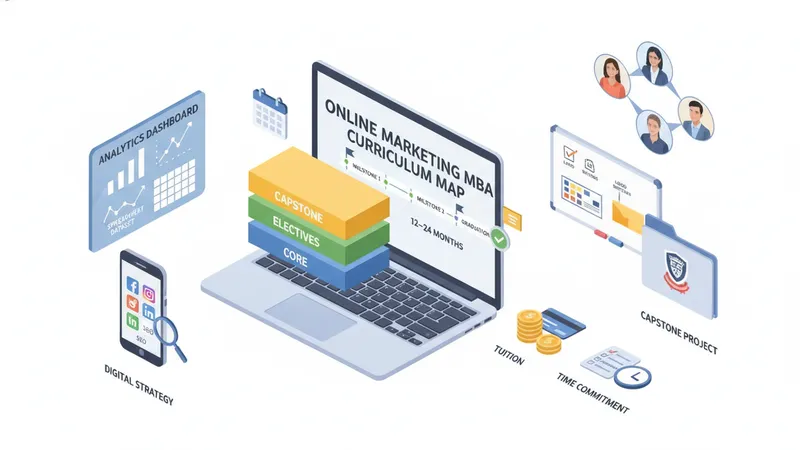
When planning study in a marketing-focused graduate program delivered online, it can be useful to compare program length, credit structure, and elective offerings as they relate to desired competencies. Typical program durations may range from about 12 to 24 months depending on full- or part-time pacing. Learners often examine the balance between core management requirements and marketing electives to ensure sufficient depth in analytics, digital strategy, or brand management. Clarifying sequencing and capstone expectations can help in assessing realistic time commitments and skill milestones.
Costs and resource access are relevant planning factors but are not uniform; programs may vary widely in tuition and in the inclusion of software or platform access. Prospective students often check whether coursework includes licensed tool access, datasets for analysis, or partnerships that facilitate experiential projects. Understanding these practical provisions may influence how readily a student can gain hands-on experience with industry-standard tools during their studies.
Another consideration is the alignment between coursework and professional responsibilities an individual expects to hold. Learners may prefer programs with electives that match intended specializations—such as analytics, brand strategy, or digital media—or with capstone formats that permit work on an industry-relevant project. Reviewing syllabi and sample projects can provide insight into whether program content supports specific competency goals and how assessment approaches map to real-world marketing tasks.
Finally, students often plan for complementary learning such as short technical courses or portfolio work to enhance specific skills that coursework addresses at a conceptual level. Preparing examples of applied work, such as campaign reports or analytics dashboards, may help translate academic outcomes into demonstrable competencies. The remaining sections of this series would typically examine examples of course modules and exemplar projects in greater detail.