
Home automation refers to coordinating household devices and systems so they communicate and operate with little manual intervention. Connected devices use local networks, cloud services, or direct wireless connections to exchange state information and execute scheduled or triggered actions. Typical configurations allow lights, heating and cooling systems, door locks, cameras, sensors, and appliances to be monitored and adjusted through a unified interface or automated rules. The overall concept centers on interoperability and information flow: sensors report conditions, controllers decide or schedule actions, and actuators change device states to reflect those decisions.
Connected devices can transform daily routines by enabling context-aware responses and remote visibility. For example, occupancy sensors may inform heating setpoints, or lighting scenes can adapt to time of day and activity. These changes can affect convenience, perceived safety, and energy use without requiring constant direct user input. Implementation patterns vary: some systems emphasize local control and privacy, while others rely on cloud connectivity for remote access, analytics, or voice integration. Each approach has trade-offs in latency, reliability, and data exposure that stakeholders often weigh.
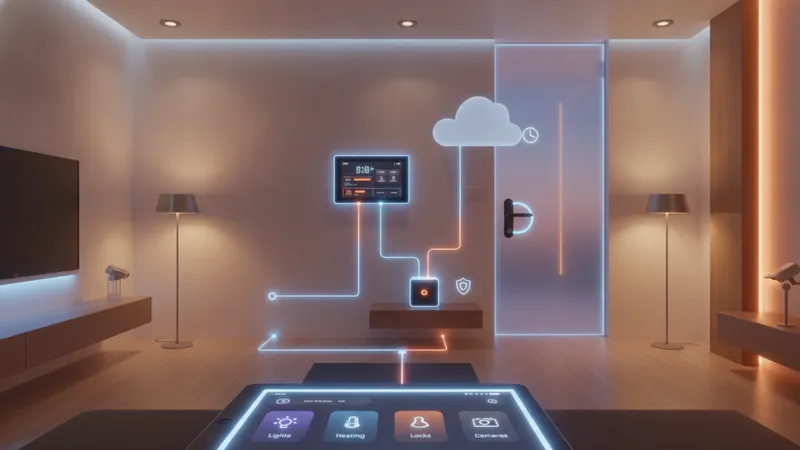
Comparing control models helps clarify how devices transform everyday living. A locally focused system may keep data within a home network and can operate when internet access is interrupted; a cloud-centric model typically enables broader remote access and vendor-provided services such as routine updates or aggregated analytics. Hybrid deployments combine both approaches, where time-sensitive automation runs locally and less critical features use cloud services. Users and designers may consider responsiveness, privacy preferences, and the likelihood of software updates when choosing an architecture for an automated home.
Automation logic commonly follows event-driven, schedule-driven, or condition-driven patterns. Event-driven rules run when sensors or user actions produce triggers, schedule-driven rules execute at set times or intervals, and condition-driven logic evaluates multiple inputs before acting. These frameworks may be implemented in device firmware, a local hub, or a cloud service and can often be composed into layered behaviors—for example, a lighting scene that only activates on motion if ambient light is below a set threshold. Understanding these patterns can simplify planning and troubleshooting.
Energy management and appliance automation illustrate typical practical outcomes without promising uniform results. In many cases, optimizing thermostats, scheduling high-consumption appliances during favorable tariffs, and using smart plugs for standby loads can reduce energy waste. The actual impact depends on building fabric, occupant behavior, and local utility pricing. Automated scheduling often aims to align comfort preferences with efficiency goals, and monitoring hardware may supply data that supports incremental adjustments rather than immediate, guaranteed savings.
Privacy and security considerations influence how connected devices are deployed and maintained. Devices may collect logs, video, or usage metadata that could be shared with vendors or third-party services unless configured otherwise. Local control and encrypted communication channels can reduce exposure, while strong account management practices and firmware updates can mitigate common vulnerabilities. Planning for secure onboarding, network segmentation, and periodic review of device permissions typically forms part of a prudent installation strategy.
In summary, integrating connected devices into a residence generally shifts repetitive tasks toward automated routines, increases remote visibility of systems, and alters how occupants interact with their environment. Outcomes depend on choices about device types, control models, and privacy trade-offs, and may vary across households. The next sections examine practical components and considerations in more detail.
Smart lighting and climate control represent two of the most visible applications of connected devices in everyday living. Networked lighting can provide scene-based controls, adaptive schedules, and occupancy-based activations; climate controls can adjust setpoints based on time, presence, or external temperature inputs. In many installations, thermostat devices may incorporate multiple sensors or integrate data from separate occupancy detectors to reduce conflicting signals. When planning these systems, designers often consider sensor placement, wiring constraints, and whether control logic should reside locally or in a cloud service to balance responsiveness with remote access.
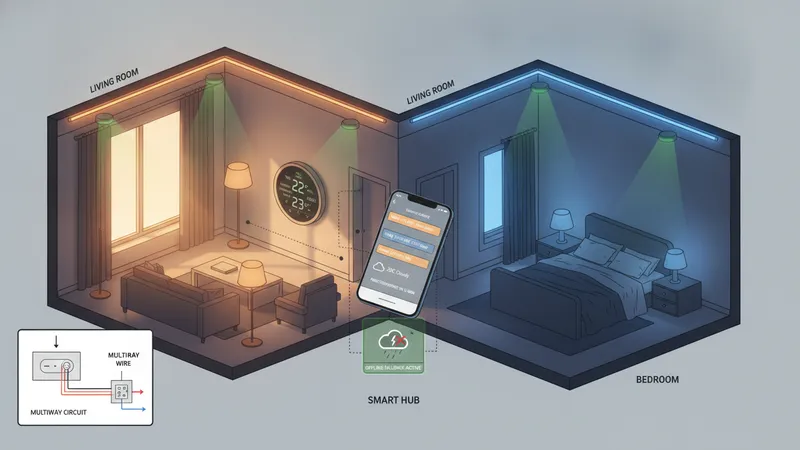
Performance and perceived benefit typically depend on how these devices are configured to match occupant routines. For example, coordinating lighting scenes with wake and sleep schedules may reduce manual adjustments, while setback schedules for heating or cooling can limit unnecessary runtime. Some households may integrate weather-aware scheduling, where forecast data influences preconditioning periods. Practical considerations include compatibility with existing wiring (e.g., neutral wires for smart switches), load handling for multiway circuits, and ensuring that automation rules include fallback behavior during connectivity outages.
Energy and comfort interactions often require modest calibration rather than large, immediate changes. Thermostats with adaptive algorithms may learn typical usage patterns and propose setpoint adjustments that occupants can accept or refine. Similarly, dimming and color temperature adjustments may be tuned to reduce visual fatigue at different times of day. Implementers commonly monitor performance over weeks to identify unusual cycles or occupancy mismatches and then adjust rules or sensor placement accordingly. This iterative approach can lead to more stable, occupant-aligned automation.
Security and access management are relevant when lighting and climate devices are exposed to remote control. Accounts and device endpoints that permit remote adjustments should be subject to appropriate authentication and, where available, multi-factor controls. Network segmentation—placing IoT devices on a separate subnet—can also limit lateral exposure from compromised endpoints. Routine firmware updates and awareness of cryptographic defaults can reduce known vulnerabilities. Such operational considerations are part of maintaining reliable, predictable lighting and climate automation.
Smart security systems combine locks, cameras, motion detectors, and contact sensors to provide event detection and reporting. These components may be integrated into a central hub that aggregates events for rule evaluation and notification. In many configurations, cameras may run local recording and cloud backup options, and door locks can provide access logs for authorized users. Designers often consider detection coverage, camera fields of view, and sensor tamper resistance to ensure that automated responses reflect real conditions and minimize false positives that could erode user trust.
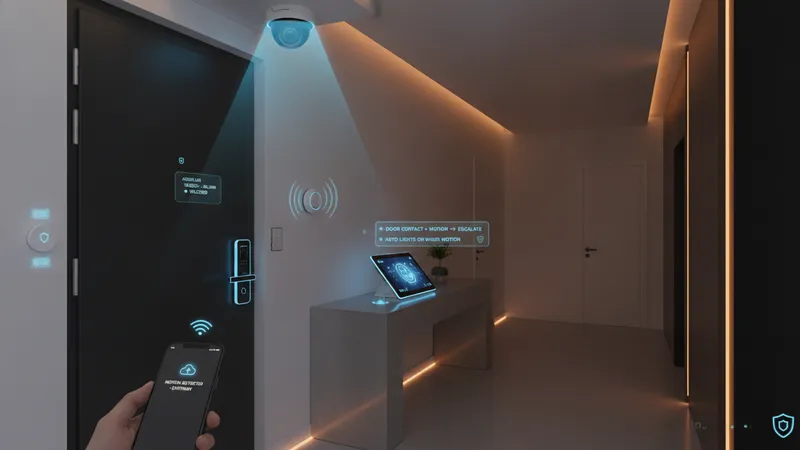
Interfacing security devices with other automation elements can enable contextual responses, such as turning on lights when motion is detected or arming certain zones automatically when occupants leave. Event correlation—combining inputs from multiple sensors before taking high-impact actions—may reduce unnecessary alarms. For example, requiring both door contact and motion detection before a security alert is escalated can lower false alarms. Such rule composition often relies on a hub or controller capable of evaluating multi-parameter conditions without excessive latency.
Privacy considerations receive particular attention in security deployments. Camera placement, retention policies for recorded video, and access control for viewing streams are practical matters that influence acceptance. Some implementers favor local storage with selective cloud backup to reduce continuous cloud exposure, while others use vendor services for managed recording and analytics. Clear configuration of sharing, notification settings, and retention schedules typically helps align system behavior with occupant expectations and legal considerations.
Operational maintenance for security sensors includes periodic battery checks, firmware updates, and validation of detection coverage after reconfigurations or structural changes. Regular testing of contact sensors and door locks ensures that automated arming and disarming behaviors remain reliable. When security systems are integrated with professional monitoring services, notification chains and escalation paths should be reviewed periodically to confirm they match current household routines and occupants’ preferences.
Voice assistants and mobile apps provide user-facing interfaces for control and monitoring but differ in architecture and privacy implications. Voice interfaces often rely on cloud processing for natural language parsing, which may introduce additional data flows outside the home. Mobile apps can communicate either through a vendor cloud or directly with a local hub. Hubs and bridges translate among communication protocols—such as Zigbee, Z-Wave, Thread, and Wi‑Fi—allowing diverse devices to interoperate. Choosing whether automation logic runs on the hub or in the cloud affects latency, offline operation, and the surface area for updates.
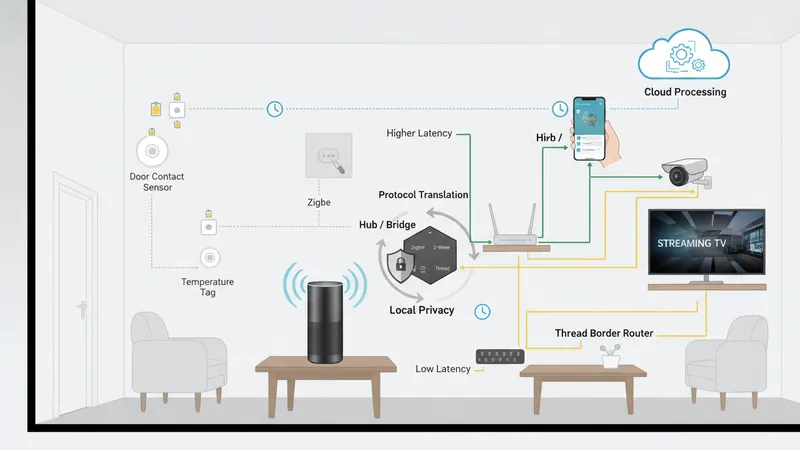
Protocol choice and network design influence device reliability and response times. Mesh protocols like Zigbee and Z-Wave extend range through intermediary devices and often consume less power, making them suitable for battery-powered sensors. Wi‑Fi provides higher bandwidth but may be less power-efficient for many small sensors. Thread is an IP-based low-power option that can integrate with other IPv6 services. Network planning typically includes ensuring sufficient wireless coverage, avoiding interference, and considering redundant connectivity paths for critical devices.
Integration patterns matter when combining voice, app, and hub controls. Systems that expose local APIs may permit third-party controllers or home automation platforms to operate without cloud dependency, enabling rules to run even when internet access is unavailable. Conversely, cloud-reliant devices can offer remote access and vendor-hosted automation but may cease certain functions during outages. Many households adopt a hybrid mix: local execution for safety-critical automation and cloud services for convenience features such as remote notifications or advanced analytics.
Operationally, maintaining connectivity involves software updates, periodic reboots of network equipment, and monitoring for degraded links. Insider considerations include segmenting IoT traffic away from primary computing devices, setting clear device naming conventions for ease of troubleshooting, and using manufacturer documentation to confirm supported protocol versions. Thoughtful namespace and access configurations reduce confusion as systems scale and can prevent unintended interactions between automations and voice or app commands.
Energy management and automated appliances extend automation benefits into household resource use. Smart meters, home energy monitors, and appliance-level monitoring can produce data that informs scheduling decisions—such as deferring a dishwasher cycle to off-peak hours or limiting charging for electric vehicles during high-rate periods. Connected appliances may support time-of-use scheduling, but coordinated control often requires a central policy engine or hub that can arbitrate competing demands. Practical deployments commonly balance convenience with energy objectives and treat automation as an adjustable layer rather than an immutable setting.
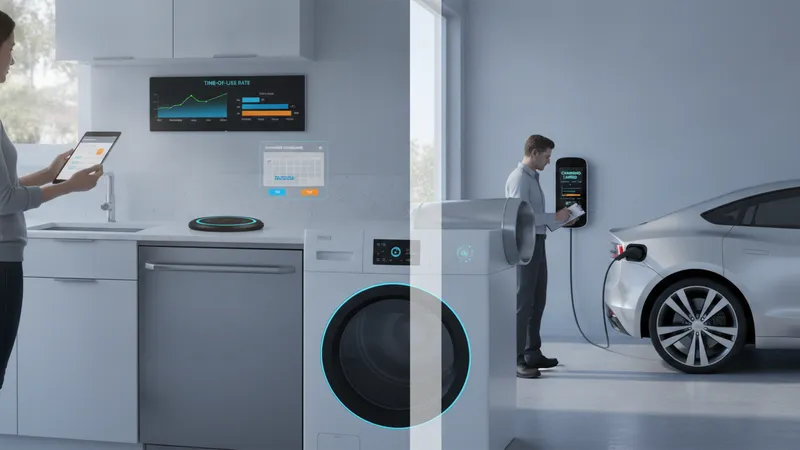
Appliance automation includes state reporting, remote start/stop, and integration with routines; however, safety constraints and warranty conditions may limit the extent of remote operation for certain devices. For example, initiating dryer cycles remotely may require confirming that venting and load conditions are suitable. Maintenance considerations include ensuring devices are compatible with existing electrical infrastructure and observing manufacturer guidance for connected operation. Regular inspection and adherence to electrical codes are part of responsible long-term operation.
Maintaining an automated home typically involves periodic review of automation rules, firmware updates, and calibration of sensors. Occupant routines evolve, and automations may need adjustment to remain relevant. Backups of configuration data, documentation of custom rules, and a basic recovery plan for replacing failed components can reduce downtime. When relying on third-party services, reviewing account access, data retention, and vendor update practices forms part of an ongoing maintenance approach rather than a one-time setup task.
Choosing a home automation setup often begins with defining priorities—whether convenience, energy efficiency, security, or privacy is foremost—and then mapping those priorities to device types and control models. Stakeholders commonly prototype with a few devices, assess interoperability, and scale gradually while keeping network and data flows under review. Continued reading of the previous sections may help clarify how specific device classes and connectivity choices interact in practical deployments, and may guide measured, informed decisions about expansion and maintenance.