
Brokerage accounts and trading platforms refer to the combination of an account held by an investor with a brokerage firm and the digital interfaces used to place and manage trades. The account itself defines legal ownership, tax treatment, and available services, while the platform provides the tools to view prices, enter orders, monitor positions, and access research. Together they determine what asset types an investor can hold (for example equities, bonds, exchange-traded funds, or mutual funds), what order types can be used, and how information is presented for decision-making.
The platforms often integrate market data, charting, and account administration functions that interact with the brokerage’s clearing and custodial systems. Brokerage accounts may include features such as cash or margin balances, linked bank transfers, and settings for trade approvals or restrictions. Regulatory requirements and custody arrangements commonly influence how customer assets are held and how account statements and trade confirmations are delivered, which affects operational workflows on the platform side.
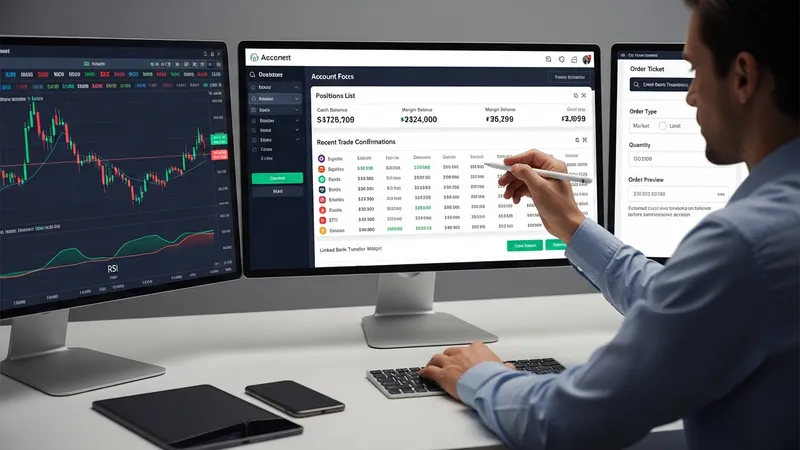
Comparing these examples helps clarify functional trade-offs that may arise between service breadth and cost. Full-service platforms may include non-trading services such as financial planning templates and deeper research databases, while discount brokerages often prioritise execution speed and simplified fee structures. Robo-advisors typically automate portfolio construction and rebalancing, which can reduce manual oversight but may limit customization. Each model may support common account types such as taxable brokerage accounts, retirement accounts, and custodial accounts, but the exact offerings and constraints often vary by provider.
Order entry and execution are core technical functions embedded in platforms and may affect trading outcomes. Typical order types available across platform examples include market orders, limit orders, and stop orders; some platforms extend these with conditional or algorithmic orders. Execution may route through multiple venues such as exchanges, alternative trading systems, or internalizers; routing logic can prioritise price improvement, speed, or certain liquidity sources. Transparency about routing and execution quality can differ among providers and may appear in regulatory disclosures or execution-quality reports.
Market data and analytical tools are frequently differentiated by depth and cost. Some platforms provide real-time quotes, historical time series, and advanced charting at no additional fee, while others gate premium data behind subscription tiers. Research content can include analyst reports, company filings, economic calendars, and screeners that filter securities by metrics. The degree to which a platform bundles these tools often reflects its business model; users may see integrated research in full-service offerings and modular add-ons in discount or hybrid services.
Account features that involve financing, tax handling, and custody can shape practical usage. Margin lending, for example, may be available subject to margin requirements and interest rates that can vary by broker. Tax reporting tools and year-end statements typically accompany custody services, and some platforms offer automated tax-loss harvesting or consolidated tax documents. Security and authentication features such as multi-factor authentication, encryption, and custodial segregation are typically provided to protect client assets and data.
In summary, the concept combines legal account structures with technological platforms that enable trade execution, portfolio management, and account administration. Examples such as full-service brokerages, discount platforms, and robo-advisors represent common approaches that differ in service emphasis, cost structures, and available tools. Selection of a particular model may depend on an investor’s need for advice, desire for control, and tolerance for fees. The next sections examine practical components and considerations in more detail.
Account types available through the models described above typically include individual taxable accounts, joint accounts, retirement accounts, and custodial accounts for minors. Each account type may carry specific tax reporting formats and regulatory limits: for instance, retirement-designated accounts often have contribution and withdrawal rules that affect tax treatment. Platforms may restrict certain products by account type — for example, some brokers limit access to margin or certain derivatives in retirement accounts. When opening an account, identity verification and documentation requirements often apply as part of anti-money-laundering and know-your-customer procedures.
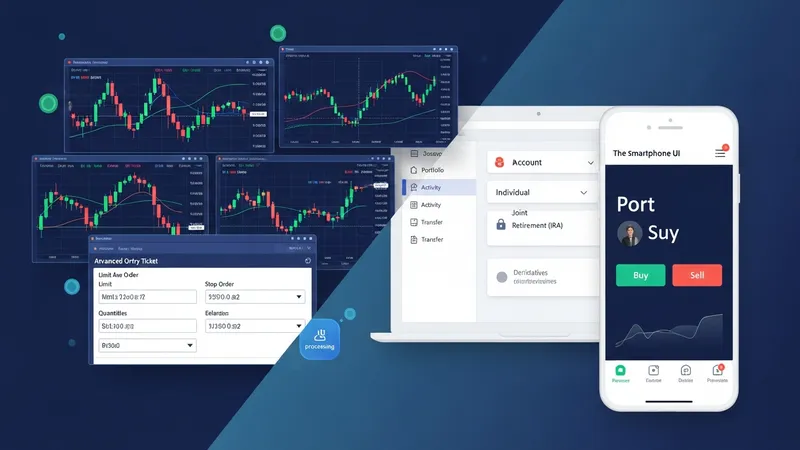
Access mechanisms vary: web-based portals, desktop applications, and mobile apps are common, and each may expose different feature sets. Desktop platforms frequently offer more advanced charting and order-entry tools suitable for active traders, while mobile apps emphasize portability and core functions like order entry and balance checks. APIs are sometimes available for programmatic access, enabling algorithmic trading or custom reporting. Access permissions within accounts can also be configured for multiple users, power-of-attorney arrangements, or institutional access for advisory relationships.
Custody arrangements and clearing processes underpin account access and settlement timelines. Most brokerage firms use a clearing agent to settle trades and record ownership; settlement cycles for equities and funds typically follow industry norms and may affect when funds become available for withdrawal or subsequent trades. Platforms commonly display settled versus unsettled cash to help avoid accidental free-riding or restricted activity. Understanding the interplay between account type, custody, and settlement can clarify liquidity timing and permissible actions within a given account.
Operational considerations include funding methods, transfer tools, and account portability. Platforms usually support linked bank transfers, wire transfers, and in-kind transfers from other custodians, each with differing timelines and possible fees. Some providers offer electronic transfer services designed to streamline account-to-account moves, while others may require manual paperwork for certain types of transfers. These practical elements can affect onboarding timeframes and the ease with which existing positions are consolidated or migrated between providers.
Order types commonly supported across platforms include market orders, which seek immediate execution at prevailing prices; limit orders, which set a maximum or minimum acceptable price; and stop or stop-limit orders, which aim to trigger trades when prices reach specified thresholds. Some platforms offer conditional or advanced orders that execute based on time, price, or other triggers. The availability and behavior of each order type can differ slightly by platform, so users may see variations in how orders interact with market liquidity and partial fills.
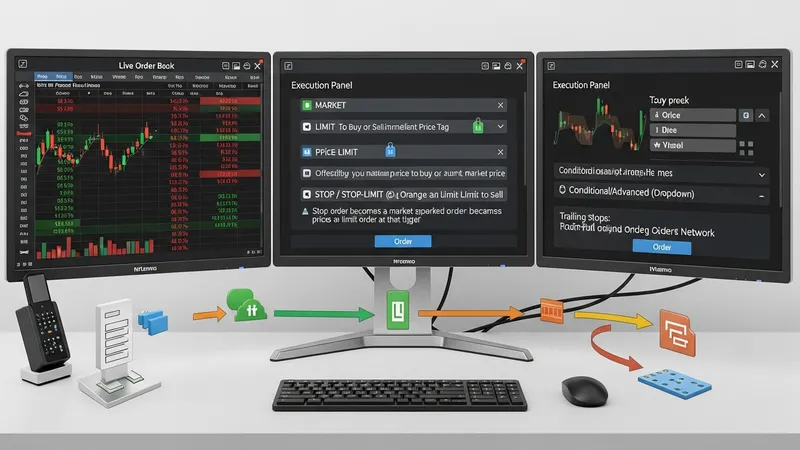
Trade routing determines where an order is sent for execution and can influence execution speed and price improvement opportunities. Orders may route to national exchanges, alternative trading systems, or market makers. Brokers may disclose routing practices in customer documents; these disclosures typically describe factors such as price, speed, likelihood of execution, and any relationships that influence routing. Practices such as payment-for-order-flow can be present in some markets and are often described in regulatory materials rather than implying a specific outcome for execution quality.
Execution quality metrics may include measures such as execution price relative to prevailing quotes, fill rates, and time-to-fill. Some platforms publish execution reports or summaries that illustrate typical performance across order types and venues. For algorithmic trading or larger orders, advanced execution algorithms may break orders into smaller slices to reduce market impact or to seek liquidity across venues. Such algorithms can be useful for larger transactions but may introduce complexity in assessing final execution results.
Operational latency and user interface design also influence trade experiences. High-frequency traders often prioritise low-latency connections and direct market access, while retail traders may prioritise intuitive order-entry workflows and pre-trade risk checks. Platform features such as order confirmations, audit trails, and trade blotters support recordkeeping and compliance. Awareness of these execution and routing mechanics may inform how different platform examples align with an investor’s trading frequency and strategy.
Fee models across the described platform types can vary widely and typically include components such as commissions per trade, spreads, account maintenance fees, and subscription fees for premium tools. In recent years many discount brokerages have moved to commission-free pricing for standard equities trades, while options trading or broker-assisted trades may still incur explicit per-contract or per-trade charges. Full-service platforms commonly charge advisory fees or commission schedules that reflect additional services like personalised advice and research access.
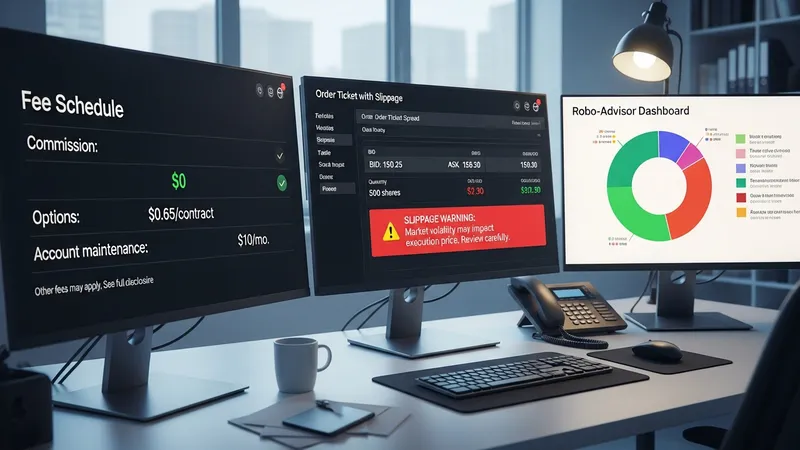
Indirect costs should also be considered: bid-ask spreads, possible execution slippage, and margin interest on borrowings can affect overall transaction cost. Margin interest rates may be tiered based on borrowed amounts and can vary across providers. For robo-advisors, fees are often expressed as a percentage of assets under management and may include underlying fund expenses such as expense ratios for ETFs or mutual funds. Comparing fee components in regulatory fee schedules or pricing disclosures can help contextualise typical cost patterns.
Some platforms offer premium data, advanced analytics, or direct-access features under subscription plans; these costs can be recurring and may be justified for some users depending on trading style and information needs. Other potential fees include transfer fees, inactivity fees, or fees for broker-assisted transactions. Fee disclosures and clear examples in account documents are commonly provided to help clients estimate recurring and transactional charges without implying specific savings or outcomes.
When assessing cost, investors often weigh transparency and predictability of fees alongside service scope. Fee structures that itemise charges and provide examples for typical trade sizes may make comparative evaluation easier. Cost considerations may influence the choice among a full-service provider with bundled services, a low-cost broker with a la carte add-ons, or a robo-advisor with an asset-based fee, depending on the expected level of activity and the services most relevant to the account holder’s objectives.
Security measures on platforms commonly include encryption of data in transit and at rest, multi-factor authentication options, and session controls to reduce unauthorised access. Custodial arrangements typically segregate client assets from firm assets, and many jurisdictions offer investor-protection schemes or insurance for certain losses up to defined limits. Compliance features on platforms often surface regulatory disclosures, tax forms, and audit trails that support reporting requirements and record retention.
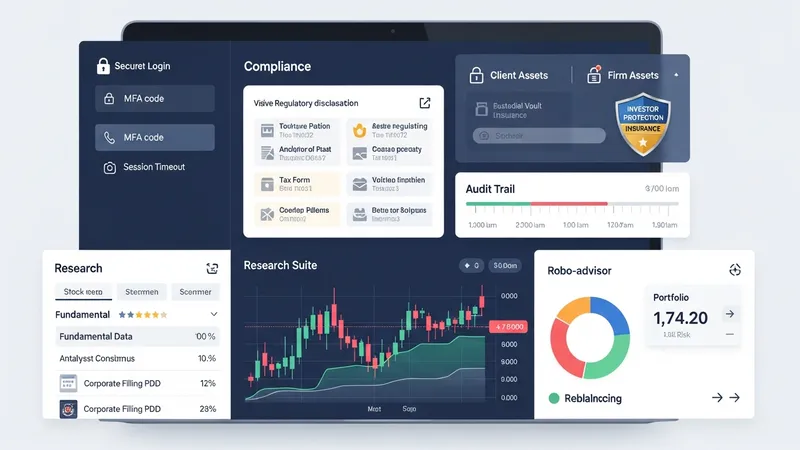
Research tools vary by platform example and may include screening tools, fundamental data, analyst consensus, corporate filings, and charting modules. Full-service platforms may integrate proprietary research reports and third-party content, while discount platforms tend to offer modular research suites or links to public filings. Robo-advisors generally expose diagnostic reports about portfolio composition, risk metrics, and rebalancing actions rather than detailed equity-level research, reflecting their model-based approach.
Portfolio tracking functions commonly provide real-time valuations, performance attribution, and transaction histories. Tax reporting features may include downloadable tax lots and gain/loss summaries, while some platforms enable portfolio-level analysis such as asset allocation drift, correlation metrics, and scenario testing. APIs or export tools can support external analysis and integration with financial planning or tax software, which may be particularly useful for consolidated reporting across multiple custodians.
Operational considerations and prudent controls include verifying regulatory credentials, reviewing security settings, and understanding dispute and error-resolution processes. Platforms typically publish incidents and outage procedures in service terms or operational notices. Maintaining clear records, checking periodic account statements for accuracy, and using available security features are informational considerations that can help users manage operational risk and maintain oversight of assets held within brokerage accounts and trading platforms.