
Mechanized farming combines powered equipment with organized field operations to perform tasks such as soil preparation, seeding, crop care, water management, and material handling. This concept covers a range of machines and attachments used to convert labour, fuel, and inputs into measurable field work. Machines are selected and organized around crop cycles, landform characteristics, and the desired throughput of planting and harvesting operations. The overall objective in these systems is to enable timely field operations while managing resource inputs and operational risk in a way that matches enterprise scale and crop requirements.
The role of mechanized equipment in field operations typically spans primary tillage, secondary tillage, planting, pest and nutrient application, harvesting, and post-harvest handling. Equipment choice can influence soil condition, compaction, fuel use, and scheduling windows for operations that are sensitive to weather. Complementary elements such as water-delivery hardware, conveying systems, and storage handling are often considered part of the operational setup so that harvested material moves efficiently from field to storage. Decisions emphasize functional fit, maintenance capacity, and seasonal timing rather than promotional attributes.
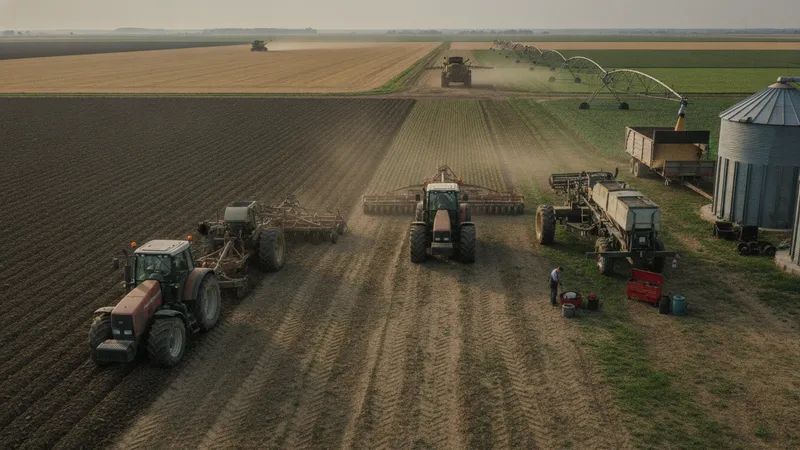
Matching equipment to crop and terrain often requires evaluation of traction, ground pressure and implement width. Machines that exert lower ground pressure may reduce compaction on delicate soils, while wider implements can increase field coverage but also demand higher power and transport considerations. In sloped or irregular fields, articulated or tracked machines may offer better stability. The decision process typically considers how an implement’s working width and operational speed translate into area covered per hour and how that aligns with seasonal windows for activities like planting and harvest.
Capacity and throughput considerations typically influence purchase or lease choices and may affect crew size and scheduling. For harvesting equipment, throughput is often expressed as mass or volume processed per hour and can vary with crop moisture content and field conditions. Planting and spraying operations are planned around achievable hectares per hour given implement width and ground speed. Producers frequently estimate required capacity based on peak workload periods to avoid bottlenecks during critical operations, understanding that higher-capacity machines may increase fuel and maintenance demands.
Maintenance, parts availability and lifecycle planning are central to sustained operation. Regular servicing intervals for engines, hydraulics and drivetrains can extend usable service life, while wear items—tyres, cutting elements, bearings—typically require more frequent replacement. Availability of spare parts and diagnostic tools can influence downtime and repair lead times; some regions may see longer waits for specialized components. Owners often track maintenance histories and plan for component replacement cycles so that equipment is available during key seasonal windows rather than relying on emergency repairs.
Integration of water delivery, material handling and control systems can improve operational flow and reduce manual handling. For example, synchronizing harvester unloading intervals with on-farm transport can reduce bottlenecks during harvest. Irrigation hardware and soil moisture sensing may be combined with scheduling software to adjust application timing. Such integration often requires assessing electrical, hydraulic and data interfaces to ensure components communicate reliably. Decisions about integration are typically guided by functional compatibility, intended outcomes, and the capacity of farm personnel to maintain combined systems.
In summary, mechanized field equipment and supporting systems encompass a spectrum of implements and infrastructure that together enable timely field operations, water management and post-harvest handling. Choices about machines are typically driven by crop types, field conditions, throughput needs and maintenance capacity, rather than singular performance claims. The next sections examine practical components and considerations in more detail.
Field equipment categories can be grouped by function: draft and prime movers, soil-engaging implements, seeding devices, crop protection applicators, harvesters, and material handlers. Draft and prime movers commonly refer to tractors or utility vehicles that provide traction and power. Soil-engaging implements modify seedbeds and residue, with designs adapted to conserve moisture or perform intensive inversion. Seeding devices are distinguished by placement accuracy and row spacing. Crop protection applicators vary by delivery method and droplet control. Material handlers focus on lifting, loading, and moving bulk product within the farm environment.
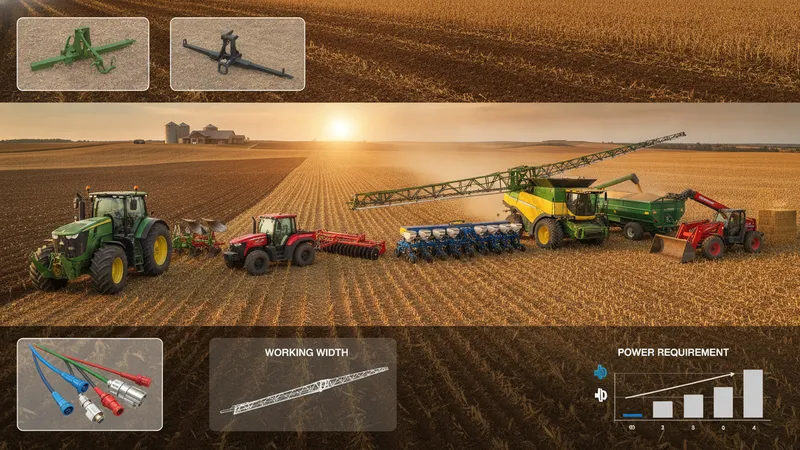
When comparing implement families, considerations often include working width, required power, hitch type and hydraulic or electrical interfaces. Wider implements increase effective field coverage but may need higher drawbar or PTO power. Hitch types—three-point, drawbar, or specialized mounts—affect compatibility and ease of attachment, while hydraulic flow and control requirements determine whether a tractor can operate a given implement efficiently. These technical characteristics generally dictate whether an implement is suited to a given power unit and operational plan.
Harvesting equipment differs substantially by crop harvested and the separation process required. Small-grain combines are designed to cut and thresh cereals with headers sized to field and transport constraints. For root and tuber crops, harvesters perform digging, cleaning and conveyance. Forage harvesters chop biomass for storage and feed use. Each class of harvester involves trade-offs among throughput, cleaning performance, residue management and fuel consumption. Operators commonly consider the match between header type and crop to reduce losses and improve yield retention during harvest.
Material-handling implements and yard equipment are often overlooked but can be critical to post-harvest efficiency. Front loaders, telehandlers and forklifts provide flexibility in moving bales, pallets, and bulk product, while conveyors and augers manage grain movement. Selection hinges on lift capacity, reach, and manoeuvrability in farmyard conditions. Adequate planning for material flow, including temporary storage and vehicle access, may reduce handling time and stress on primary machinery during peak harvest operations.
Determining appropriate machine size typically starts with estimating peak seasonal workload and desired completion windows for tasks like planting and harvest. Smaller operations may favor compact tractors and narrow implements that are easier to manoeuvre and cheaper to operate, while larger enterprises often use higher-horsepower tractors and wider implements to increase daily coverage. Capacity metrics such as hectares per hour, liters of fuel per hour under load, or tonnes per hour for harvesters can support comparisons, acknowledging that these figures vary with field conditions, operator skill and crop characteristics.
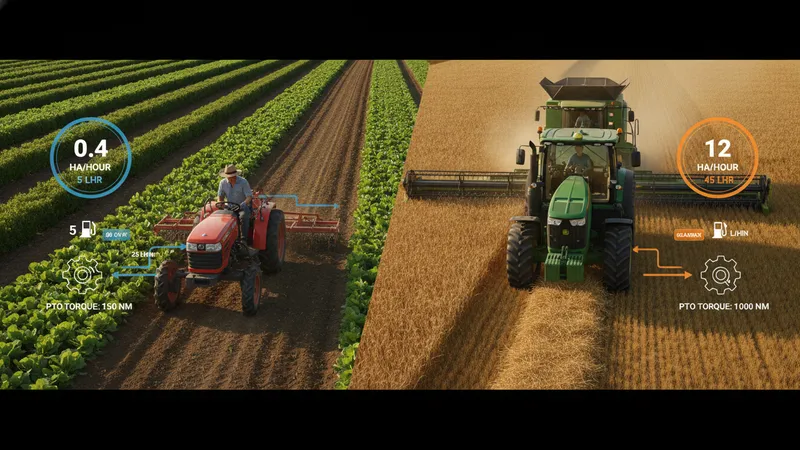
Power and transmission choices influence implement compatibility and operational flexibility. A tractor’s rated engine power, PTO capacity and torque characteristics determine which implements it can drive effectively. Continuously variable transmissions may provide smoother speed control for implement-driven work, while gear and power shift transmissions can offer durability under heavy load. Matching hydraulic flow and control circuits is also necessary for implements requiring proportional control. Considering these elements together often prevents under- or over-sizing and aligns machine capability with expected tasks.
Transport and roadability are practical constraints in many operations. Wider implements and larger machinery may require special permits or escorts on public roads in some jurisdictions and may complicate access through gates or between fields. Transport dimensions also affect storage requirements. Operators commonly weigh the trade-off between wider working widths that reduce field time and the complexity of moving larger machines between dispersed fields. Planning for turning radii and headland width helps ensure that selected machinery can be used effectively within the existing field layout.
Operator capacity and training are part of matching decisions. Larger or more complex machinery can demand higher operator skill for safe, efficient operation and routine diagnostics. Considerations such as camera systems, automation features, and electronic controls may reduce repetitive workload but can increase the need for basic troubleshooting competence. Many operations factor operator availability, experience and training potential into size and complexity choices, understanding that machine capability must be supported by human resources to achieve intended productivity.
Operating costs usually include fuel, routine maintenance, consumables and eventual replacement or depreciation. Fuel consumption varies with engine load, transmission type and duty cycle; heavy tillage or continuous high-load harvesting typically increases fuel use. Routine maintenance—oil and filter changes, hydraulic fluid checks, and lubrication of moving parts—can reduce the risk of major failures. Consumable costs such as cutting edges, belts, and tyre replacement are recurring and often scale with field area and surface conditions. Lifecycle planning helps align capital turnover with operational budgets.
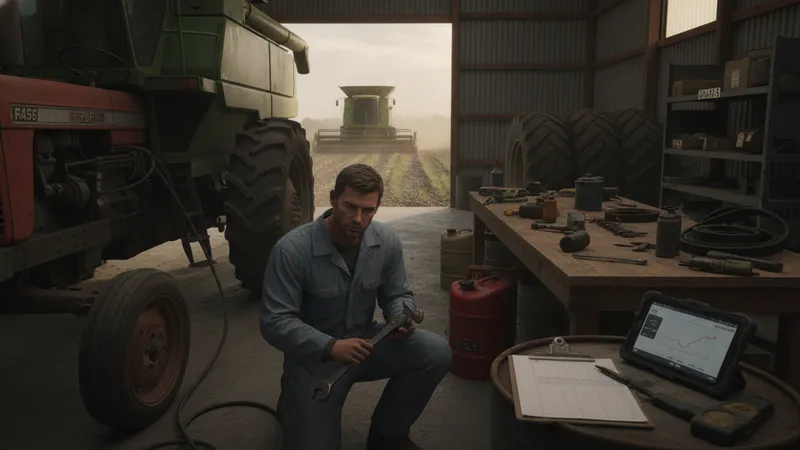
Preventive maintenance schedules typically follow manufacturer guidance and field usage patterns. Regular inspection of drivetrains, hydraulic hoses, and electrical connectors may catch wear before failures occur. Tracking maintenance history permits more informed decisions about refurbishing versus replacing components. For older machines, availability of replacement parts and access to compatible diagnostic tools may influence cost-effectiveness of repairs. Some operators maintain inventories of common wear parts to reduce downtime during critical periods.
Depreciation and residual value are factors in long-term fleet planning. Machines that are intensively used may see faster depreciation, while well-maintained units often retain better resale potential. Decisions about refurbishing versus purchasing newer equipment commonly weigh remaining usable life, expected repair costs, and the changing requirements of farm operations. Financial considerations can inform whether to pursue incremental upgrades, rebuild key systems, or retire items that become increasingly expensive to maintain relative to their productive contribution.
Safety, training and regulatory compliance are additional operational considerations. Proper operator training, appropriate guarding, and adherence to local regulations for transport and emissions can reduce risk and potential liabilities. Safety checks—brakes, lighting, rollover protection systems—should be routine. Consideration of these factors typically plays into scheduling and budgeting for maintenance, as well as into the selection of machines that align with an operation’s capacity to manage safe and compliant use.
Irrigation hardware ranges from surface and flood systems to sprinklers and localized drip delivery; choice is typically driven by water availability, crop water requirements and soil permeability. Sprinkler systems may offer uniform coverage across variable terrain, while drip systems often aim to reduce application volume and evaporative loss. Center pivot systems provide automated circular coverage for larger fields. Integration with flow meters and basic scheduling tools can help match deliveries to crop needs, subject to the reliability of water sources and field access.
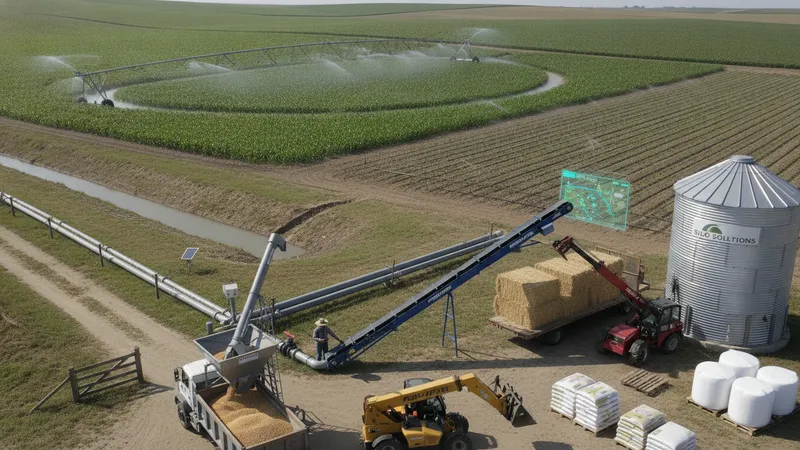
Material handling systems support timely movement of harvested crops and inputs. Augers and conveyors reduce manual handling for grain, while loaders and telehandlers aid in moving bales, pallets and bulk materials. Selection often considers lift capacity, reach, throughput and compatibility with handling surfaces. Properly sized material handling equipment can reduce the time primary machines spend waiting during unloading or staging, and can influence decisions about on-farm storage configuration and transport logistics.
System integration increasingly involves sensors, farm management software, and basic automation. Soil moisture sensors and simple weather stations can feed scheduling decisions for irrigation and spraying, while telematics can record machine hours, fuel use and location to inform logistics and maintenance. Integration choices generally consider data compatibility, robustness of local connectivity, and the capacity of operators to use and maintain the systems. Modular approaches may be preferable so that individual components can be serviced or replaced without extensive system disruption.
When planning integrated systems, interoperability and maintainability are practical considerations. Standardized electrical and hydraulic interfaces, common spare parts, and accessible diagnostic information can reduce downtime and simplify repairs. Training for personnel to handle routine diagnostics and software updates may be necessary to maintain integrated systems. Assessing these elements as part of system planning can help ensure that irrigation, handling and control components function cohesively to support seasonal workflows and resource management goals.