
A lawyer who focuses on injuries from collisions or similar incidents may assist a person with the legal and procedural aspects that follow an accident. Such counsel typically explains how insurance processes work, identifies potentially relevant coverages, and outlines legal options for pursuing compensation. Work by this type of attorney may include reviewing police and incident reports, clarifying deadlines, and advising on whether to pursue a claim through an insurer, via alternative dispute resolution, or in court.
In practice, this assistance often involves translating insurance terminology, estimating recoverable losses, and suggesting evidence that could support a claim. Counsel can outline likely procedural steps and the general trade-offs of settling versus continuing to negotiate or litigate. The role is informational and procedural: providing legal analysis, outlining risks and timelines, and coordinating with medical or technical experts when specialized evidence is needed.
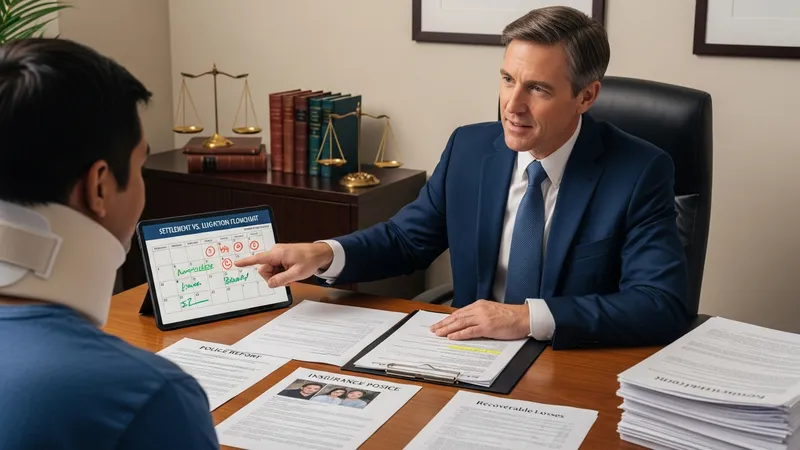
Assessment and framing often start with a timeline of events and a review of policies that may apply. Counsel may examine whether bodily injury, property damage, or third-party liability coverages are implicated and whether additional policies (such as uninsured motorist or employer policies) might be relevant. This stage commonly guides whether a formal demand will be presented or if further investigation is warranted. In many jurisdictions, early case screening helps identify which claims are likely to be settled administratively and which may require more intensive development.
Organizing documentation typically involves gathering medical records, billing statements, repair estimates, and any documentation of lost time or diminished earning capacity. Preservation of evidence may include sending written notice to preserve vehicle damage, requesting official records, and documenting communications with insurers. Proper labeling and chronological arrangement of records can help when preparing a demand package and may reduce administrative delay. Counsel often advises on which documents are most persuasive for valuation purposes.
When communicating with insurers, counsel may follow recognized negotiation practices such as submitting a written demand, providing supporting evidence, and setting a response timeline. Adjusters commonly open with investigatory questions and initial offers that may be lower than later proposals; legal representatives can frame counterarguments and provide substantiation for higher valuations. Attorneys may also recognize when insurer communications include reservations of rights or denials that require a formal written response or escalation to regulatory channels.
Legal representation can also include coordination with medical experts, accident reconstruction specialists, or vocational analysts to substantiate claims of lost function, impairment, or diminished earning potential. Expert involvement is often selected based on the specific evidentiary gaps in a case and can strengthen causation or damage opinions. The choice and timing of expert engagement typically reflect the expected complexity of a claim and the resources necessary to support higher-value demands.
In summary, legal counsel in accident-related matters generally provides case assessment, documentation strategy, insurer interaction management, and expert coordination while explaining associated timelines and trade-offs. This support aims to clarify options and procedural steps rather than promise outcomes. The next sections examine practical components and considerations in more detail.
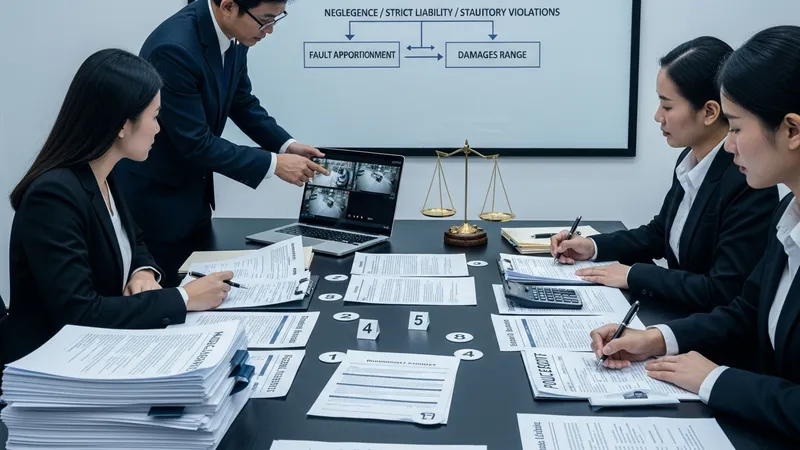
Evaluating who may be legally responsible and what damages might be recoverable is often an early legal task. Counsel may review factual records such as police reports, surveillance video, and witness accounts to form a liability hypothesis. Damages assessment typically considers medical costs, property repair estimates, and non-economic losses like diminished quality of life; quantifying these elements may require medical summaries or rehabilitation estimates. Attorneys commonly frame an initial valuation range to set expectations, noting that valuations can change as new records or expert opinions emerge.
Legal analysis often distinguishes between negligence, strict liability, and statutory violations depending on the incident type and jurisdiction. Counsel may identify legal theories that align with available evidence and may explain how fault apportionment could affect recovery. In multi-party incidents, contribution and comparative fault rules may introduce complexity; attorneys typically outline how allocation of responsibility among parties can influence net recoverable amounts and subsequent negotiation strategies.
Engaging experts can be a practical consideration when causation or future care needs are disputed. Medical practitioners can provide functional assessments and prognosis statements, while accident reconstruction specialists can clarify vehicle dynamics or collision mechanics. Vocational experts may assist when lost earning capacity is at issue. Counsel often advises on the potential evidentiary value of each expert relative to projected costs and the likelihood that an insurer will accept an expert’s conclusions.
Timelines for assessment vary by case complexity and jurisdictional procedures. Many civil claims go through an investigatory phase that may last weeks to months before formal demand or filing decisions are made. Counsel typically explains statutory filing deadlines and recommends prompt steps to avoid procedural losses. Readers may find it useful to treat early assessment as an iterative process: initial evaluations often refine with additional information rather than providing fixed outcomes.
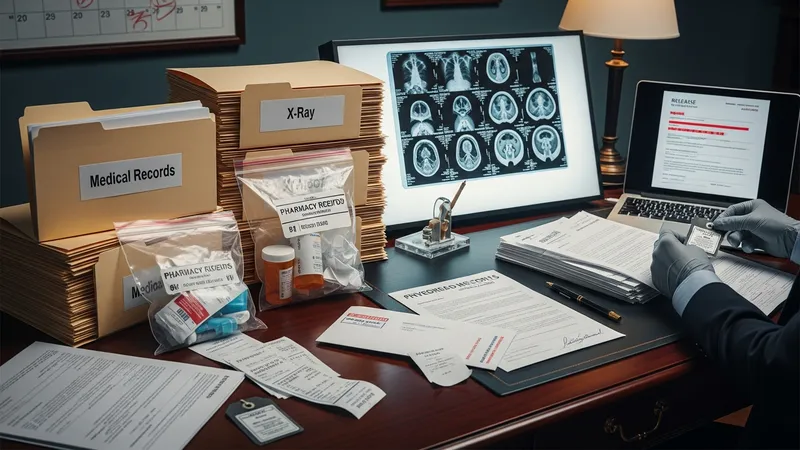
Organized evidence is central to claim development. Attorneys may recommend systematic collection of medical records, pharmacy receipts, diagnostic images, and receipts for repairs or replacements. Preservation efforts sometimes include sending recorded letters to preserve physical evidence or notifying custodians of records to prevent loss. Maintaining a clear chain of custody for physical items and documenting when and how records were obtained can help maintain their admissibility and credibility in negotiations or hearings.
Medical documentation often plays a pivotal role in connecting an accident to claimed injuries. Counsel may advise on obtaining complete treatment histories, itemized bills, and narrative summaries from treating providers that explain diagnosis and prognosis. Release forms that permit coordinated retrieval of records from multiple providers may be used to compile a comprehensive medical chronology. Where treatment gaps exist, attorneys typically discuss the implications for causation and potential strategies to address those gaps in valuation discussions.
Photographic and electronic evidence can also support factual claims. Timestamped photos of damage, scene conditions, and visible injuries may be helpful, as can metadata from devices or telematics reports where available. Collecting witness contact information and written statements early may reduce the risk of losing testimony over time. Counsel often suggests methods to preserve digital records, including saving original files and noting any transformations or transfers that occur during collection.
Documentation packages submitted to insurers commonly aim to balance conciseness with thoroughness. Demand packages usually include a statement of facts, liability documentation, medical summaries, and an itemized list of economic damages. Counsel may emphasize clarity and logical organization to facilitate insurer review. Preparing these materials with an eye to likely insurer requests can sometimes shorten exchange cycles and reduce repetitive follow-up for additional substantiation.

Interaction with insurance adjusters is typically structured around investigation and valuation. Counsel may handle written communications, present organized demand letters, and respond to adjuster inquiries in a way that preserves legal positions. Early communications often involve verification of coverage, clarifying the scope of policy limits, and requesting claim file materials. Attorneys commonly monitor insurer responses for indications of dispute over liability or damages and may adjust strategy accordingly.
Negotiation often follows a sequence: initial offer, exchange of evidence, counteroffer, and, if needed, escalation to mediation or litigation. Attorneys may use comparative valuations and documented medical narratives to justify proposed settlement figures. It is common for insurers to make preliminary offers that may be lower than later settlements; counsel typically explains this pattern and may recommend incremental evidence submissions to support higher valuations rather than relying solely on oral arguments.
When disputes arise regarding coverage or causation, counsel may explore alternative dispute resolution options such as mediation or neutral evaluation before filing suit. These forums can provide a structured setting for settlement discussion without the same formality as trial. The decision to pursue such options often depends on the relative costs, potential recovery size, and the parties’ willingness to negotiate; attorneys often present these options with an assessment of probable timelines and resource implications.
Clear documentation of all insurer communications is a common consideration. Written records of phone calls, captured email exchanges, and logged submission dates can be important if procedural disputes or statutory notice requirements emerge. Counsel may advise creating a contemporaneous communication log for the claimant’s file, noting dates, interlocutors, and key content points to reduce later misunderstandings and to support any formal challenge to insurer handling practices.
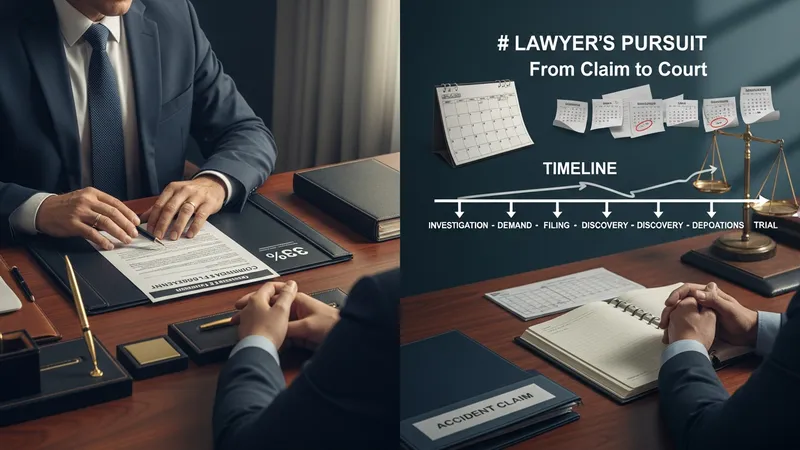
Fee arrangements for counsel in accident-related matters vary and are commonly structured to reflect case complexity and resources. Contingency fee agreements are often used in personal injury contexts, where the attorney’s fee is a percentage of any recovery; the exact percentage may vary and is typically described in a written agreement. Alternative arrangements, such as hourly billing or hybrid models, may be used when circumstances warrant. Counsel should explain expected client costs, including court fees, expert expenses, and administrative charges, as considerations rather than guarantees.
Case timelines can range from weeks for straightforward administrative settlements to several months or years when litigation becomes necessary. Early stages usually focus on investigation and demand preparation, while subsequent phases may involve formal filings, discovery, expert depositions, and potential trial. Many claims resolve during negotiation or at mediation, which can shorten timelines, but complex causation or disputed liability issues commonly extend the process. Counsel often discusses realistic timing expectations given the case facts and jurisdictional procedures.
Managing out-of-pocket expenses is an important practical topic. Some attorneys advance litigation-related costs on a client’s behalf, to be reimbursed from a recovery; others require clients to cover certain disbursements as they arise. Discussing how expenses will be handled and documented can help clients evaluate the financial implications of different procedural paths. Counsel typically presents these arrangements transparently as part of initial case intake and underlines that expense responsibilities vary by agreement.
Finally, statute of limitations and procedural deadlines are critical considerations that usually dictate early action. Missing filing deadlines can forfeit legal remedies, so counsel commonly identifies applicable limitations and recommends timely preservation steps. While each situation is fact-specific, understanding these timing constraints often shapes whether to prioritize settlement negotiation, pursue alternative dispute resolution, or prepare for court proceedings. Readers may use this information to better understand procedural pacing without interpreting it as prescriptive legal advice.