
When someone searches for local roofing services, they are often seeking an understanding of both the materials commonly used for roofs and the range of services that contractors provide. This concept covers how different roof coverings perform in varied climates, what routine and corrective services are typically available, and how homeowners or property managers can compare options based on durability, maintenance needs, and lifespan. The focus is informational: outlining the main material types, common service categories, and factors that may influence a contractor’s suggested approach.
Understanding this subject generally involves separating material characteristics from service scope. Materials differ by weight, installation method, and typical maintenance cycles, while service options include inspections, repairs, partial replacements, and full installations. Local contractors may specialize in certain materials or systems, and their service descriptions often list tasks such as flashing replacement, gutter work, and underlayment upgrades. This framing helps readers form a clearer picture of what to expect when evaluating local roofing assistance without making prescriptive choices.
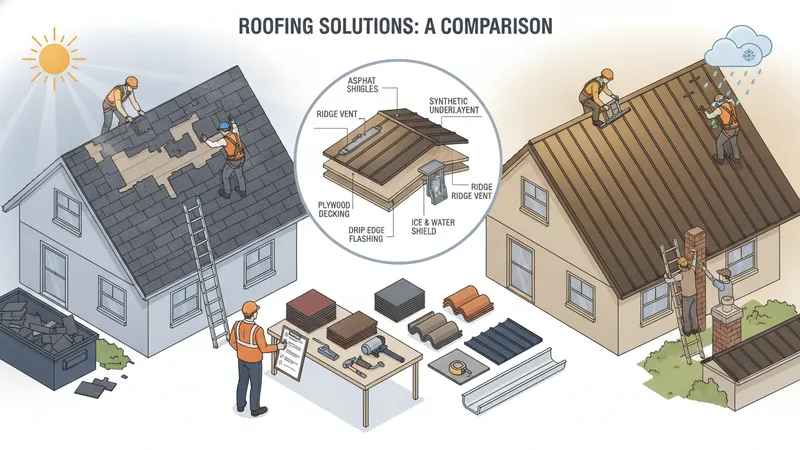
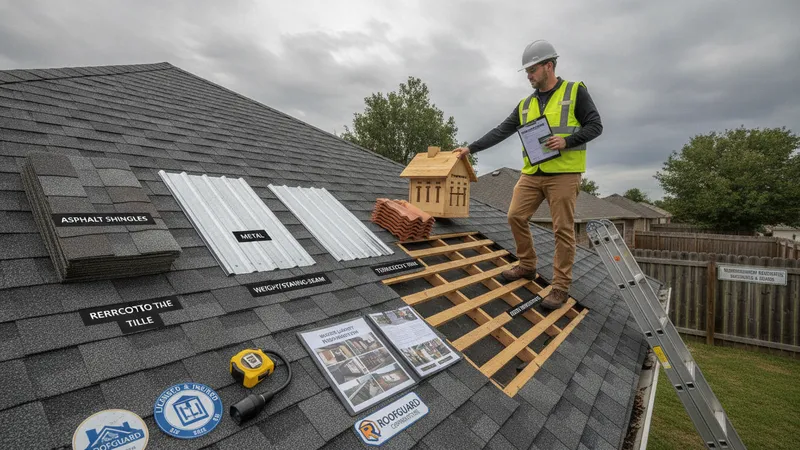
Comparing material categories often involves trade-offs rather than absolute advantages. For example, asphalt shingles may often cost less up front and can be installed more quickly on common roof shapes, while metal systems may typically offer longer nominal lifespans and different thermal or drainage characteristics. Tile or slate may be heavier and require structural consideration. Evaluations often account for climate, roof pitch, and expected maintenance cadence. These comparative points can help clarify why a particular roofing solution may be commonly recommended in one region and less common in another.
Service scope ranges from visual inspections to extensive reroofing. Routine inspections may identify flashing deterioration, shingle lift, or ponding on low slopes, and they may occur seasonally or after major weather events. Repair tasks can include patching membranes, replacing isolated shingles, or resealing penetrations. Replacement work typically involves removing old materials, assessing substrate condition, and installing new underlayment and finish roofing. Understanding these service categories helps in anticipating timelines, access needs, and the kinds of preparatory decisions that are often needed before work begins.
Material selection often involves practical considerations such as weight, compatibility with existing roof framing, and local climate resilience. Heavier materials like tile may require verification that the roof structure can carry additional loads. Membrane systems for flat roofs may require attention to drainage and seams to avoid recurring ponding. Insulation and ventilation choices may interact with material selection, as some coverings can trap heat more than others. These interactions typically influence both short-term performance and longer-term maintenance expectations.
Cost factors typically include material pricing, labor intensity, roof complexity, and access conditions. Simpler roof geometries with fewer penetrations usually have lower labor costs per square, while steep slopes, complex valleys, and constrained access can increase labor time and specialized safety measures. Warranties and the presence of existing damage may also affect overall scope. Cost estimates often vary by region and season, so they are best treated as indicative ranges rather than fixed figures.
In summary, this overview described how local roofing searches commonly center on matching material characteristics to available service options and practical constraints. The material types, service categories, and selection factors outlined above provide a framework for understanding what local contractors may describe when discussing a roof. The next sections examine practical components and considerations in more detail.
Different roofing materials tend to have distinct performance attributes that local contractors typically reference when assessing a project. Asphalt composition shingles often are noted for straightforward installation on pitched roofs and moderate replacement cycles. Metal roofing types, including standing seam and corrugated panels, can offer differing seam and fastener strategies that affect leak risk and thermal movement. Tile and slate usually require roof framing assessment due to additional dead load. Flat roof membranes—such as modified bitumen or single-ply systems—may require attention to slope and drainage to prevent ponding and accelerated wear.
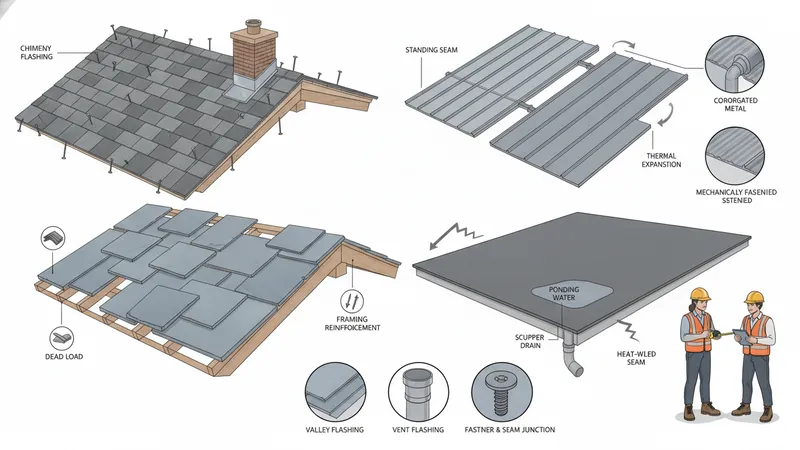
Installation approaches often vary by material and influence both cost and maintenance patterns. For example, asphalt shingles are usually layered over underlayment with nails and flashings, while metal panels may be mechanically fastened or clipped, and membranes are adhered, mechanically fastened, or heat-welded. Flashing details around chimneys, vents, and valleys typically matter across all systems and are common points for future leakage if not detailed properly. These material-specific installation characteristics commonly inform the scope that local service providers outline in estimates.
Environmental and climate factors may also shape material suitability and expected service rhythms. Materials that can handle repeated freeze-thaw cycles, ultraviolet exposure, or heavy precipitation often show different degradation patterns. For low-slope systems, ponding can accelerate seam failures, while in wind-prone areas, attachment methods and edge securement are frequent focal points during inspection. Local contractors often describe these climate-related considerations when discussing which materials may be more or less commonly used in an area.
When evaluating material performance, it may be helpful to consider lifecycle implications rather than single-point attributes. Lifespan estimates can vary with maintenance frequency: membranes may last longer when seams and flashings are regularly inspected; metal roofs may need periodic fastener or sealant attention; shingles can be sensitive to attic ventilation and substrate condition. These lifecycle perspectives often appear in contractor communications as considerations rather than definitive predictions, and they may influence decisions about inspection intervals and routine maintenance tasks.
Inspections typically focus on areas prone to wear: flashings, penetrations, valleys, ridge caps, and gutter interfaces. A routine visual inspection may identify missing or lifted shingles, cracked flashing, or evidence of water staining in the attic. For flat roofs, inspectors frequently check for ponding water, seam integrity, and membrane blistering. Inspections commonly lead to prioritized repair lists that separate immediate leak risks from items that can be monitored. Local contractors often use this separation to frame follow-up work in an informational way rather than making prescriptive statements about timing.
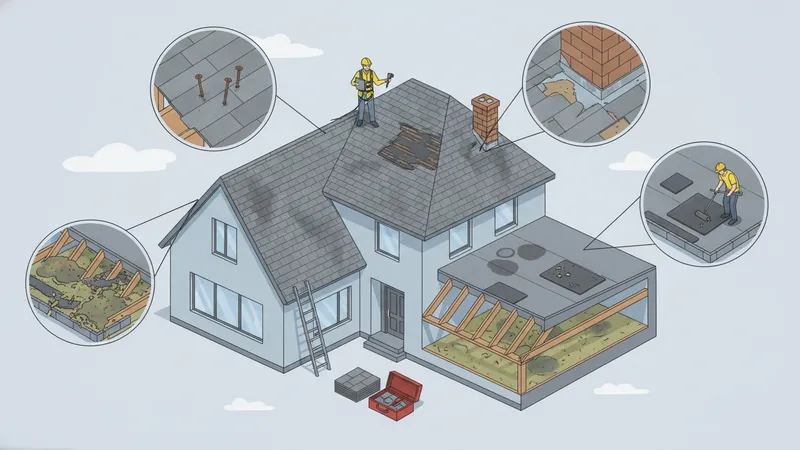
Common repair services include targeted shingle replacement, sealant renewal around flashings and penetrations, and localized membrane patching. Repair approaches often depend on the underlying cause: for example, recurrent membrane leaks may indicate drainage or substrate issues, while isolated shingle damage is often related to wind uplift or impact. Repair scope can also be influenced by material availability and compatibility—certain membranes or shingles may need matching products to maintain continuity of warranty or performance characteristics.
Repair frequency and likely maintenance needs typically vary by material and climate context. Shingle roofs in temperate climates may need spot repairs after wind events, while flat roofs may need more active seam monitoring in wet climates. Some repair tasks may often be performed incrementally to manage cost and disruption, whereas other situations could prompt a recommendation to address substrate or insulation deficiencies simultaneously to reduce repeat interventions. These distinctions often appear in contractor assessments as trade-offs rather than mandates.
Documentation from inspections can be useful for tracking recurring issues and informing longer-term decisions. Photos, notes on observed deterioration, and simple maintenance checklists may help property owners monitor trends over time. Such records commonly aid communication between owners and contractors and can clarify whether a problem is localized or indicative of systemic concerns. This documentation-first approach typically supports more measured planning for future maintenance or replacement work.
Full replacement projects generally begin with a condition assessment and may include removal of existing materials, substrate inspection, and any necessary structural repairs. Sequencing often involves addressing underlying issues—such as rotted decking or insufficient ventilation—before installing new underlayment and finish materials. For systems like tile or slate, sequencing may also include reinforcement of framing where required. Contractors commonly describe these steps as part of a logical workflow that reduces the likelihood of uncovering additional issues mid-project.
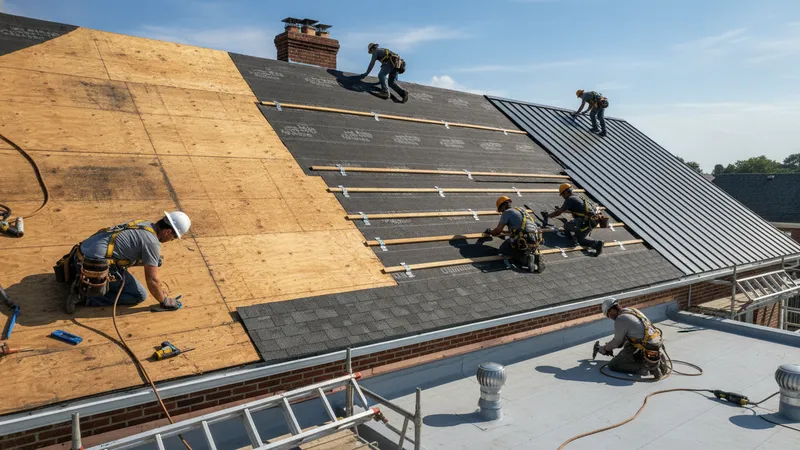
Installation specifics commonly differ by material: shingle installations usually involve starter courses, field application, and ridge cap details; metal installations require panel alignment, edge securement, and fastener strategies; membrane systems for low slopes may be heat-welded or fully adhered with attention to transitions. In each case, flashing integration around chimneys, vents, and roof-to-wall intersections is a recurring focus since improper flashing is a frequent cause of subsequent leaks. These task-level considerations often guide discussions about timing and sequencing.
Contractors may also note practical site considerations that influence installation approach and schedule. Access for equipment, staging of materials, and weather windows often affect timeline estimates. Roof complexity—such as multiple hips, valleys, and penetrations—can extend labor time and require more detailed flashing work. Temporary protection for interior spaces and trash handling strategies are additional logistical aspects commonly addressed during planning. Presenting these operational points helps clarify why certain installations may take longer or require additional coordination.
Post-installation items such as ventilation balancing, gutter integration, and removal of debris are often part of a complete installation scope. Proper attic ventilation and insulation alignment may influence long-term performance of the new roof covering. Gutter and downspout alignment with the new roof planes can affect drainage performance and reduce water exposure to wall systems. These integration details commonly appear as considerations in installation planning rather than prescriptive requirements.
Selecting an appropriate material typically involves balancing durability, weight, aesthetics, and maintenance expectations. Durability estimates may vary by manufacturer and by local climate patterns; therefore, material choice often reflects typical regional performance rather than universal claims. Weight considerations can influence whether structural reinforcement is recommended. Aesthetics and local building codes or neighborhood guidelines may also play a role. These selection factors are commonly described by contractors as considerations that can shape long-term upkeep and inspection schedules.
When evaluating contractors, it may be informative to review how they describe their service scope, warranty handling, and inspection follow-up. Neutral evidence such as past project examples, references, or clearly written scope documents can help clarify what tasks are included. License and insurance status may also be relevant practical factors in many jurisdictions. Asking how a contractor documents condition findings and proposed work tends to support clearer expectations without implying any endorsement of specific providers.
Cost-related considerations often include material choices, expected labor intensity, roof complexity, and site access. Estimates may be presented as ranges with explanations of what is included and what variables could alter the figure. For larger or older roofs, contractors commonly note the possibility of discovering additional issues once old materials are removed, and they may outline how such discoveries would be addressed. These transparent framing practices typically help property owners plan for contingencies in a measured way.
Finally, ongoing maintenance planning is frequently described as part of responsible roof ownership rather than an obligatory expense. Suggested inspection intervals, seasonal checks after major weather, and simple maintenance actions—such as clearing gutters—are commonly presented as considerations that may extend functional life. Framing these items as potential practices rather than requirements can assist in setting realistic expectations about how different materials and service options interact over time.