
Many modern telephone systems for small and medium-sized organisations use packet-switched networks rather than circuit-switched public telephone lines. These systems encode voice into data packets and transmit them over local area networks and the public Internet, combining voice with other communication services. For smaller organisations, such setups may replace or supplement legacy Private Branch Exchange (PBX) installations and often rely on a mix of on-premises devices and cloud-based control functions to handle call setup, routing, and voicemail.
At a high level, such installations typically include user endpoints, signalling elements, media gateways, network transport, and management interfaces. Endpoints can be dedicated hardware phones or software-based clients that run on desktops and mobile devices. Signalling protocols coordinate call setup and teardown, while media paths carry encoded audio. Management functions cover provisioning, analytics, and access control. System choices can vary by organisational size, existing infrastructure, and the degree of centralised versus hosted control that is preferred.

Endpoint choices influence administration and user experience. Hardware phones often provide physical buttons, dedicated speakerphones, and power-over-Ethernet options that may simplify desktop deployment, while softphone clients can reduce hardware cost and support remote working patterns. Both approaches typically support common signaling protocols, though softphones may introduce additional considerations for device management and security. Organisations often weigh the trade-offs between device-level control and the flexibility of software endpoints when planning deployments.
Signalling and media handling are central to interoperability and quality. Session Initiation Protocol (SIP) is commonly used for call setup and control, while various codecs encode audio for transport. Codec selection can affect bandwidth consumption and audio quality; for example, some codecs use less bandwidth at the cost of processing or slight quality differences. Network elements such as gateways, session border controllers, and media servers often mediate between internal systems and external carriers, translating signalling and handling any required call routing or protocol conversion.
Call routing and management features may include direct inward dial, hunt groups, auto attendants, and programmable call flows. Systems often provide configurable rules that can route calls based on time of day, caller identity, or queue conditions. Voicemail and message handling typically integrate with email or unified messaging platforms to provide transcripts, attachments, or retrieval via softphones. Conferencing and presence features frequently extend basic telephony with multi-party audio, screen sharing, and message threading, which can be useful for teams that collaborate across locations.
Network readiness and security are practical considerations for reliable operation. Quality of Service (QoS) practices on local networks can prioritise voice packets to reduce latency and jitter. Encryption and access controls may be applied to signalling and media to reduce interception risks. Provisioning and administration tools can simplify ongoing management, including user onboarding and firmware updates. The next sections examine practical components and considerations in more detail.
Endpoints and provisioning tools form the visible surface of a communication system for smaller organisations. Endpoints may include desk phones, softphone applications, and mobile clients; provisioning systems automate user creation and profile distribution. For call control, organisations may choose a locally hosted PBX application or a cloud-based control plane. Hosted control can reduce on-site maintenance, while on-premises software may allow tighter integration with local systems. Media gateways and SIP trunks often provide interconnection to external telephone networks and may be provisioned per channel or per concurrent call.
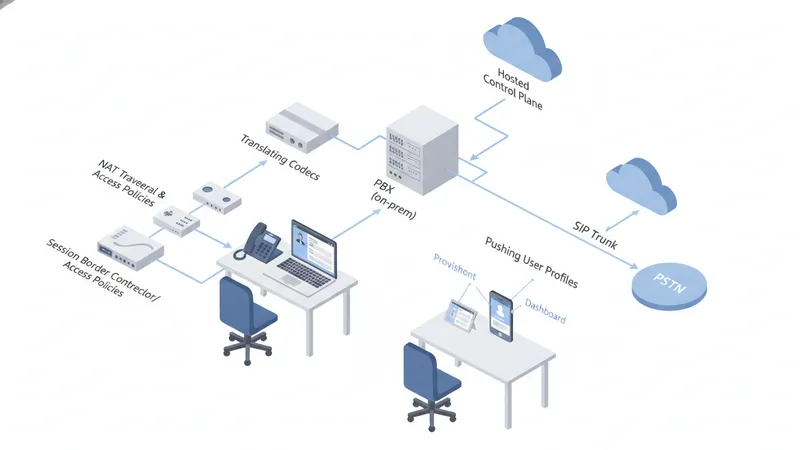
Hardware and software components interact with the local network and Internet to carry voice traffic. Media gateways handle protocol or codec translation when calls cross domain boundaries. Session border controllers can be deployed to manage signalling and media edge security, including NAT traversal and access policies. Some vendors combine multiple functions in a single appliance suitable for small sites, which may simplify initial deployments but can require careful capacity planning if call volumes grow.
Operational cost factors typically include per-user licensing for hosted services, concurrency-based charges for SIP trunks, and one-time capital costs for hardware phones or on-premises servers. Monthly per-user service fees may vary widely depending on included features, and per-channel trunking fees can affect peak-hour costs. Organisations often model expected call concurrency and growth to estimate capacity needs before selecting trunk bandwidth or on-premises hardware to avoid under-provisioning during busy periods.
Interoperability and standards support are central to long-term maintainability. Widespread adoption of SIP and RTP for signalling and media means many endpoints and providers can interoperate, but vendor-specific extensions or proprietary features can complicate migrations. When planning, teams may review supported codecs, signalling extensions, and configuration options to ensure devices and services can be integrated without extensive customisation. This assessment often reduces unforeseen integration work during rollout.
Signalling protocols like SIP govern how calls are established, modified, and terminated. SIP messages carry headers that identify endpoints, handle authentication, and convey session parameters. Real-time Transport Protocol (RTP) typically transports media once a session is established, and Secure RTP (SRTP) can add encryption for media streams. The choice of protocols and their secure variants may affect device compatibility and computational load on endpoints and gateways, so administrators often check processor and battery implications for mobile and embedded devices.
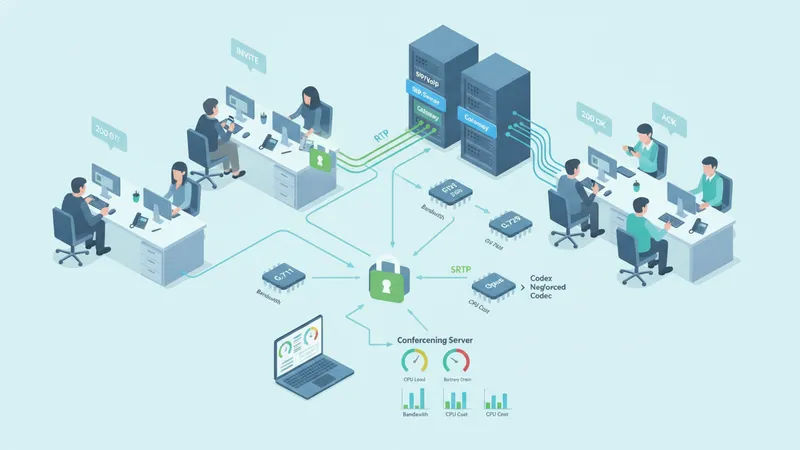
Codecs determine how audio is encoded and compressed for transport. Common examples include G.711 for uncompressed audio and more compressed codecs such as G.729 or Opus that reduce bandwidth at the cost of additional processing. Selection of codecs often balances available network bandwidth, expected audio quality, and licensing constraints. Some deployments negotiate codec preferences dynamically based on endpoint capabilities, while others enforce a common codec to simplify media handling through gateways and conferencing servers.
Call management features frequently used in small and medium organisations include auto attendants, IVR menus, hunt groups, voicemail-to-email, and call queues. Auto attendants route callers with menu prompts, while IVR systems can collect inputs to guide routing logic. Queuing systems may provide estimated wait behaviours and overflow rules that divert calls as needed. These features are often configurable through an administrative interface and may integrate with presence information or business calendars to alter call flows according to availability.
Conferencing and messaging components extend basic telephony by linking multiple participants and combining synchronous and asynchronous communication. Conferencing servers may provide audio bridges, participant controls, and optional recording. Messaging elements can synchronise voice messages with email or team collaboration tools so that messages may be retrieved on different devices. When selecting these features, teams typically consider scalability, concurrent participant limits, and any storage or compliance implications for recording and message retention.
Protecting signalling and media traffic is an important operational consideration. Transport layer security for SIP (SIP over TLS) and SRTP for media encryption are common controls that may reduce the risk of eavesdropping. Session border controllers can perform topology hiding, protocol normalization, and rate limiting, which may reduce exposure to certain classes of attacks. Access controls such as strong authentication for administrative interfaces and role-based permissions for provisioning tools can help limit the impact of compromised credentials.
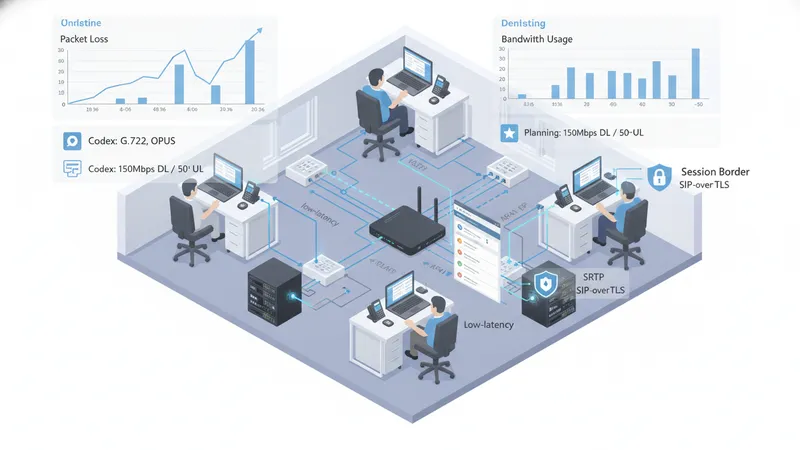
Network-level measures often include VLAN segmentation to separate voice and data traffic, and Quality of Service configurations to prioritise voice packets across switches and routers. These steps may reduce latency and jitter under mixed-traffic conditions. Bandwidth planning is also relevant: organisations commonly estimate per-call bandwidth for chosen codecs, multiply by expected concurrency, and add headroom for growth. Network monitoring tools can then provide visibility into packet loss, latency, and jitter trends that may affect perceived call quality.
Threat vectors specific to IP telephony include toll fraud, denial-of-service attacks, and SIP enumeration. Safeguards may include limiting tolls to authorised destination sets, using access control lists on SIP servers, and monitoring call patterns for anomalous behaviour that may indicate misuse. Regular firmware and software updates for endpoints and servers can address known vulnerabilities, while logging and alerting systems may assist in early detection of abusive activity. Security measures may introduce operational complexity, so teams often balance protective depth with manageability.
Reliability and resilience can be improved through redundancy and failover design. Redundant SIP trunks, geographically separate control planes for hosted services, or backup PSTN gateways for emergency calling are examples of approaches that may reduce single points of failure. Backup and configuration export routines for on-premises systems can shorten recovery time after a failure. Careful planning for power, network, and service continuity often pays off when maintaining acceptable availability for organisational communications.
Administrative tools provide user provisioning, device configuration, and policy enforcement for a communication system. Centralised management consoles often allow bulk onboarding of users, template-based phone provisioning, and firmware distribution. Role-based access to these consoles may help segregate duties between IT and telecommunications administrators. Regular audits of user accounts, device inventories, and configuration baselines can reduce configuration drift and support predictable operation as staff and needs change.

Analytics and reporting capabilities can offer insights into usage patterns and operational performance. Common metrics include total call volume, average call duration, peak concurrency, and call quality indicators like jitter and packet loss. These metrics may inform capacity planning and help pinpoint network segments or times with recurrent quality issues. Some systems may export logs and call detail records (CDRs) for integration with external analytics tools or business intelligence platforms for deeper longitudinal analysis.
Integration with business applications such as customer relationship management (CRM) systems and scheduling tools can streamline workflows. Examples include click-to-dial from customer records, automated call logging, and screen-pop functionality during inbound calls. Such integrations typically rely on APIs or middleware connectors and may require careful mapping of identifiers and event triggers. Teams often evaluate available APIs and the level of native integration offered when assessing platforms for operational fit.
Operational considerations for ongoing support include update management, backup schedules, and vendor or community support channels for troubleshooting. Change management processes for configuration updates and feature rollouts can reduce accidental disruptions. As organisations scale, administrators may consider scripted provisioning, automated monitoring, and documented incident procedures to maintain service levels. Regular review of logs and periodic capacity reassessments can help keep the environment aligned with organisational communication needs.