
Personal alert systems for seniors are technologies and services designed to let an individual request help after a fall or during other emergencies, both inside the home and when away from it. These systems typically combine a wearable component (such as a pendant, wristband, or clip), sensors that may detect sudden movement patterns, and a communication pathway that connects the user to responders or designated contacts. The goal is to shorten the time between an incident and a response by providing a straightforward means to signal for assistance and to supply location or context when available.
Functionally, these systems vary by how they detect incidents and how they reach help. Some devices rely on a manual emergency button that the wearer presses; others include automatic fall-detection algorithms based on accelerometers and gyroscopes. Communication can use a dedicated home base station, a cellular radio inside the wearable, or a paired smartphone as the relay. Response pathways may send an alert to a monitoring service, to a list of personal contacts, or to local emergency services depending on configuration and local regulations.
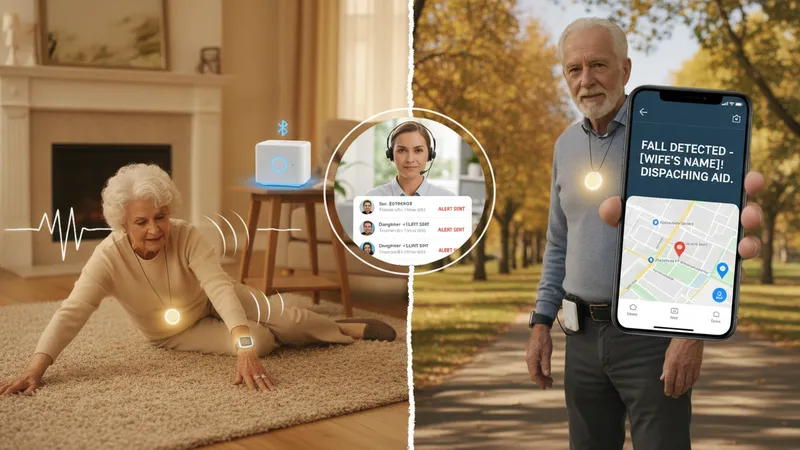
Comparisons among these example approaches often center on detection method, range, and dependence on other equipment. Manual-button systems typically have simple operation and may be reliable when the user can press the device, but they require the wearer to be conscious and reachable. Automatic fall detection may catch incidents when the user cannot press a button, yet sensitivity settings and algorithm quality can affect false alarms; adjustments may be needed to balance missed events and false positives. Smartphone-based solutions provide GPS location outdoors but rely on cellular or data connectivity and the user keeping the phone on their person.
Range and environment are important technical considerations. Home base stations can work across much of a residence using low-power radio, but their effective distance depends on floor plan and building materials. Wearables with built-in cellular radios extend outdoor coverage but depend on cellular network availability and signal strength. Bluetooth-reliant devices typically need to remain close to a paired phone or base unit. In many contexts, users combine devices to cover both indoor convenience and outdoor mobility.
Monitoring and response pathways differ by model and service. Some setups route alerts to a professional monitoring center that follows an escalation protocol—attempting two-way voice communication and contacting emergency services when necessary—while others notify personal emergency contacts first. Privacy and consent are relevant: systems that share continuous location or health-related motion data should have clear account settings and consent options. Users and caregivers often weigh preferences about who receives alerts and how escalation should proceed.
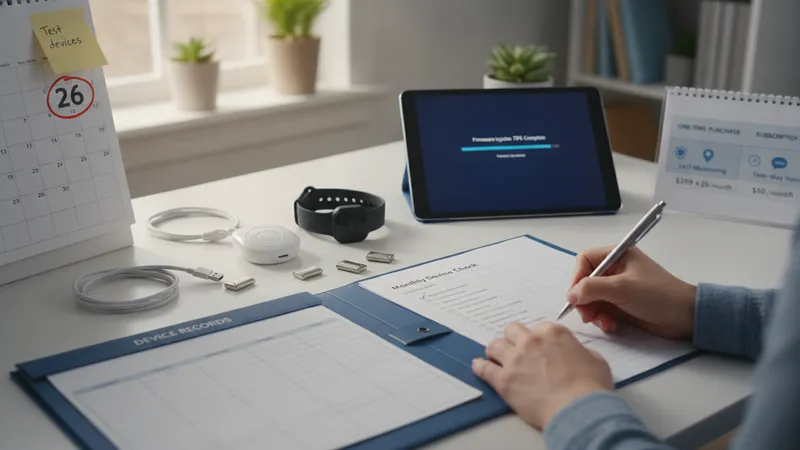
Maintenance, testing, and reliability are routine practical matters. Battery life varies by device type and usage pattern; many wearables include low-battery alerts and recommend periodic testing. Firmware updates and occasional device resets may be necessary to maintain accurate detection and reliable communication. Training the user and household members on device operation, periodic drills for test alerts, and confirming contact lists can support consistent performance without assuming infallible behavior by any single component.
In summary, personal alert systems for seniors combine wearables, sensors, communications, and response workflows to provide a means of requesting help after a fall or other emergency. Choices among manual-button devices, automatic fall-detection wearables, and smartphone-based solutions involve trade-offs in detection accuracy, range, dependency on other equipment, and the route by which alerts are delivered. The next sections examine practical components and considerations in more detail.
Wearable pendants and wristbands typically serve as the simplest type of personal alert: a button press sends a signal through a home base unit or paired phone to notify chosen contacts. These units often prioritize ease of use and long battery life. Automatic fall-detection wearables use motion sensors and onboard algorithms to detect signature patterns associated with falls; they may trigger alerts automatically but can generate false triggers depending on sensitivity and the wearer’s activity profile. Smartphone-based solutions rely on the phone’s sensors and GPS to provide location and may include one-touch interfaces for alerts. Hybrid systems combine a home base for indoor coverage with cellular or smartphone links for outdoor mobility.
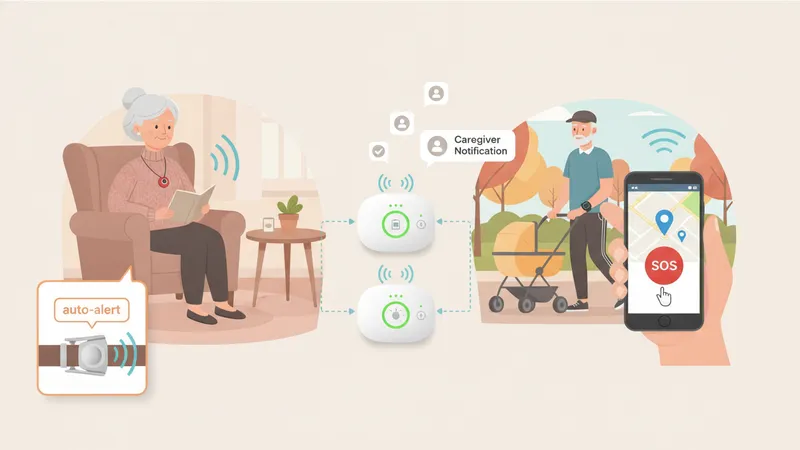
Placement and design influence effectiveness. Neck pendants and chest-level clips often register button presses and are less likely to be obstructed by clothing, while wrist-worn devices may be convenient for those accustomed to watches. Motion-sensor algorithms generally perform better when tuned to the individual’s typical movement patterns; professional configuration or user-adjustable sensitivity may reduce unnecessary alerts. When considering alternatives, it is informative to think about daily routines: devices that match where a person typically carries items are more likely to be available at an incident moment.
Power and charging patterns are practical differentiators. Some wearables use replaceable batteries that may last months, while rechargeable units may need nightly charging similar to a smartphone. Home base stations often plug into mains power with battery backup for brief outages. For outdoor use, cellular-enabled wearables can operate independently of a phone but depend on network coverage. Regularly checking battery indications and scheduling routine charging or battery replacement is a common maintenance consideration to preserve readiness.
Interoperability and accessory ecosystems can affect long-term usability. Certain devices work only with a particular provider’s monitoring service; others offer open interfaces or optional pairing with a caregiver’s smartphone. For users who travel or who split time between home and community settings, solutions that adapt—by switching between base-station and cellular modes or by integrating with commonly used smartphones—may provide more continuous protection. These factors often shape practical decision-making more than raw device specifications alone.
Communication paths include local radio to a base station, Bluetooth to a paired smartphone, and built-in cellular modems that connect directly to a mobile network. Base stations are useful for in-home coverage but do not extend outdoors; Bluetooth solutions are limited by typical Bluetooth range and require the phone to be present and connected. Cellular-enabled wearables provide broader geographic coverage when a mobile network is available, but signal strength varies with location and carrier. Understanding the primary environments where the person spends time helps determine which connectivity model may be most appropriate.
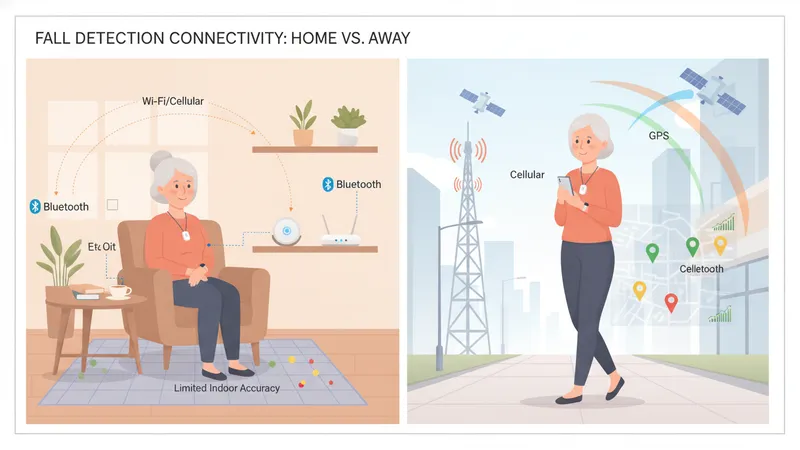
Location reporting varies by method and environment. GPS generally supplies better outdoor location accuracy but can be unreliable inside buildings or in dense urban areas with obstructed sky view. Assisted GPS and cell-tower triangulation can improve location estimates when pure GPS signals are weak, though accuracy may be degraded. Bluetooth beacons or Wi‑Fi-based indoor location systems can support finer indoor positioning in some settings, but these require additional infrastructure. For outdoor activities such as walking or errands, devices that include GPS or that can transmit a phone’s location often provide more actionable location information.
Latency and message reliability are practical concerns. Cellular messages and data can be delayed during network congestion or in areas with limited coverage. Systems that provide two-way voice through the wearable or base station allow for immediate verbal assessment, which can reduce the need for rapid location precision in some cases. For critical incidents, redundancy—such as a wearable with cellular plus the option to notify personal contacts who can use phone-based location sharing—may increase the chances that appropriate help arrives.
Privacy and data handling are connected to connectivity choices. Devices that regularly transmit continuous location or high-frequency motion data create a data footprint that may be stored by service providers. Users and caregivers benefit from reviewing privacy policies and data retention practices to understand who may access location and event logs, how long information is retained, and what consent options exist. These considerations are often balanced against the practical benefits of improved location reporting when an incident occurs.
Response models typically fall into professional monitoring and direct-contact approaches. Professional monitoring services receive alerts and follow scripted escalation procedures that may include two-way voice attempts, contacting emergency services, and notifying designated caregivers. Direct-contact setups notify family or friends first, leaving escalation decisions to them. Both approaches have trade-offs: monitored services may offer consistent availability while direct-contact models rely on the responsiveness of personal networks. The choice often depends on preferences about professional oversight versus personal involvement.
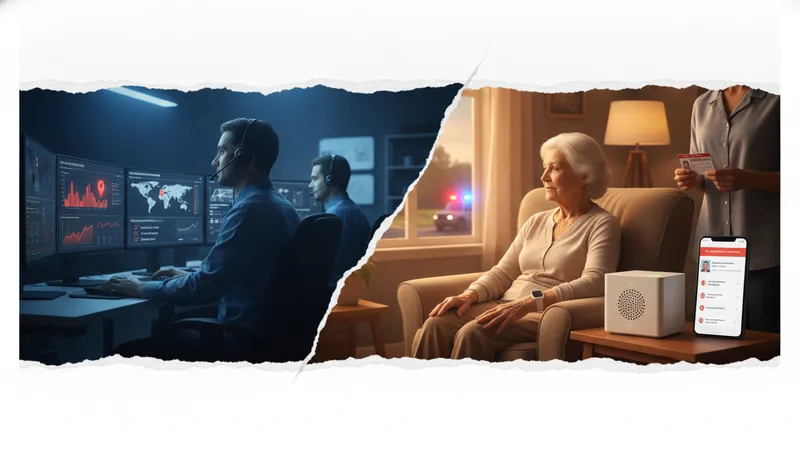
Two-way communication capability is a significant functional element. Many base stations include a speaker and microphone to enable an initial voice exchange with the wearer; cellular-enabled wearables may also include small speakers. Two-way voice can clarify the situation quickly and may reduce unnecessary dispatching of emergency responders. When voice is not possible—if the person is unconscious or severely injured—automated alerts with location data and previously supplied medical or contact information aid responders and contacts in decision-making.
Escalation procedures and contact lists are configurable in many systems. Common practices include listing multiple emergency contacts, establishing an order for whom to contact first, and identifying local emergency services for direct notification where permitted. Some services allow custom messages or medical profile information to be attached to an alert to inform responders. Reviewing and updating contact information periodically helps ensure the right people are reached when an alert occurs.
Legal and regulatory environments can influence how alerts reach official emergency services. In some regions, providers may be able to directly contact emergency dispatch on behalf of a user, while in others, monitoring services must work through personal contacts. Understanding local practices and the provider’s role clarifies expectations for response and potential limitations. For users and caregivers, setting clear protocols that match local norms can help align system behavior with practical needs.
Routine maintenance supports reliable operation. Recommended practices include testing devices at prescribed intervals, checking battery charge or replacement schedules, and confirming firmware updates are applied where applicable. Wearable positioning and fit should be checked so that buttons remain reachable and sensors are not obstructed. Caregivers often find that scheduling a monthly device check and documenting maintenance steps helps maintain readiness without overcomplicating routines.
Cost structures vary across device and service combinations. Some systems function with a one-time hardware purchase and optional monitoring subscription; others bundle hardware and monitoring into a recurring fee. Fees may be structured monthly or annually and may depend on included features such as 24/7 monitoring, GPS capability, or two-way voice. Because pricing patterns differ by provider and region, users typically evaluate both upfront and ongoing costs and match them to the level of coverage and response model they prefer.
Use cases illustrate how different people may prioritize features. For those who spend most time at home, a simple base-station plus pendant with two-way voice may meet needs. Individuals who are active outdoors or who split time between multiple residences may prioritize GPS-enabled wearables or smartphone-based solutions for continuous location. For people with higher fall risk who live alone, automatic fall detection combined with professional monitoring may be considered as an additional layer, recognizing that automatic detection has sensitivity trade-offs and cannot detect all incidents.
Adoption considerations include training and acceptance. Familiarity with the device, routine testing, and inclusion of the person in decisions about contacts and escalation often improve consistent use. Caregivers and users may review privacy settings, discuss preferred response paths, and practice test alerts together to build confidence. Thoughtful selection of features aligned with daily life and realistic expectations about device capabilities helps set an appropriate balance between preparedness and practical use.