
Digital clinical record platforms are software systems designed to capture, store, and present patient-related information in structured electronic form. They typically organize demographic details, documented encounters, problem lists, allergies, immunizations, and care plans so authorized clinicians can access and review longitudinal patient data. These platforms often combine user interfaces for entering notes with back-end databases that maintain versioned histories and audit logs. The goal in practice is to replace or supplement paper charts with an organized electronic record that supports routine clinical tasks such as documentation, ordering, and care coordination.
Such platforms may include modules for clinical documentation, medication ordering, diagnostic result management, scheduling, and administrative reporting. Data is often presented as discrete fields and narrative text, and systems can support templates, structured forms, and scanned documents. Many implementations also incorporate access controls and encryption to protect data at rest and in transit. Vendors and implementers frequently design workflows to align with clinical roles so that physicians, nurses, and allied staff see relevant information in context during patient encounters.
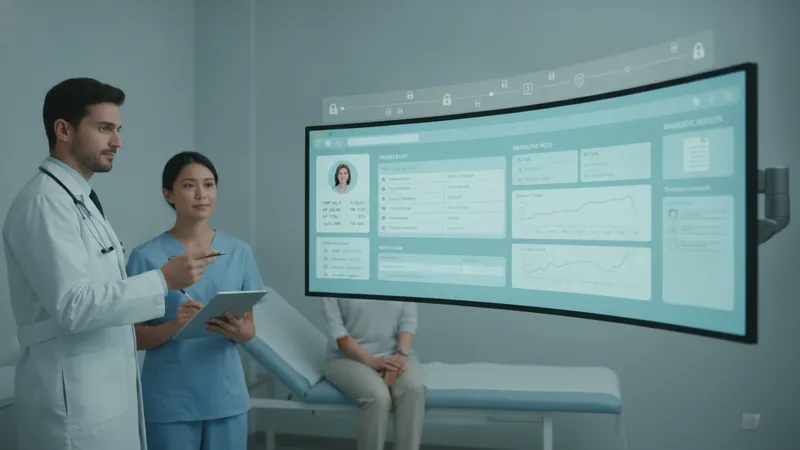
Clinical documentation modules often balance structured data entry with narrative text. Structured fields can support decision support, reporting, and coding, while free-text notes capture nuanced clinical reasoning. Implementations may include problem-oriented templates, encounter-specific forms, and specialty-focused note types. Designers commonly allow customization so teams can adapt templates to local workflows, though customization can increase implementation complexity. Attention to template design typically helps reduce duplicate documentation and may streamline data extraction for quality measurement, while careful training can reduce documentation burden on clinicians.
Medication management functions commonly include electronic prescribing, medication reconciliation tools, and basic drug interaction alerts. These features may improve accuracy of active medication lists and support safer transitions of care. Systems often integrate with pharmacy interfaces to transmit prescriptions and may record administration events for inpatient settings. Users should note that alert fatigue can arise when decision support is poorly tuned, so many organizations configure thresholds and suppression rules to focus on clinically relevant warnings rather than every possible interaction.
Laboratory and diagnostic result management usually relies on standardized interfaces and terminology to present results promptly. Many systems incorporate trend charts and result flagging to help clinicians identify abnormal values over time. Integration with laboratory information systems and picture archiving systems often uses technical standards that facilitate automated transfer of results. Where interfaces are not available, staff may use manual entry or scanned reports, which can limit discrete-data availability for reporting and decision support.
Administrative functions such as scheduling, billing integration, and patient communications are frequently bundled with clinical modules or offered as interoperable components. Scheduling tools may support appointment rules, reminders, and resource allocation. Billing-related interfaces often map clinical documentation to billing codes and transmit claims to payers, which can reduce duplicate entry but may require careful mapping and validation. Patient-facing features, such as portals for secure messaging and result access, may support engagement but typically require workflow changes to manage incoming communications effectively.
In summary, these software platforms bring multiple components together to store clinical data, support medication and diagnostic workflows, and connect administrative processes. Implementations may vary in modular structure, customization, and interface support; therefore planning tends to focus on matching system capabilities to clinical workflows, data exchange needs, and privacy requirements. The next sections examine practical components and considerations in more detail.
Clinical documentation components center on how encounters, histories, and plans are captured and retrieved. Systems may present problem lists, medication lists, past encounters, and progress notes in a consolidated view that supports continuity of care. Structured data fields can enable automated quality reporting and populate registries, while narrative notes preserve clinician reasoning. Common considerations include template design, version control for notes, and role-based access to editable fields. Organizations often monitor documentation completeness and may provide training or peer review to encourage consistent use of templates and proper coding practices.
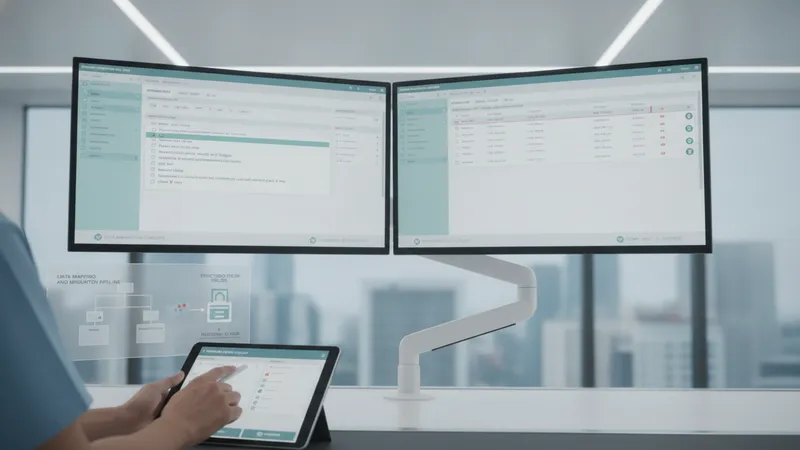
Data provenance and auditability are central to record management. Systems usually record timestamps, authorship, and edits so reviewers can trace changes over time. This can be important for compliance, quality assurance, and medico-legal documentation. Record retention policies and archival workflows may dictate how long historical records remain active and how legacy data is displayed. When migrating from older systems, teams often perform data mapping and validation to ensure chart continuity, acknowledging that some legacy content may remain unstructured or require manual reconciliation.
Usability considerations often influence how clinicians interact with documentation tools. Interface layout, default templates, and shortcut tools may reduce the time needed to complete notes, though poorly aligned templates can lead to redundant entries. Many teams pilot template variations with representative users to balance thoroughness and efficiency. Documentation workflows that align with clinical tasks—such as point-of-care charting during an encounter or post-encounter summary completion—may improve completeness and timeliness without introducing excessive administrative burden.
Privacy and access control are integral to record management design. Systems typically offer role-based permissions, segmented access to sensitive information, and encryption for stored data. Consent management and limited-access mechanisms for sensitive conditions may be supported in some implementations. Administrators often develop policies about who can view, edit, or export elements of the record, and audit logs help demonstrate adherence to those policies over time. These governance measures may be paired with staff training on appropriate use and confidentiality.
Medication management modules typically combine medication lists, computerized provider order entry (CPOE), and e-prescribing capabilities. These components can streamline the process of placing orders, communicating with pharmacies, and documenting administrations. Systems may include formulary references and basic interaction checks, and some incorporate dosing calculators for specialty areas. When integrated with inventory or pharmacy systems, medication modules can support dispensing workflows and reconciliation across care settings. Implementation teams often evaluate the balance between alert sensitivity and clinical relevance to reduce unnecessary interruption to clinicians.

Medication reconciliation workflows are frequently addressed to reduce discrepancies during transitions of care. Systems may provide reconciliation screens that present pre-admission, inpatient, and discharge lists side by side for review. Staff may be guided through stepwise edits to confirm active medications, note discontinued therapies, and document patient-reported over-the-counter or supplement use. Effective reconciliation processes often rely on clear role assignments and communication among clinicians, pharmacists, and the patient or caregiver to improve accuracy.
Integration with external pharmacy systems and e-prescribing networks is a common interoperability consideration. Many vendors support standard messaging formats for prescription transmission, but network participation and regional pharmacy connectivity can vary. Where integration exists, transmission confirmation and prescription status tracking can reduce manual follow-up. Organizations planning deployment often inventory local pharmacy partners and verify technical compatibility to avoid delays in patient access to prescribed therapies.
Safety features such as allergy checks, duplicate therapy alerts, and weight-based dosing prompts may be present and configurable. To manage alert fatigue, implementers may tune thresholds, prioritize high-severity warnings, and allow user feedback mechanisms to refine rules. Monitoring usage patterns and override rates can inform iterative adjustments. These measures are typically framed as ongoing optimization rather than a one-time configuration task, with periodic reviews recommended to maintain clinical relevance.
Interoperability features focus on sharing patient data across systems using technical standards and agreed semantics. Common approaches include exchange of messages or documents through standardized formats and APIs; these can enable transfer of lab results, discharge summaries, and medication histories. Implementations may use widely accepted standards to improve compatibility. Data mapping and terminology alignment are often required to ensure that concepts like laboratory test names or problem codes carry consistent meaning across systems and organizations.

Reporting capabilities typically use both structured and unstructured data to generate clinical, operational, and regulatory reports. Systems may support configurable dashboards for metrics such as encounter volumes, test utilization, and adherence to care processes. Extract-transform-load (ETL) processes and data warehouses are often used when complex analyses are needed. Teams commonly validate report outputs against source records to confirm accuracy and may document data lineage to address discrepancies between operational views and analytical datasets.
Health information exchange (HIE) and secure messaging mechanisms can extend data sharing beyond a single organization. Participation in regional exchanges or use of direct secure messaging protocols can facilitate transitions of care and referrals. Where standards-based APIs are supported, patient-facing applications may retrieve portions of the record for portal displays. However, privacy controls and consent management remain important considerations when enabling external access to portions of patient data.
Governance and data quality processes support reliable exchange and reporting. Organizations often define data dictionaries, coding standards, and validation rules to reduce variability. Regular audits and reconciliation checks may identify mapping errors or missing values. These governance activities typically aim to support clinical decision-making, quality measurement, and population health initiatives while preserving data integrity and respecting privacy constraints.
Administrative modules often include appointment scheduling, resource management, and patient registration functions. Scheduling tools may support recurring appointments, room and equipment allocation, and waitlist management. Effective scheduling typically requires configuration to reflect a facility’s resource constraints and visit types, and organizations commonly create rules for booking lead times and visit durations. Integrating scheduling with clinical workflows can reduce double-booking and improve patient flow when calendars reflect real-world constraints.
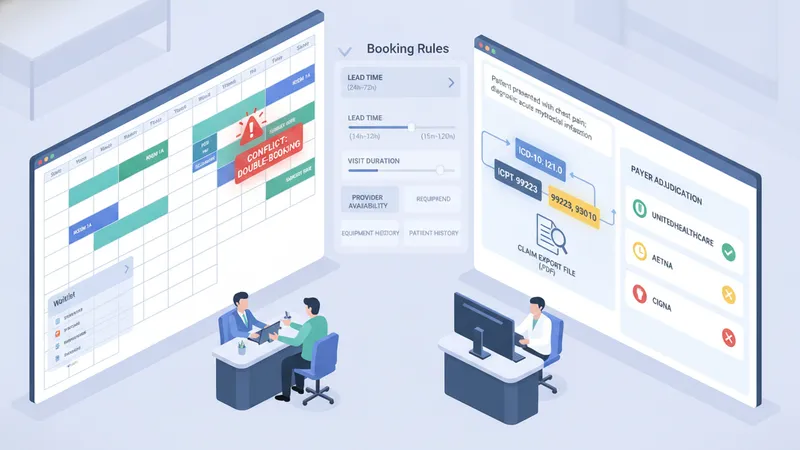
Billing integration connects coded clinical documentation to billing systems to support charge capture and claims submission. Systems may map clinical encounters to billing codes, generate claims files, and track payer adjudication status. Accurate mapping and validation of coding rules can reduce denials and rework. Organizations commonly maintain separate workflows for clinical documentation and billing review to ensure that clinical notes reflect services delivered while billing entries adhere to payer policies and coding guidelines.
Patient engagement features such as secure messaging, appointment reminders, and portal access are frequently linked to administrative workflows. Secure portals may allow patients to view parts of their record, request appointments, and complete pre-visit forms. Implementers often assess how incoming messages will be triaged and who will respond, recognizing that enabling patient access tends to shift some administrative and clinical workload and may require staffing adjustments and clear response-time expectations.
Performance monitoring and operational reporting support continuous improvement of administrative processes. Dashboards for no-show rates, average scheduling lead time, and billing denial rates may help teams identify bottlenecks. Organizations often apply iterative changes and monitor metrics before and after workflow adjustments. These monitoring activities are typically presented as part of routine operational governance rather than prescriptive mandates, allowing teams to prioritize improvements that align with local goals and constraints.