
Automated resume generation tools are software systems that assist with composing and formatting professional résumés or curriculum vitae. These systems commonly combine pattern recognition, predefined templates, and natural language generation to extract relevant information from a user’s input and assemble a structured document. Typical functions include parsing existing documents, suggesting phrasing for responsibilities and achievements, and organizing sections such as work history, education, and skills. The goal is to reduce manual formatting and to present information in a clear sequence that recruiters or automated screening systems can evaluate.
These systems may analyze job descriptions to suggest relevant keywords, propose section orders that reflect career priorities, and offer variant layouts for differing application contexts. Some use machine-learned models to recommend skills that match described tasks, while others focus on consistent typography and spacing for print and digital delivery. Limitations often relate to the quality of user-provided input and the extent to which templates fit distinct career paths; outcomes may require human editing to meet niche or highly technical role expectations.

Different products implement distinct approaches: template-driven editors assemble user entries into fixed layouts, while generative systems may produce new phrasing based on brief prompts. Template-driven solutions often provide predictable file structures that may be easier for applicant tracking systems (ATS) to parse, whereas generative tools can suggest more expressive achievement statements but may require manual refinement. When evaluating outputs, users commonly check for consistency in tense, quantifiable metrics where relevant, and alignment between stated skills and described duties.
Keyword matching and job description analysis are frequent capabilities. Systems may scan a target role’s description and identify recurring terms to emphasize in a résumé; such matching can make documents more discoverable in automated screens but can also introduce repetitive phrasing if applied without judgment. Many platforms allow users to compare a résumé against a sample description and receive a similarity score or highlight missing keywords, which can be used as a diagnostic rather than a definitive measure of suitability for a specific posting.
Formatting and export options vary and can affect downstream compatibility. Common export formats include PDF and plain text; some platforms also generate Word documents. Choice of layout influences how content is read by recruiters and parsing software: for example, multi-column designs may appear attractive on-screen but can confuse simple parsers. Users often balance aesthetics with machine readability by selecting templates that maintain linear section order and avoid excessive graphical elements that impede text extraction.
Data handling and privacy considerations are relevant when using automated résumé services. Providers may retain submitted content to improve models or to provide template autosave, so data retention policies and export controls are important to review. When entering sensitive information—such as dates of birth or identification numbers—users may prefer to omit or redact those fields. Platform privacy statements typically outline whether inputs are used to train language models and whether personal data is transmitted to third-party analytics services.
In summary, automated résumé generators combine template management, keyword analysis, and language assistance to accelerate document creation while leaving room for user editing. Outputs may often require human review for specificity, quantifiable detail, and alignment with a particular role. The next sections examine practical components and considerations in more detail.
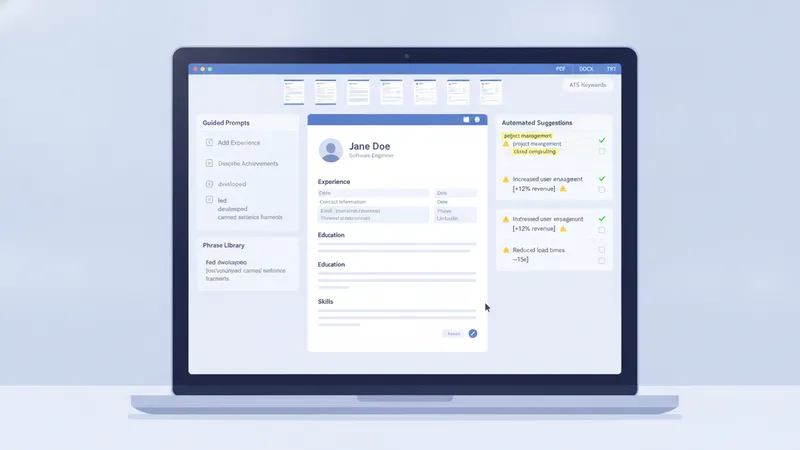
Feature sets across résumé automation tools commonly include guided prompts, phrase libraries, and export controls. Guided prompts may walk users through role descriptions and responsibilities, while phrase libraries offer common sentence structures and action verbs that can be adapted. Export controls typically allow selection of PDF, DOCX, or plain text formats. Some systems integrate job-description analysis to surface relevant keywords. When assessing features, consider whether the tool supports structured contact and dates, customizable headings, and the ability to edit generated text directly rather than only through prefilled fields.
Automated phrasing and template selection are distinct but related components. Template selection determines layout and visual hierarchy, and may affect how applicant tracking systems parse a résumé. Automated phrasing uses pattern-based or model-based generation to suggest achievement statements; model-based suggestions may include inferred metrics but can also invent non-verified claims if user input is sparse. Because of this, many workflows combine automated suggestion with manual validation, enabling users to refine wording and ensure factual accuracy before export.
Job-description analysis components often rely on keyword extraction and frequency analysis. Systems may highlight nouns and verbs that recur in the description and recommend emphasizing matching skills and terms. This function typically aims to increase alignment between the résumé and an employer’s stated priorities, but reliance on surface-term matching can overlook contextual fit. A cautious approach is to treat highlighted terms as prompts to reflect relevant experience rather than direct inserts that risk over-optimization or unnatural phrasing.
Integration points such as LinkedIn imports, cloud storage, and ATS upload features can streamline workflow. LinkedIn import tools may prefill sections but often require normalization of role titles and dates to match résumé conventions. Cloud storage integrations allow version control and access across devices. Where direct ATS upload is offered, attention to file format and section sequencing is advisable, as different employer systems parse resumes with varying fidelity. These functional aspects often shape how users incorporate automated tools into a broader application process.

Data retention practices differ among providers and can affect how user inputs are used. Some services state that submitted résumé text may be retained to improve models, while others maintain that user content is deleted upon account removal. Reading privacy policies can clarify whether data is used for training language models or for analytics. For sensitive roles or when including personal identifiers, users may choose to withhold certain details. Consider whether a platform offers local export only or whether it stores copies on remote servers.
Accuracy of generated content varies with input quality and model constraints. When users supply specific, quantified accomplishments, systems commonly produce clearer achievement statements; when inputs are brief, generated text may use generic language. It is typical for editors to review generated sections for factual correctness, consistent tense, and precise metrics. In regulated fields or technical disciplines, domain-specific terminology may be required, and generic language models may not reliably replicate specialized phrasing without targeted prompts or user editing.
Transparency about algorithmic behavior is uneven across the ecosystem. Some providers document their use of rule-based parsing versus machine learning models, while others offer limited technical detail. This transparency may matter for users who need to understand why certain keywords were prioritized or how suggestions are derived. As a consideration, favoring platforms that disclose data handling and algorithmic approaches can help users make informed choices about trade-offs between convenience and control.
Security measures such as encryption in transit and at rest are relevant but variably reported. Users may inquire whether platforms offer end-to-end encryption for stored résumés or require multi-factor authentication for accounts. For collaborative workflows that share résumés with career advisors or peers, platform sharing controls and access logs can be helpful. These operational details often determine suitability for professional contexts where confidentiality of work history and contact data is important.
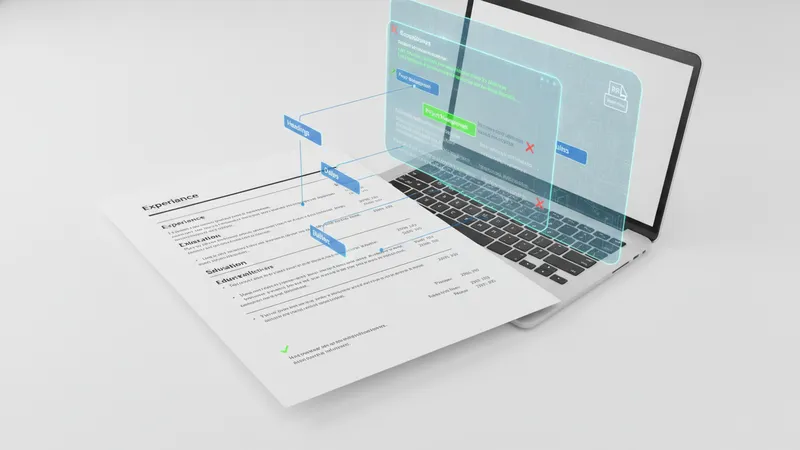
Formatting choices affect both human readability and machine parsing. Linear, single-column layouts with clear section headings are generally more amenable to ATS parsing than complex multi-column or heavily graphical templates. Fonts, bullet styles, and explicit section labels (for example, “Experience” rather than “Professional Highlights”) can influence parsing outcomes. When a résumé is intended for automated screening, plain text or simple PDF exports often yield more consistent results across varied parsing engines.
Applicant tracking systems commonly parse by section headings and recognized date formats; inconsistent headings or embedded images can reduce parse accuracy. Keyword matching features in résumé builders may recommend terms that appear in a job posting, but mechanical insertion of those words without contextual support can appear hollow to human reviewers. Consider framing recommended keywords within concrete achievements or responsibilities to provide verifiable context rather than relying on repetition alone.
Some platforms include simulated ATS scoring or similarity metrics that estimate alignment with a job description. These metrics may use term overlap, role title similarity, and section completeness as inputs and typically provide a comparative signal rather than a definitive pass/fail. Users may find such metrics useful as diagnostic tools, but should interpret them alongside qualitative judgment about content relevance, clarity, and the inclusion of measurable outcomes where applicable.
When exporting for specific employer systems, checking the target organization’s submission guidelines is advisable. Some employers request plain-text input in online forms, which can strip formatting and require manual adjustments. Others accept PDF attachments that preserve layout. As a practical consideration, keeping an editable source document or accessing the builder’s editor after export can facilitate rapid adjustments when different file formats are requested by varied employers.
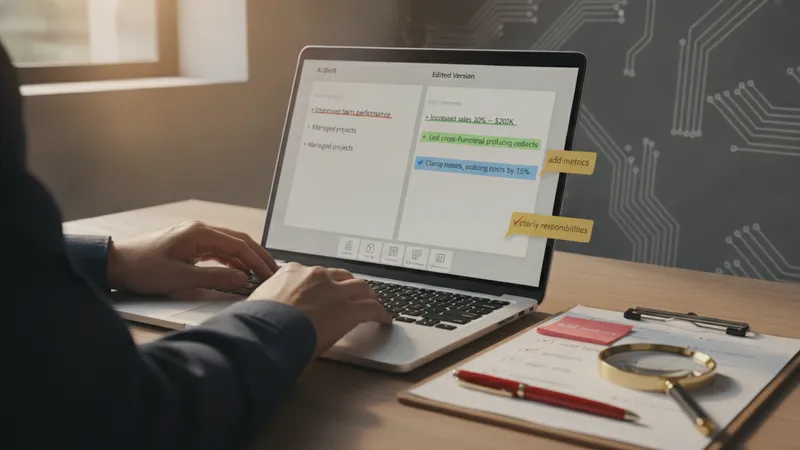
Human review remains a key step in workflows that use automated résumé tools. Generated text often benefits from editing to add role-specific metrics, clarify responsibilities, and remove vague phrasing. Editors typically check for consistent verb tense, clear quantification (for example, percentages or numeric impacts), and alignment between claimed skills and described tasks. Treating generated text as a draft rather than a final submission helps ensure accuracy and relevance.
Template selection affects presentation and perceived emphasis. Some templates place skills at the top, which can be useful for role transitions, while others foreground chronological experience for established career progression. Choosing a template should be informed by the user’s career narrative and the norms of the intended field. Templates that allow adjustment of section order can help users tailor emphasis without extensive reformatting.
Collaboration features such as comment threads, shared editing, and export history support iterative refinement. Career advisors or peers may suggest alternative phrasing or identify missing quantifiable outcomes. Version control is useful when tailoring documents for multiple role types to avoid confusion between versions. As a consideration, retaining a master copy that contains all experience and achievements enables faster adaptation to future role-specific edits.
Limitations of automated systems include context gaps and potential overreliance on common phrasing. To mitigate these issues, reviewers may cross-check technical terms, include role-specific details, and verify dates and employer names. Combining automation for structure and phrasing with careful human editing for specificity often yields the most reliable outcome. Concluding reviews by reading the résumé aloud or asking a peer to summarize the candidate’s strengths can reveal areas where generated language may be unclear or non-specific.