
A system designed to capture and follow prospective customers collects contact details, records interactions, and maintains a timeline of engagement from first interest to a formal sales outcome. It centralizes incoming leads from web forms, inbound calls, events, and referrals, and links those leads to individual contact records and organization profiles. The system may also track source attribution, channel performance, and the sequence of touchpoints so that teams can observe where prospects are in a defined engagement process.
Such software typically includes tools for organizing leads into lists or stages, deduplicating entries, and attaching notes or documents to contact records. It often supports assignment rules so leads route to specific sellers or teams, and provides search and filtering to find prospects that match defined criteria. Integration with email, calendars, and advertising platforms may be available to ensure interactions are logged automatically and to reduce manual data entry.
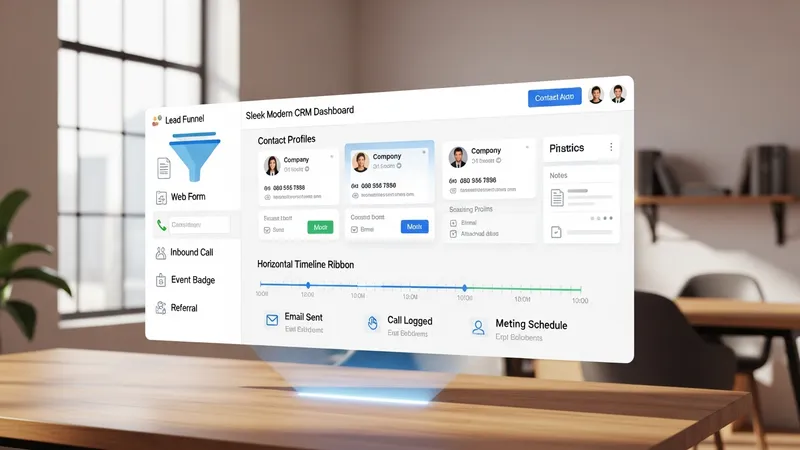
Comparing these examples, systems may differ by scalability, data model, and integration depth rather than by a single measure of quality. Enterprise platforms often provide configurable objects and advanced automation for complex sales processes, while lightweight combinations of forms and spreadsheets may suffice for small teams or early-stage processes. Selection commonly reflects organizational size, expected lead volume, and whether the workflow requires tight integration with marketing or customer support systems.
Lead capture and enrichment are practical components that may reduce manual work. Capturing structured fields at first contact can standardize qualification indicators, and third-party enrichment services can append publicly available company or role information to incomplete records. These practices can increase contact completeness but may raise data quality and privacy considerations that organizations need to assess in context.
Qualification and scoring frameworks are often used to prioritize follow-up. A scoring model can combine demographic attributes, behavioral signals (such as downloads or page visits), and explicit responses to qualification questions. Scores typically guide routing and follow-up priorities, and organizations often calibrate thresholds iteratively so that scoring aligns with observed conversion patterns rather than fixed assumptions.
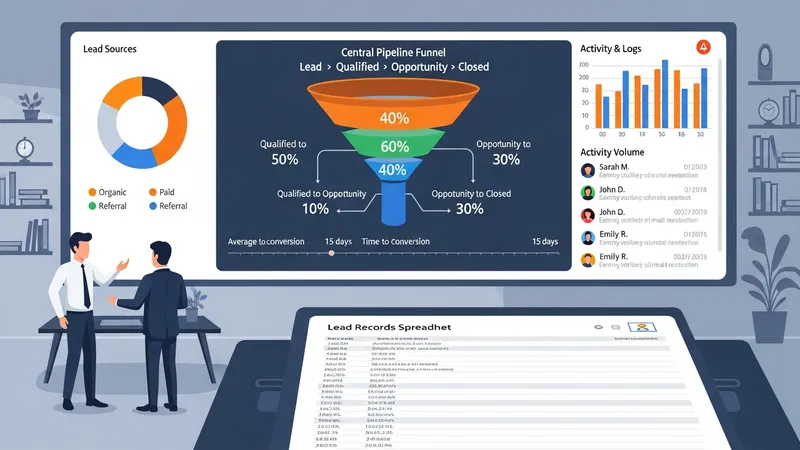
Reporting and visibility are typically central to operational use. Dashboards may show stage distribution, average time in stage, conversion rates between stages, and activity counts per team member. These metrics can inform process adjustments and resource allocation but should be interpreted with awareness of how data enters the system and which interactions are automatically captured versus those requiring manual logging.
In summary, a centralized approach to collecting, organizing, and tracking prospective customers provides structured records, routable workflows, and measurable pipeline visibility. Implementation choices often balance functionality, ease of use, and integration needs, and data quality and privacy practices may influence operating procedures. The next sections examine practical components and considerations in more detail.
Different system types support organizing and tracking prospective customers in varying ways. Cloud-based CRMs typically offer multi-user access, role-based permissions, and continuous updates from vendors. On-premises installations may provide more direct control over data residency but often require larger IT maintenance effort. Hybrid configurations can use cloud services for front-end capture while storing certain sensitive fields in controlled databases. Teams often weigh configuration complexity against the need for customization and integration with existing back-office systems.
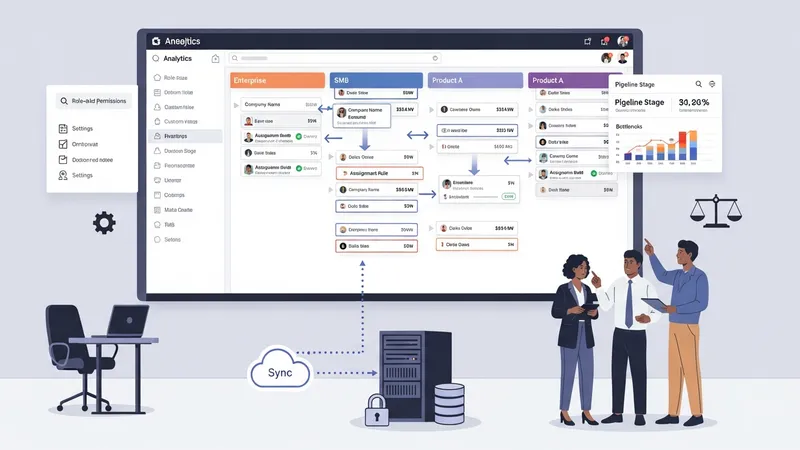
Configuration choices commonly include the number of pipeline stages, custom fields to reflect product or service specifics, and assignment rules for routing leads to sales owners. Multi-pipeline setups may be used when different product lines or customer segments require distinct progression stages. Simpler configurations with fewer stages can reduce administrative overhead, while more granular stage definitions can provide finer insights into bottlenecks, at the cost of increased maintenance.
Scalability considerations often guide system type selection. Teams expecting significant lead volume may prioritize platforms that can handle high event throughput and complex automation, while smaller groups may prefer lightweight tools that minimize training. Integration capacity is another factor: platforms that offer APIs and prebuilt connectors enable automated syncing with marketing tools, support systems, and analytics platforms, which can reduce duplicated work and improve data consistency across functions.
Operational considerations include user training, governance of custom fields, and documentation of process rules. Systems that allow citizen configuration often encourage experimentation but require guardrails to avoid field proliferation and inconsistent naming. Establishing a small governance group to review changes and to align naming conventions can help maintain data usability without overly constraining iterative improvements.
Lead capture workflows may include website forms, event registrations, inbound calls, social media leads, and integrations with advertising platforms. Each source can present different data completeness and reliability, so configuring required fields and source tags helps downstream processes. Contact records commonly combine personal and organizational attributes, interaction history, and a record of consent where applicable. Maintaining timestamps for first capture and most recent interaction aids in lifecycle analysis and in applying rules for re-engagement.
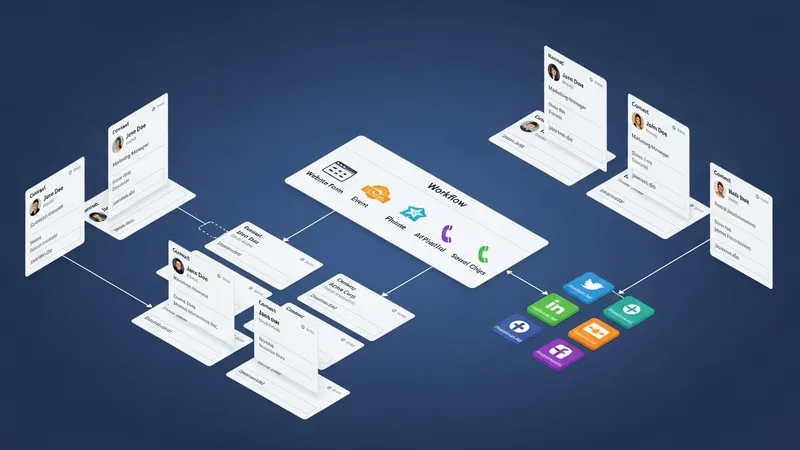
Deduplication routines and matching logic can prevent multiple records for the same person or company. Matching may rely on email address, phone number, or combination rules involving name and organization. Automated merging rules often include review steps to reduce the risk of incorrect merges. Teams typically balance automation and human review to maintain a clean contact base while avoiding excessive manual effort on routine cases.
Qualification commonly uses explicit criteria and behavioral signals. Explicit criteria may include budget ranges, decision timeframe, or authority level, while behavioral signals could be multiple product-page visits or repeated form submissions. Combining these inputs into a qualification checklist or score helps prioritize leads. Organizations may periodically evaluate which criteria correlate with successful conversions and adjust qualification logic to improve alignment with actual outcomes.
Data enrichment is sometimes applied to fill gaps in contact profiles, using publicly available directories or third-party services to append company size, industry code, or seniority level. Enrichment can support more accurate segmentation and routing, but it may introduce privacy considerations and additional costs. Documenting the sources and frequency of enrichment helps teams track data lineage and maintain transparency about where contact attributes originate.
Pipeline tracking typically maps stages that reflect organizational processes such as initial contact, qualification, proposal, and negotiation. Each stage may have clearly defined entry and exit criteria that relate to observable actions or documented evidence. Tracking time-in-stage and transition rates helps identify stages where prospects stall. Visual pipeline boards or kanban views often make it easier for teams to inspect workload distribution and to spot pipeline imbalances without implying prescriptive actions.
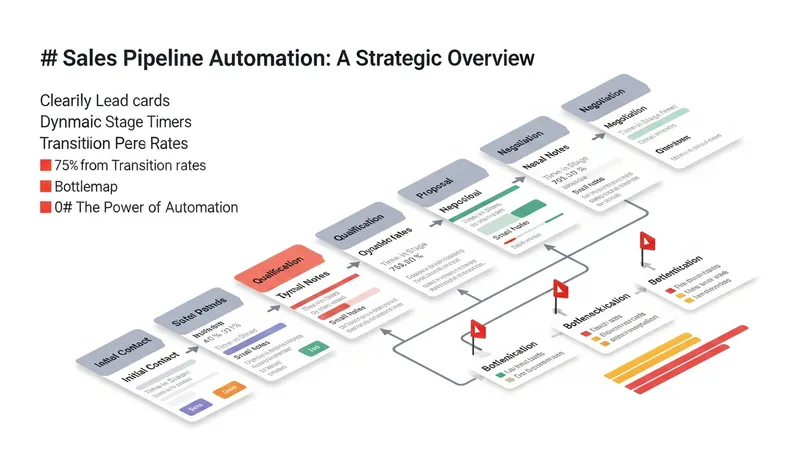
Assignment rules route leads to specific individuals or teams based on geography, product interest, account size, or round-robin distribution. Rules may be deterministic or weighted, and they often include fallbacks for unassigned leads. Maintaining transparent rules and documenting exceptions assists in managing expectations about follow-up responsibilities and ensuring leads are not inadvertently neglected due to ambiguous ownership.
Workflow automation can handle routine tasks such as sending acknowledgement messages, scheduling follow-ups, or creating tasks when certain conditions are met. Automation typically reduces manual steps and enforces consistency, but overautomation can create rigid flows that do not fit every prospect scenario. Organizations often start with a few common automations and iteratively expand based on observed benefits and edge cases.
Handoffs between marketing and sales are operational points where clarity matters. Defining what constitutes a sales-ready lead and how marketing-qualified leads transfer to sales roles helps reduce confusion. Service-level expectations for response time are often documented as internal agreements rather than absolute rules, and teams may monitor adherence through time-to-contact metrics to better align capacity with lead inflows.
Reporting commonly includes metrics such as lead source breakdown, conversion rates between stages, average time to conversion, and activity volume per team member. Dashboards that combine pipeline health metrics with activity indicators can help stakeholders understand whether low conversions are due to insufficient outreach or poor lead quality. When interpreting reports, it is important to consider how data entry practices and automated capture affect metric accuracy and completeness.
Data governance practices for lead records often cover field definitions, mandatory metadata, retention policies, and access controls. Clear definitions for fields such as “lead source,” “status,” and “owner” reduce ambiguity and improve the reliability of aggregated reports. Retention and archival policies help manage storage costs and privacy obligations by limiting how long personally identifiable information is retained when it is no longer needed.
Privacy and compliance considerations commonly influence system configuration and process design. Consent capture, opt-out handling, and secure storage of personal data are typical focus areas that teams address in collaboration with legal or privacy specialists. Integrations that transmit contact data to external services should be reviewed for data transfer controls and contractual safeguards to align with applicable privacy expectations.
Operational readiness involves training, documentation, and iterative process reviews. Training helps users understand how to log interactions consistently and how to apply qualification criteria. Documentation of common workflows, examples of correctly completed records, and a lightweight change-control process for field additions can reduce errors and preserve reporting integrity. Periodic reviews of system use and metrics may reveal refinement opportunities while keeping processes aligned with evolving business needs.