
Automatic pallet wrapping machines are industrial systems that apply stretch film to palletized loads to stabilize and protect goods during storage and transport. These systems automate the film application step that otherwise would be done manually, using mechanical motion and controlled film carriage to wrap film around a pallet. Common components include a film carriage, a mechanism to rotate either the pallet or the film head, tension and prestretch devices for the film, and sensors or controls that determine wrap patterns and counts. In Mexican distribution and manufacturing contexts, these machines may be configured to match local pallet dimensions and throughput patterns.
The operational goal of an automated stretch wrapping system is to deliver consistent wrap coverage while limiting film use and handling time. Systems may operate around a rotating turntable that moves the load, or by moving a rotating arm or ring around a stationary pallet. Control systems often allow settings for wrap height, number of top and bottom wraps, and film tension. Installations in Mexico may be integrated with conveyor lines or used as stand-alone units in maquiladora facilities, logistics centers, and cold-storage warehouses where repeatable load stability is needed.
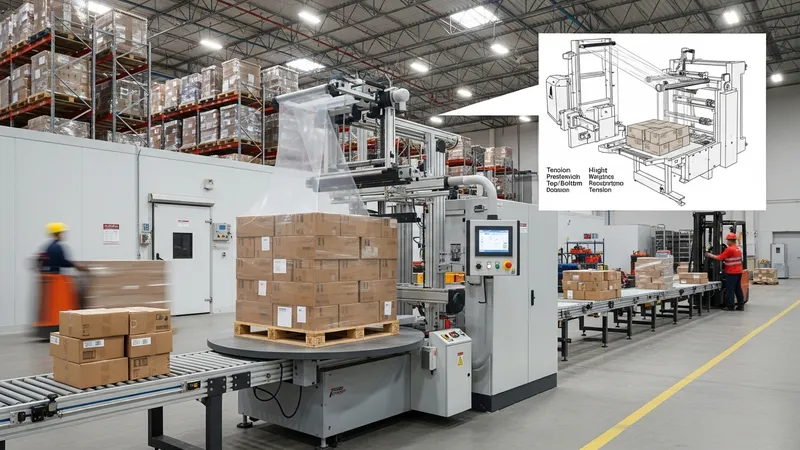
Rotating turntable machines typically place film via a carriage that moves vertically while the pallet turns. Turntables may be floor-mounted or integrated into conveyor lines in Mexican plants in Monterrey or Querétaro, where space and line speed influence selection. Turntable systems often have simpler mechanical layouts and can be paired with basic safety cages or light curtains. For loads that fit standard pallet sizes and where throughput is moderate, turntables may offer predictable wrapping cycles. Operators often program wrap height and cycle counts through a local control interface, and maintenance tends to focus on drive belts, bearings, and the film carriage motor.
Rotary arm and rotary ring wrappers often address taller or unstable loads by keeping the pallet stationary and moving the film around the load. This approach can reduce lateral forces on stacked goods and may be used in Mexican distribution centers handling fragile or top-heavy items. Rotary arms can be configured with variable speed and torque settings so wrap patterns are adjusted for different product types. Because the pallet does not move, conveyor alignment and pallet positioning must be precise; this is commonly managed by upstream guide rails or automated pallet stops in facilities in Guadalajara or Puebla.
Film prestretch systems are a key component for reducing film consumption and increasing containment force per meter of film used. In Mexico, prestretch ratios may typically range from 150% to 300% depending on film type and carriage design, although exact settings vary with load characteristics. Carriage designs that use mechanical prestretch rollers or powered prestretch motors enable more consistent film elongation than manual methods. Facilities often balance prestretch settings against film breakage risk, since higher prestretch may reduce film thickness requirements but can increase sensitivity to defects in the film roll.
Control and automation features vary from simple timers and wrap-count selectors to programmable logic controllers (PLCs) with HMI panels and optional network interfaces. In Mexican warehouses seeking data integration, PLC-based wrappers may communicate wrap cycle counts, fault codes, and basic production metrics to a plant automation system. Safety interlocks, emergency stops, and light curtains are commonly integrated with control logic to meet workplace safety practices promoted by Mexican authorities. Service access and local technician training are operational considerations, since downtime can affect outbound shipments in regional hubs like Tijuana.
Operational considerations for layout, film selection, maintenance, and energy use often influence the total cost of ownership in Mexico. Film type (linear low-density polyethylene, pre-stretched films) and roll sizes influence changeover frequency and storage needs. Maintenance cycles commonly include tensioner inspection, motor lubrication, and sensor calibration. When evaluating automated wrappers for Mexican facilities, planners may factor in local service availability, spare-parts lead times, and compatibility with existing conveyor modules. The next sections examine practical components and considerations in more detail.
System selection often centers on how film is applied: by rotating the pallet (turntable) or by moving the film head around the pallet (rotary arm/ring). Turntable configurations may be favored where pallets are standard and floor space allows a rotating platform; they can integrate into conveyor lines with lift-and-transfer stations used in Mexican plants. Rotary arms are more common where palletization patterns vary or goods are taller, since the stationary pallet reduces lateral stress. Film application methods also differ by carriage type—some carriages traverse the load vertically while others combine vertical travel with variable wrap patterns that add reinforcement at pallet edges.
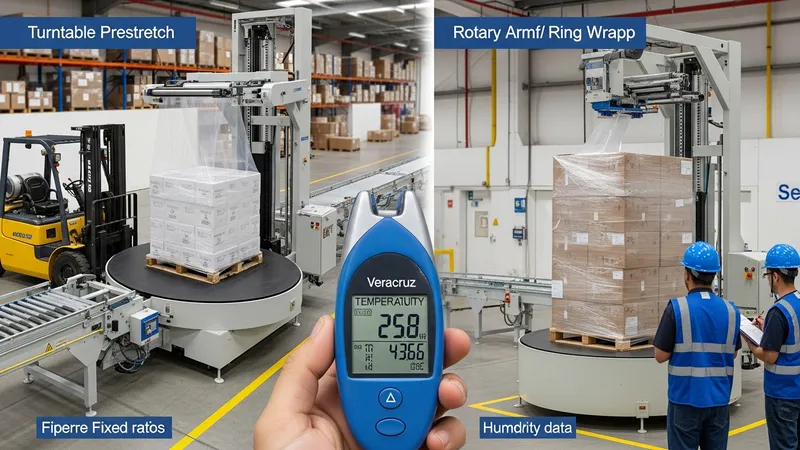
Prestretch and tension control are central to film performance. Mechanical prestretch units in Mexico may use fixed roller ratios that provide consistent elongation, while servo-driven carriages allow adjustable prestretch to respond to different film formulations. Higher prestretch ratios can lower film usage by increasing the film’s hold per meter, but they may require film formulated for higher stretch and tear resistance. Facilities often trial film grades under local temperature and humidity conditions—relevant in coastal operations in Veracruz versus inland warehouses in Saltillo—since environmental factors can affect cling and film behavior.
Load profile and pallet format are practical inputs to method choice. For stable, evenly stacked loads, a moderate wrap count with banding at the base and top may stabilize the stack adequately. For mixed or irregular loads, careful wrap pattern programming that adds multiple bottom wraps and cross-wraps at weak points can improve containment. In Mexican food and beverage distribution centers, for example, secondary packaging and pallet overhang are assessed before selecting wrap patterns. These assessments typically inform carriage speed, number of wraps, and film width selection.
Operational planners in Mexico often consider film logistics—storage, roll diameter limits, and waste handling—when specifying systems. Film rolls chosen to match local supply chain sizes may reduce changeovers and storage footprint. Some facilities adopt roll-handling accessories and film shuttles to speed replacements and reduce manual handling risks. While specifying film and method, teams may consult local suppliers for trial rolls and small-scale testing before scaling settings across multiple lines to ensure consistent performance under local operating conditions.
Control systems for automated wrappers range from standalone timers to PLCs that interface with plant-level automation. In Mexican manufacturing sites, PLC-controlled wrappers may be connected to conveyor controllers, barcode scanners, or packaging execution systems to coordinate wrap cycles with pallet arrival. Such integration can reduce idle time and help ensure each pallet receives the intended wrap pattern. Communication options may include discrete I/O, Ethernet/IP, or Modbus, depending on the plant’s control architecture. Integrators often prioritize simple fault reporting and clear HMI menus to streamline operator response.
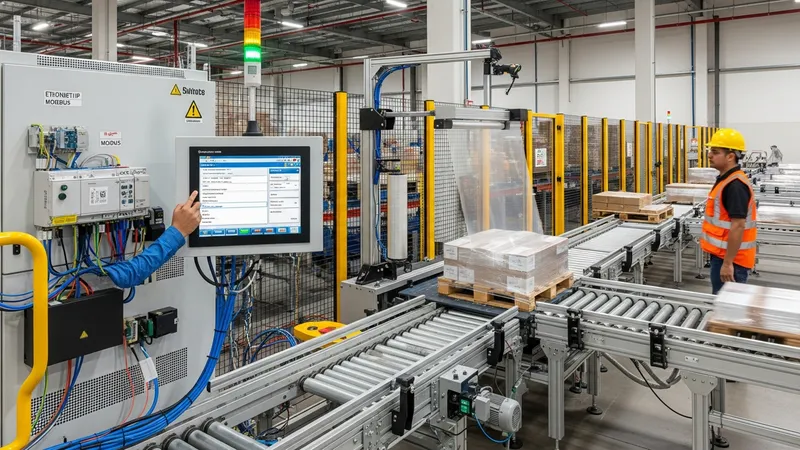
Interfacing wrappers with upstream equipment requires attention to pallet detection and positioning. Photoelectric sensors, proximity switches, or encoders can signal the wrapper when a pallet is correctly positioned, which reduces cycle errors and film waste. In Mexican distribution centers with mixed pallet types, adjustable pallet guides and automated stops are commonly used to ensure consistent placement. Line layout may include accumulation areas or buffer conveyors so that wrapper cycles do not impede upstream packing or palletizing operations, supporting a smoother overall throughput.
Data capture and basic metrics are increasingly part of wrapper specification. Machines may log cycle counts, film usage estimates, and fault histories that maintenance teams review for preventive care. In Mexico’s larger industrial clusters, some operators integrate these logs with maintenance management software to schedule bearing replacements or film carriage servicing. While full Industry 4.0 implementations are not universally adopted, capturing simple performance indicators can help identify trends such as increased film breaks or repeat faults tied to particular shifts or film batches.
Choosing control vendors and service partners in Mexico often involves assessing local support and spare-parts availability. Machines with widely used controllers and standardized components may be easier to service through local distributors in cities like Monterrey, Mexico City, or Guadalajara. When considering integration, teams may request documentation for I/O mapping and recommended maintenance intervals so local technicians can perform routine calibration and troubleshooting with minimal external support. These considerations can influence uptime and the practical utility of automation features.
Safety features for automated wrappers typically include emergency stop circuits, safety light curtains, safety mats, and interlocked access panels. In Mexico, employers commonly reference workplace safety practices promoted by the Secretaría del Trabajo y Previsión Social (STPS) when implementing machinery safeguards. Local compliance efforts may focus on guarding moving parts, establishing lockout/tagout procedures for maintenance, and ensuring operator training. Facilities may also apply company-level procedures that align with recognized international safety practices while tailoring documentation and signage to Spanish-language requirements for clarity.
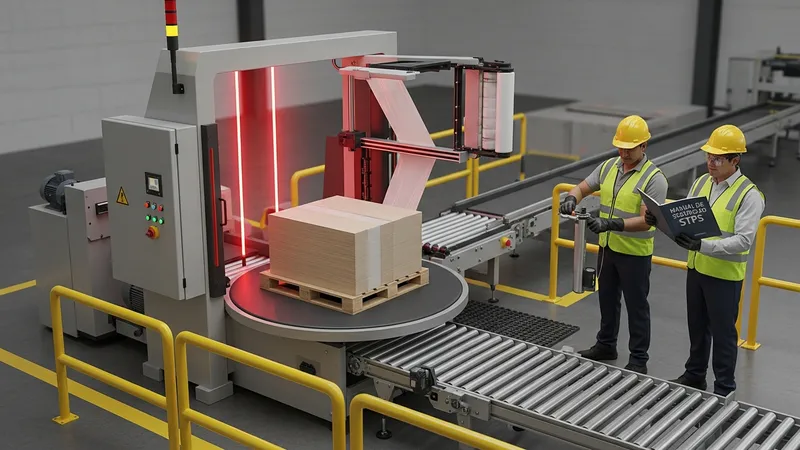
Machine placement and perimeter guarding are practical safety considerations. Wrappers placed on production floors often require marked zones and clear operator approaches to reduce pedestrian interaction with moving loads. Where conveyors feed wrappers, interlocks that prevent the wrapper from operating while access gates are open are commonly used. In Mexican operations with high pedestrian traffic in packing areas, light curtains or two-hand control options may reduce risk during film threading or roll changeovers. Employers commonly document these controls in local safety manuals and provide operator instruction in Spanish.
Maintenance safety emphasizes lockout/tagout and safe handling of film rolls, which can be heavy and awkward. Facilities often use roll lifts or handling tools to reduce strain and risk of dropping rolls during changeover. Preventive maintenance schedules may specify steps for safely de-energizing equipment, verifying stored energy release, and using authorized tools. These procedures are typically included in maintenance checklists and training programs to reduce incident risk and ensure continuity of operations in Mexican plants with varying workforce experience levels.
Regulatory awareness also covers waste handling and disposal of used stretch film. Some Mexican recycling programs and private collectors accept PE stretch film for recycling; operators commonly segregate used cores and film remnants to local recycling services. When specifying film types and auxiliary equipment, teams may consider film compactors or balers that reduce transport volume before sending material to regional recyclers. Aligning wrap operations with waste management practices can help facilities manage environmental footprint and local disposal costs.
Efficiency measures for automated wrapping systems often focus on throughput, film consumption per pallet, and downtime. In Mexico, facilities may use cycle-time studies to estimate how many pallets per hour a given wrapper configuration can handle under typical conditions. Adjusting carriage speed, wrap counts, and prestretch settings can improve film usage efficiency while maintaining load stability. Operational teams may also track wrap-related downtime and film changeover times to identify small process changes that cumulatively improve line productivity.
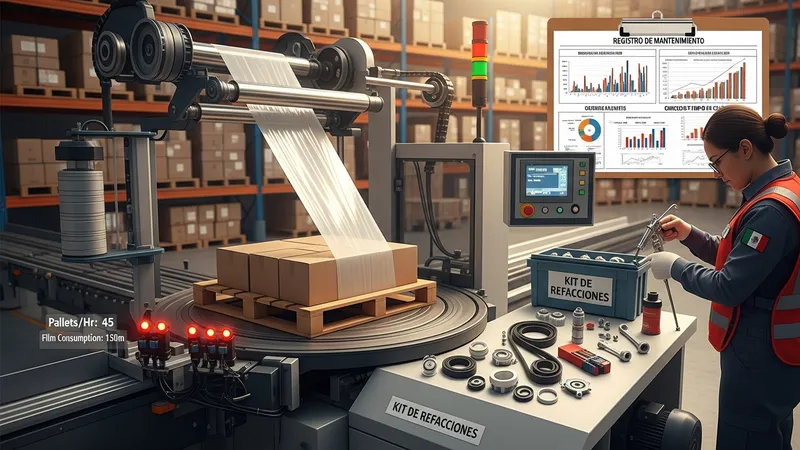
Maintenance planning typically includes scheduled inspections of drive components, prestretch rollers, and film brake systems. Preventive tasks such as bearing lubrication, sensor cleaning, and belt tension checks are commonly documented in maintenance logs. Mexican sites sometimes establish local spare-part kits for high-failure items such as photoeyes, belts, and fuses to reduce repair lead times. Training local technicians in basic diagnostics can help limit external service calls and maintain more predictable machine availability.
Cost considerations include capital expenditure, consumable film costs, and service or installation expenses. Basic automatic wrappers in Mexico may have a wide price range depending on features and integration needs; for planning purposes, small to mid-range units may sometimes be in the approximate range of $200,000 to $1,200,000 MXN, while more integrated, high-throughput systems that include conveyors and advanced controls may cost more. Facilities often evaluate film consumption estimates, expected life-cycle service costs, and local installation requirements when assessing total cost of ownership.
Practical considerations for deployment in Mexican facilities include space, power supply, and local supplier networks. Prior to installation, teams commonly perform site surveys to confirm floor loading, electrical service, and conveyor alignment. Selecting equipment with service representation or distributor support within Mexico’s major industrial regions can reduce downtime risk. As facilities implement automated wrapping, incremental trials and operator familiarity typically lead to more consistent results and allow adjustments to wrap patterns to match local logistics and transport conditions.