
A secured business credit card is a business payment account backed by a refundable security deposit that an issuer holds to reduce lending risk. The deposit usually establishes or caps the available credit line and may be returned when the account is closed or converted to an unsecured product. Issuers typically use the account activity and payment history to assess ongoing creditworthiness, and some report activity to business-oriented credit bureaus. The arrangement is often used by small enterprises or sole proprietors that seek a credit account while they build a documented track record of on-time payments and controlled usage.
Account setups vary: some issuers accept deposits equal to the requested limit, while others set the limit at a portion of the deposit. Requirements for identity, business registration, and tax identifiers can differ by provider. Monthly billing, interest rates, and fee schedules may apply and are disclosed in account agreements. Reporting practices also vary; an account that reports to major business credit repositories may contribute to a credit history for the business entity, whereas accounts that report only to consumer bureaus may primarily affect the owner’s personal file.

Eligibility for a secured business credit card often depends on basic identity verification and business details such as tax identifiers or registration. For sole proprietors, issuers may request the owner’s personal information alongside business data. Underwriting may consider prior credit history, existing business accounts, and the intended deposit amount. Some lenders may set minimum and maximum deposit thresholds and may require documentation of business activity. Small enterprises that lack established trade credit often use secured cards as an early method to create a documented payment history that may later support broader credit access.
Deposit amounts and how they map to the credit limit can vary notably between issuers. One common model is a one-to-one relationship where a deposited amount directly equals the credit limit; another model sets limits at a fraction of the deposit. Deposit size may influence approval odds and available spending capacity. Issuers typically hold deposits in designated accounts and describe refund conditions in the account agreement. When considering typical ranges, many secured products start with deposits of a few hundred units of local currency and may extend to several thousand for larger lines.
Reporting practices are an important distinction across secured business cards. Some accounts report to commercial credit bureaus such as Dun & Bradstreet, Experian Business, or Equifax Commercial, which may help establish a business credit file over time. Other products report primarily to consumer credit agencies and thereby affect the owner’s personal credit profile. Whether an issuer reports account activity and which bureau receives the data can influence how the account contributes to building a business credit presence. It is common for reporting policies to be disclosed in provider materials or account terms.
Responsible account management practices can influence the utility of a secured business card for establishing credit history. Regular, on-time payments often produce the clearest record of creditworthiness; high utilization ratios can signal risk on credit reports. Maintaining clear bookkeeping, separating personal and business transactions, and reconciling statements may support accurate reporting and financial clarity. Over time, consistent payment behavior may lead some issuers to offer product changes or to refund the security deposit while adjusting the account’s terms, although outcomes vary with issuer policy and the business’s credit performance.
In summary, a secured business credit card uses a refundable deposit as collateral to create a controlled credit line for business use. Variations include deposit-to-limit mapping, reporting to different credit repositories, and differing fee structures and eligibility requirements. These factors may influence how effectively an account builds a business credit history. The next sections examine practical components and considerations in more detail.
Security deposits serve as collateral and typically influence the maximum credit limit available to an account. In a one-to-one model, the deposit amount often equals the limit; in other designs, the issuer may set the limit as a portion of the deposit. Fee structures can include annual fees, maintenance fees, and interest on carried balances, with specific amounts varying by provider. Issuers commonly disclose deposit handling and fee schedules in account agreements. Businesses should note that fees and the effective cost of carried balances can affect how practical a deposit-backed account is for routine expenses versus occasional use.
How deposits are held can differ: some issuers place deposits in separate custodial accounts that are refundable under defined conditions, while others may use internal accounting holds. The refund process when an account is closed or converted to an unsecured product may involve verification steps and settlement of outstanding balances. For larger deposit amounts, issuers may require additional documentation. These operational details are part of an issuer’s risk management practice and often appear in disclosures rather than promotional materials.
Interest rates and finance charges on secured business cards are typically expressed as annual percentage rates and may vary with creditworthiness, market conditions, and issuer policy. For businesses that carry recurring balances, the cost of interest can affect the net benefit of establishing the account. Late payment fees and penalty APRs may apply if contractual payment terms are not met. Reading the fee schedule and understanding how balance calculations are performed can clarify total carrying costs and support more informed account selection.
Some issuers may offer gradual limit increases tied to account behavior, which can reduce the relative size of the deposit over time. Conversely, inactivity or pattern changes may lead an issuer to maintain existing limits. Understanding deposit release conditions, whether partial or full, is part of assessing the long-term flexibility of a secured solution. These factors often weigh on decisions about initial deposit size and expected account usage patterns.
Eligibility commonly includes verification of identity, business registration details, and sometimes evidence of business activity. For sole proprietors, many issuers accept a personal tax identifier alongside a business name. Credit checks may be soft or hard depending on issuer policy, with soft checks typically used for preliminary eligibility and hard checks used for final approval. Understanding whether an issuer performs a hard inquiry is relevant because it may affect the owner’s personal credit profile temporarily. Requirements can differ significantly across banks, credit unions, and fintech firms.

Credit reporting practices determine where the account activity appears and whether it contributes to a business credit history. Commercial bureaus track trade and payment histories that can support a business credit profile; consumer bureaus track personal credit behavior. Some secured products report to both types of bureaus, while others report only to consumer bureaus. Businesses that seek to establish a separate business credit footprint often prefer accounts that report to commercial repositories, but availability of such reporting varies and should be confirmed in issuer disclosures.
Report frequency and the granularity of reported data can also vary. Some issuers report monthly balances and payment timeliness, while others may report limited information. The presence of consistent, on-time reporting may support the development of tradelines in a business credit file. However, effect on a business’s overall credit posture will typically depend on the mix of accounts, payment patterns, and the presence of other trade relationships, rather than on a single secured account alone.
Where credit checks are involved, the type and timing of inquiries can influence both personal and business profiles. Issuers that perform only soft inquiries for prequalification may allow applicants to compare options without immediate impact; final applications that include hard inquiries can create a short-term record on personal files. These process differences are often described in account terms and may be listed in provider FAQs. Considering inquiry practices is one of several operational details to weigh when evaluating secured card options.
Maintaining a disciplined payment schedule is a common factor in how secured accounts may contribute to credit development. Timely payments typically create clearer records of credit performance, whereas missed or late payments can be recorded negatively. Monitoring statements and reconciling transactions each billing cycle can reduce the risk of disputes or overlooked balances. Businesses may find it useful to align billing dates with cash flow patterns to support consistent payments, although timing strategies should be considered in light of overall cash management practices rather than as a prescriptive method.
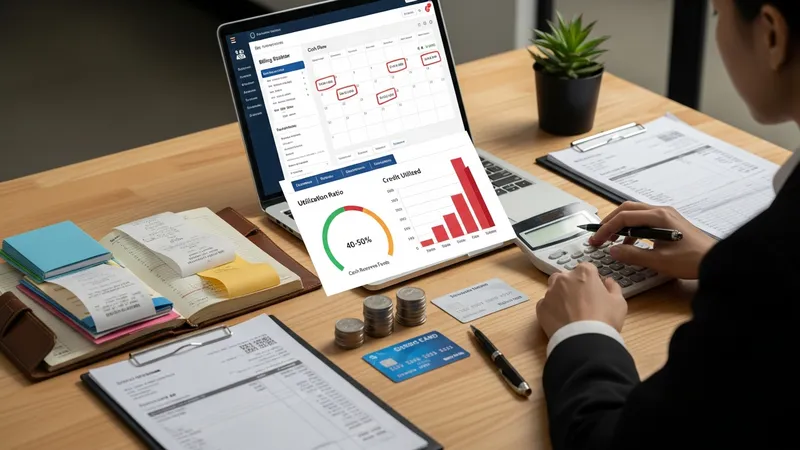
Utilization ratios—the relationship between outstanding balances and available credit—often appear on credit reports and may influence credit assessments. Keeping utilization at moderate levels may present a more conservative credit profile; conversely, consistently high utilization can be viewed as elevated credit stress. Since a secured account’s available limit is often set by the deposit, the proportion of deposits to spending needs can determine how easily utilization is managed. Planning deposit size relative to expected monthly expenses may therefore affect how utilization levels are expressed on reports.
Separation of personal and business expenses supports clearer accounting and may ease the interpretation of credit records. Using the secured business account exclusively for business-related purchases, maintaining receipts, and classifying transactions in bookkeeping systems can make credit activity more transparent. For businesses seeking to establish an independent commercial presence, consistent use of business identifiers when ordering or transacting may help align statements with business records, though reporting practices ultimately depend on the issuer and bureau policies.
Over time, some issuers may review account performance for promotions or product changes that adjust terms or limits. While these transitions can reduce reliance on an initial deposit, outcomes are issuer-specific and may involve review of payment history, account age, and overall relationship. Businesses should treat potential upgrades as possibilities rather than expected events and monitor their accounts and statements to understand how changes might be handled operationally by their provider.
Key factors include the issuer’s reporting practices, deposit-to-limit methodology, fee schedule, and refund terms. Confirming whether the issuer reports to commercial credit bureaus or consumer bureaus can clarify how the account may affect business credit records. Fee structures—such as annual fees, transaction fees, and penalties—should be reviewed alongside interest rate terms for carried balances. Refund timing and conditions for the deposit, including any holds or offsets for outstanding balances, are practical considerations that can affect liquidity planning for small enterprises.
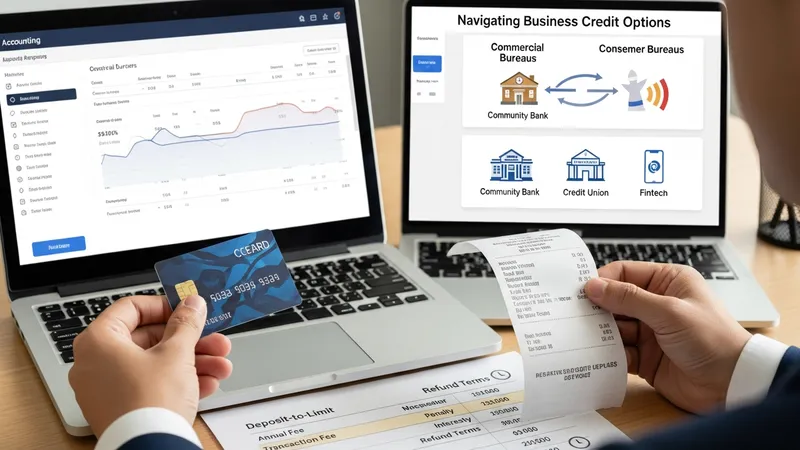
Provider type can influence account features and underwriting approaches. Community banks and credit unions may emphasize local relationships and offer conservative underwriting, while fintech providers may prioritize digital onboarding and integration with accounting tools. Each provider category may differ in documentation requirements and the speed of decisions. Businesses often weigh administrative convenience and reporting characteristics when comparing offers, rather than focusing on a single attribute.
Scalability and long-term product pathways matter for businesses expecting growth. Some secured accounts may explicitly offer a path to unsecured products or periodic reviews that could lead to limit adjustments; others may remain deposit-backed for extended periods. Considering whether an issuer provides options for future transitions or additional business credit products may align account selection with broader financial planning. These are potential outcomes, not guarantees, and vary by issuer and business performance.
Finally, transparent disclosures and accessible customer support can ease account management. Reviewing account agreements for precise language about deposits, refunds, reporting, and dispute processes helps set expectations. Asking about typical timelines for deposit refunds and the mechanics of reporting—phrased as information requests rather than requests to act—can provide clarity. Gathering these details supports informed decision-making about whether a particular deposit-backed card aligns with a business’s documentation and credit-building objectives.