
Vendors that provide payroll management systems develop software to automate worker compensation processes, reduce manual calculation, and centralize payroll records. These systems typically handle wage calculation, statutory deductions, employer taxes, and payment distribution while maintaining ledgers and employee records. The concept centers on moving routine payroll tasks from spreadsheets and manual entries into structured workflows that can be audited and reported.
Such providers often package a set of capabilities in modular form: core payroll calculation engines, tax computation and filing modules, payment execution (direct deposit or remittance files), and employee-facing pay statements. Many solutions also offer optional modules for leave management, benefits withholding, time-tracking integration, and configurable reporting. The emphasis is on consistent, repeatable processing and traceable records rather than bespoke manual routines.
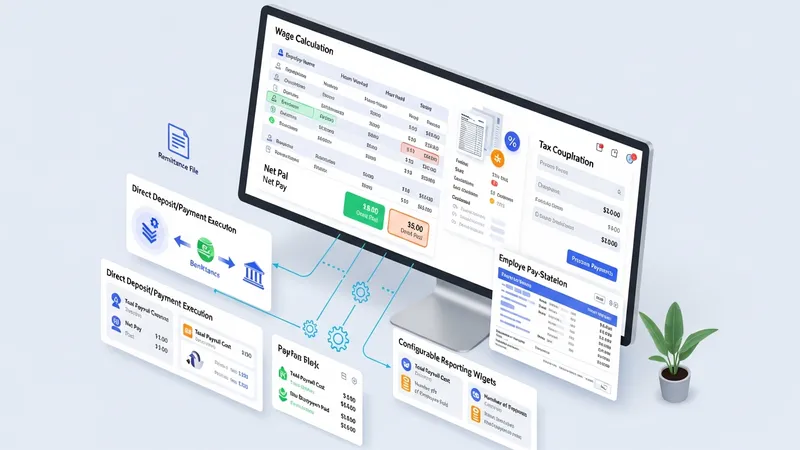
Feature coverage among vendors may vary: some systems focus primarily on automated pay calculation while others bundle benefits administration, HR onboarding, and timekeeping. Integration capabilities often determine how well a payroll provider fits with existing accounting, time-tracking, and human-resources systems. Pricing structures commonly reflect per-employee or per-pay-period billing and may include platform fees; organizations typically evaluate recurring cost relative to expected administrative time savings.
Tax calculation and filing support is a frequent differentiator. Many providers offer automated withholdings and remit services that may handle local and national tax obligations according to published regulatory schedules. For organizations operating across jurisdictions, tax logic may need configuration or supplemental local filings. Vendors often supply compliance documentation and electronic filing options that can reduce manual forms and paperwork, though final responsibility for legal compliance typically remains with the employer.
Integration with time-tracking and attendance systems may be offered via native connectors, third-party integrations, or APIs. Automated transfer of hours, overtime, and leave balances into payroll calculations can reduce reconciliation work and manual errors. Timekeeping integration may also support varied pay rules for different employee types, such as salaried, hourly, or contractors, and can affect overtime calculations and benefits accruals depending on configured policies.
Reporting, audit trail, and data retention capabilities often determine how useful a payroll system is for finance and HR teams. Systems typically provide payroll registers, tax liability summaries, and tax filing confirmations. Secure storage of historical pay records and the ability to generate customized reports may support internal audits and year-end processes. Data export options frequently exist to feed accounting systems or to satisfy statutory recordkeeping requirements.
In summary, payroll management vendors supply a mix of automated processing, tax handling, payment execution, integrations, and reporting that together aim to streamline compensation workflows and recordkeeping. The next sections examine practical components and considerations in more detail.
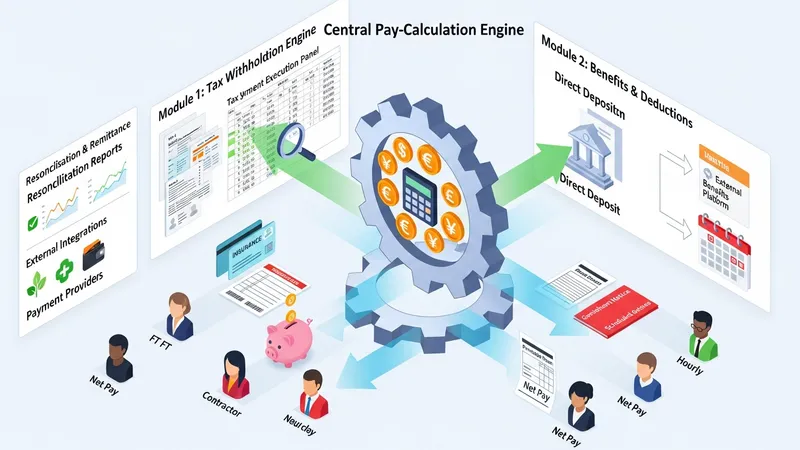
Core modules in payroll platforms typically include pay calculation engines, tax withholding logic, and payment execution mechanisms. Pay calculation engines may handle gross pay, deductions, employer contributions, and net pay computation for different worker classifications. Tax modules commonly maintain rate tables and rules for statutory deductions and may generate remittance files. Payment execution can include direct deposit batch files, payment provider integrations, or printable pay stubs. Organizations often map these core categories to internal processes to determine which vendor modules are required.
Benefits and deductions management is another component that frequently integrates with payroll. This can include pre-tax and post-tax deductions for retirement plans, health insurance contributions, and garnishments. Systems may provide scheduled deduction flows and reconciliation reports that align with external benefits platforms. Where benefits administration is separated from payroll, interoperability and synchronization of contribution amounts are typical considerations to prevent discrepancies.
Time and attendance integration often influences core functionality. Platforms may accept imports from third-party time systems, use built-in clocks, or expose APIs for direct data transfer. Common patterns include importing approved timecards into payroll runs and applying configured pay rules for overtime, shift differentials, and paid time off balances. Accurate time integration often reduces manual adjustments and supports consistent application of labor rules.
Security, access controls, and audit logs are integral. Payroll systems usually implement role-based access, encryption for stored payroll data, and logs of transactions and changes. Audit trails that record who changed pay rates, who approved payroll runs, and when tax filings were submitted can support internal control frameworks. These security and governance features are often a deciding factor for finance teams when assessing platform suitability.
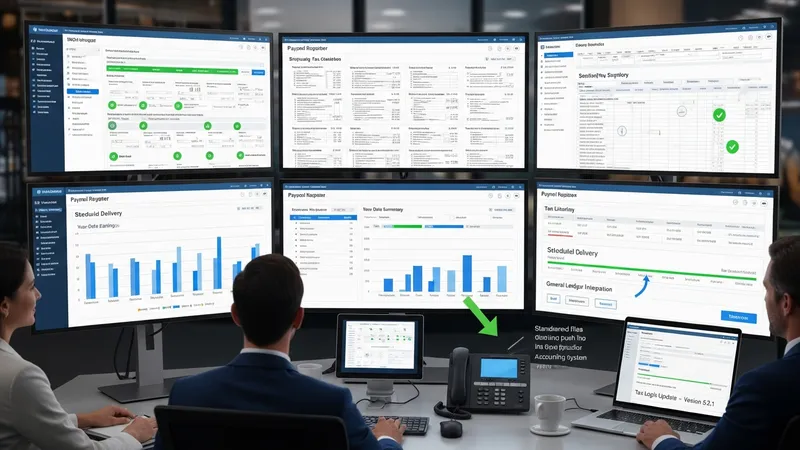
Compliance capabilities commonly include automated tax calculations, support for statutory filings, and maintenance of regulatory rate tables. Many systems provide filing services for certain jurisdictions and produce forms or electronic submissions required by tax authorities. Vendors may update tax logic periodically to reflect new rules, and organizations often verify those updates during change windows. Where vendors do not submit filings directly, systems typically generate validated reports and tax payment files for manual or third-party submission.
Reporting tools frequently cover payroll registers, tax liability summaries, and year-to-date earnings reports. Customizable reports may allow finance teams to segment payroll costs by department, project, or location for budgeting and accounting purposes. Standard formats may be exported to general ledger systems. It is common for payroll platforms to include templates for statutory reporting and to allow scheduled report delivery to designated stakeholders.
Audit readiness and record retention are typical considerations for compliance. Systems may retain historical payroll runs, tax filings, and employee pay statements for statutory retention periods. Built-in audit logs that capture changes to tax codes, pay rates, and user actions may assist in investigations or external audits. Organizations often evaluate retention policies and export options to ensure they meet applicable regulatory or internal governance requirements.
Dealing with multi-jurisdiction complexity can affect capability choices. For entities operating in multiple legal regions, payroll logic must account for differing tax rules, social contributions, and reporting formats. Some platforms support multi-country payroll or local payroll partners, while others focus on a single jurisdiction. Organizations often weigh the trade-offs between a single global platform and localized providers to meet compliance needs without excessive configuration.
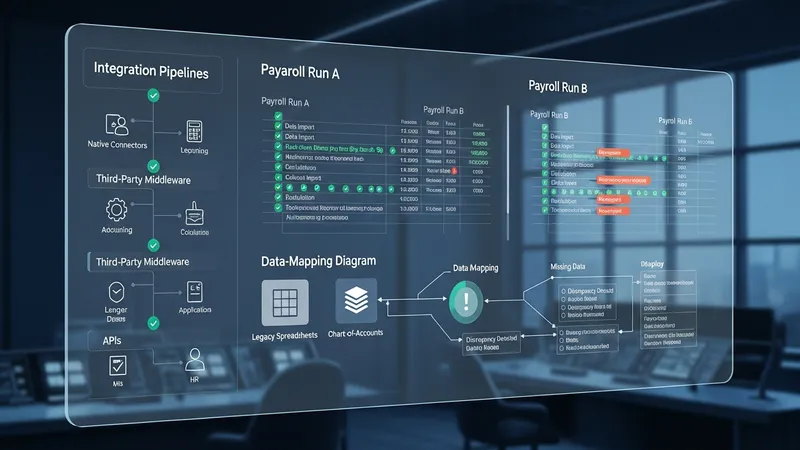
Integration methods commonly include native connectors, third-party middleware, and application programming interfaces (APIs). Native connectors may simplify integration with popular accounting or HR systems, while APIs provide flexibility for custom workflows. During implementation, data mapping from legacy systems—such as chart of accounts, employee records, and historical pay data—may require cleansing and validation. Organizations often pilot payroll runs in parallel to production to validate calculations and data flows before full cutover.
Automation often targets recurring tasks: scheduled pay runs, tax payment reminders, and report distribution. Automating data transfers from timekeeping and HR systems can decrease manual reconciliation. However, automation also requires control points, such as pre-run validations and approvals, to catch anomalies. Implementation teams typically design approval workflows and exception handling procedures that balance efficiency with oversight.
Data migration and testing are practical considerations during vendor selection. Migrating historical payroll data can be complex if formats differ or if legacy systems contain inconsistent records. Test scenarios usually include multiple pay cycles, varied employee types, and edge cases such as retroactive adjustments or terminations. Organizations commonly allocate time for iterative testing and reconciliation to reduce payroll errors at go-live.
Vendor-managed services versus self-managed platforms is another implementation choice. Some providers handle calculations, filings, and payments on behalf of the employer, while others supply software that the employer operates. This choice influences implementation timelines, internal staffing needs, and control models. Considering internal capacity for payroll administration and governance is often part of the selection and rollout process.
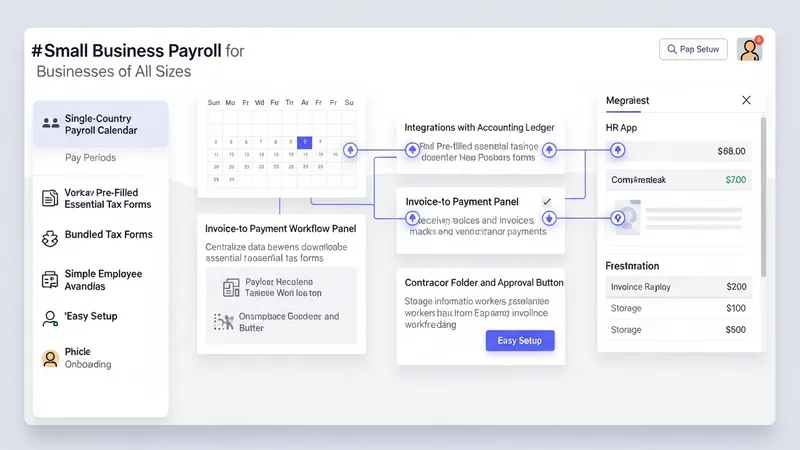
Payroll platforms may be chosen to meet different operational contexts: small organizations with simple pay structures, mid-sized firms requiring integrations with accounting and HR, and large enterprises that need multi-entity or multi-currency capabilities. Small operations often prioritize ease of use and bundled tax filings, whereas larger entities may emphasize custom reporting, advanced security controls, and scalable integration. Modular platform design can allow organizations to adopt functionality progressively as needs evolve.
Contractor and contingent workforce payments introduce distinct workflows. Processing contractor payouts may involve different tax treatments, varied documentation, and alternative payment rails. Platforms that support contractor-specific workflows—such as separate classification, different tax reporting, or simple invoice-to-payment flows—can simplify administration. It is common for organizations with a sizable contingent workforce to maintain distinct processes or separate vendor modules for non-employee payments.
Cost structures typically combine per-period or per-employee fees with possible platform or module charges. Organizations often estimate total cost of ownership by considering subscription fees, bank or payment provider charges for direct deposit, implementation costs, and internal personnel time. Budgetary planning often includes contingency for initial data cleanup and periodic updates to tax or benefit rules that may require vendor or internal effort.
Selection criteria frequently include feature coverage, integration capability, security measures, and vendor support options. Decision-makers often conduct parallel payroll runs, review reconciliation capabilities, and assess audit logs during evaluation. These considerations may help organizations align a platform to operational needs and compliance requirements without presuming universal suitability for all use cases.