
Remote patient monitoring devices are electronic tools that collect physiological or behavioral data outside traditional clinical settings and make that data available to care teams. These systems typically combine sensors that measure signals such as heart rate, respiratory rate, blood pressure, oxygen saturation, activity, or glucose levels with connectivity components that transfer readings to software platforms. Data may be visualized on clinician dashboards, routed into electronic records, or subjected to automated analytics. The overall concept centers on capturing objective measurements in the home or ambulatory environment to inform clinical decisions and ongoing care processes.
Key elements of these connected health setups include the measurement hardware, local gateways (smartphones, hubs), secure transmission channels, and back-end platforms that support storage, visualization, and alerts. Devices vary by form factor and intended use: some are continuous wearable sensors, others are episodic home devices used at scheduled intervals. Implementation typically involves defining monitoring parameters, thresholds for clinician notification, and workflows for device provisioning, maintenance, and data review. Considerations often include battery life, user interface simplicity, and methods for validating data quality.
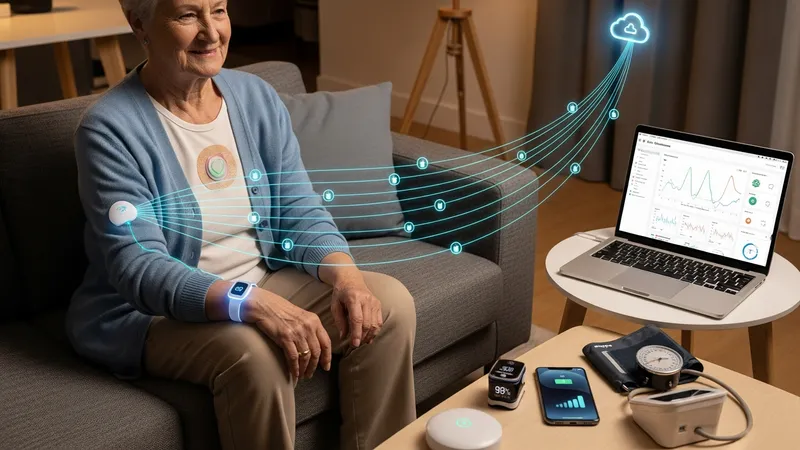
Sensors and measurement modalities differ in sampling frequency, calibration needs, and susceptibility to motion or environmental artifacts. Optical sensors that estimate pulse and oxygen saturation may be sensitive to skin tone, motion, or ambient light, while cuff-based blood pressure monitors rely on cuff fit and positioning. Validation against clinical-grade references is commonly recommended for devices intended to influence care decisions. In practice, device selection may weigh trade-offs between continuous monitoring and convenience: continuous devices can reveal trends and transient events, while episodic devices may be simpler for routine measurements in chronic-condition follow-up.
Data transmission pathways can shape reliability and latency. Bluetooth-connected sensors commonly pair to a smartphone app that acts as a gateway; cellular-enabled devices transmit directly to cloud services without a separate phone; Wi-Fi devices may be cost-effective in the home but depend on local network stability. Interoperability standards such as FHIR or HL7 often guide how monitoring data is structured for integration with electronic health record systems, but practical integration can involve middleware, APIs, and mapping work to align device outputs with clinical documentation and workflows.
Clinical applications tend to cluster around chronic disease management, post-discharge monitoring, and perioperative surveillance. For chronic heart failure, weight and symptom trends taken remotely may often supplement in-person assessments; for diabetes, remote glucose readings can inform dose adjustments in some clinical contexts; for respiratory conditions, home spirometry and pulse oximetry may contribute to longitudinal assessment. Monitoring programs typically define alert thresholds and escalation protocols so that data triggers result in a documented clinician response, rather than passive collection without follow-up.
Device lifecycle and operational management are significant practical concerns. Provisioning includes secure pairing, patient education, and baseline checks; ongoing support covers battery replacement or charging, firmware updates, and replacement of malfunctioning units. Security controls typically include device authentication, encryption in transit and at rest, and role-based access to dashboards. Regulatory frameworks and local privacy rules may influence data retention, consent, and reporting obligations. These operational layers often determine the feasibility and sustainability of a monitoring program as much as the sensor performance itself.
In summary, connected monitoring solutions combine sensors, gateways, data transport, and software to enable observation of physiological markers outside clinics. Device selection, data pathways, clinical workflows, and operational management each contribute to how monitoring data may be used in care processes. Implementation planning may therefore address validation approaches, integration with health records, and procedures for escalation and technical support. The next sections examine practical components and considerations in more detail.
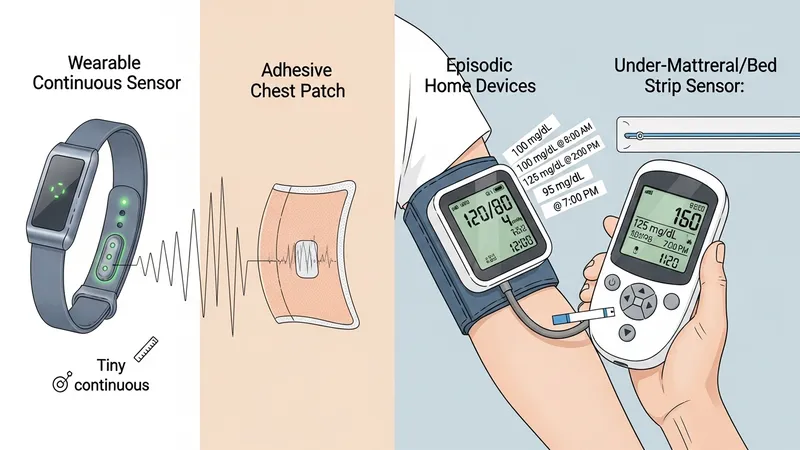
Sensor categories used in remote monitoring include wearable continuous sensors, episodic home measurement devices, and environmental or contact-based sensors. Wearables often sample at higher frequency and may provide trend data that reveals transient events; they may require skin contact and periodic recalibration. Episodic devices such as automated blood pressure cuffs or glucometers measure discrete timepoints and can be easier for patients to operate without continuous attachment. Environmental or bed sensors can capture movement or respiration indirectly. Each category may trade off between user burden, data richness, and validation needs, and selection can depend on the clinical parameter of interest and the intended monitoring cadence.
Accuracy and clinical validity are common considerations when devices inform care. Validation studies often compare device outputs against clinical reference instruments under conditions that reflect intended use. Factors that may affect measurement quality include sensor placement, device fit, motion artifacts, and physiological variability. Where decisions may be influenced directly by device outputs, programs commonly adopt devices with documented performance in populations similar to the intended users. In contrast, devices used for trend detection may permit different tolerances for absolute accuracy if trends can still be reliably identified.
Power management and connectivity constraints shape sensor design and deployment. Low-power sensors may sample intermittently to extend battery life, while continuous sensors require power-optimized components and charging plans that fit patient routines. Connectivity choices—Bluetooth to a smartphone, direct cellular, or Wi‑Fi—impact data latency, costs, and dependency on patient-owned infrastructure. For example, direct cellular devices may reduce the need for patient smartphones but can carry higher recurring connectivity costs. Program planners often weigh these trade-offs against expected monitoring duration and the technical literacy of the user population.
Usability and adherence influence the utility of collected data. Simpler user interfaces, clear pairing instructions, and unobtrusive form factors can improve consistent use. Training materials that address routine tasks such as charging, sensor placement, and troubleshooting may reduce technical failures and missing data. Passive or minimally obtrusive devices may increase continuous wear time, while episodic devices can be paired with reminders or scheduled check-ins. Considering patient capacity and support resources during selection can help align device characteristics with realistic adherence expectations.
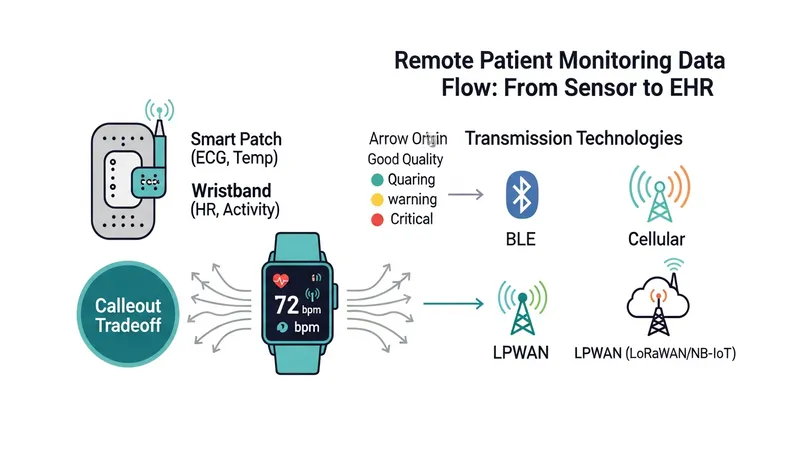
Connectivity options for remote monitoring range from short-range protocols (Bluetooth Low Energy) to long-range options (cellular or low-power wide-area networks). Gateway devices such as smartphones or dedicated hubs often perform initial aggregation and encryption before forwarding data to cloud platforms. Design choices affect data timeliness, with direct cellular often reducing reliance on intermediary devices but potentially increasing device cost. Data buffering strategies and local storage can mitigate temporary connectivity loss, while secure pairing and authentication mechanisms reduce the risk of unauthorized device access during routine communication.
Interoperability standards play a role in integrating monitoring data into clinical systems. Health Level Seven (HL7) and Fast Healthcare Interoperability Resources (FHIR) commonly guide how discrete observations and device metadata are represented. Implementation may require middleware or translation layers to map device-specific payloads into standardized resources for electronic health records. Metadata such as measurement context, device ID, calibration timestamps, and data quality markers may be important to preserve during integration so that clinicians can interpret readings appropriately within the patient record.
Latency, bandwidth, and privacy considerations influence how raw data and derived analytics are managed. Continuous waveforms or high-frequency accelerometer data can be bandwidth-intensive and are often processed locally or summarized before transmission to conserve resources. De-identified or aggregated analytics may support population-level monitoring without exposing identifiable data, while patient-level records require stronger access controls and audit logging. Encryption in transit and at rest, credential management, and adherence to applicable privacy frameworks are typical elements of a data governance approach for connected monitoring programs.
Operational factors in integration include mapping alert thresholds, creating clinician-facing dashboards, and defining escalation pathways. Alert fatigue can occur if thresholds are not tuned or if systems generate high volumes of nonactionable notifications; program teams often test and refine alert logic before broad deployment. Integration efforts may also involve training clinicians on where monitoring data appears in workflows, how to document responses, and how to reconcile device-derived measurements with in-person assessments. These integration steps can determine whether monitoring data is used as a supplemental information stream or becomes an integral part of routine care.
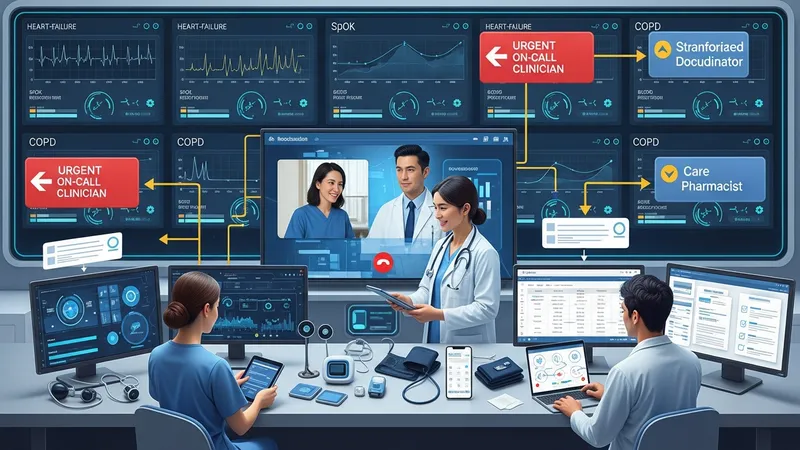
Remote monitoring has applications across chronic disease management, post-acute care, and preventive surveillance. In chronic conditions such as heart failure or COPD, regular remote measurements may help identify early signs of decompensation; in postoperative care, vitals and activity trends may support safe transitions. Implementations usually define target populations, monitoring intervals, and outcome metrics to ensure alignment with clinical goals. Care teams may include nurses, advanced practice clinicians, and pharmacists who share responsibilities for reviewing data, triaging alerts, and adjusting care plans according to predefined protocols.
Workflow design often specifies who reviews monitoring data, how frequently reviews occur, and how out-of-range values are escalated. Triage protocols can route urgent alerts to on-call clinicians while routine trends may be managed by care coordinators. Documentation templates and standardized note elements can reduce ambiguity when actions are taken based on remote readings. Operationally, staffing models and time allocation are important considerations because data review and follow-up tasks may add to existing clinical workloads unless processes are optimized or supported by automation and triage rules.
Patient-facing considerations include onboarding, education, and ongoing support. Successful monitoring programs commonly include initial training sessions, clear written or video instructions, and accessible technical support channels. Usability testing and iterative feedback loops with patients can reveal common failure modes—such as pairing errors or charging lapses—and inform changes to device choice or educational materials. Patient acceptance may vary with age, technical literacy, and perceived benefit, so programs often monitor adherence rates and adjust engagement strategies accordingly.
Measurement of program performance typically tracks process and outcome indicators, including adherence to scheduled measurements, alert volumes, response times, and clinical endpoints relevant to the monitored condition. Evaluations may compare monitored cohorts to historical controls or examine within-cohort trends. Evidence syntheses commonly find heterogeneous results because outcomes depend on device selection, integration quality, clinical workflows, and population characteristics; therefore, ongoing local evaluation is often used to refine monitoring parameters and resource allocation.
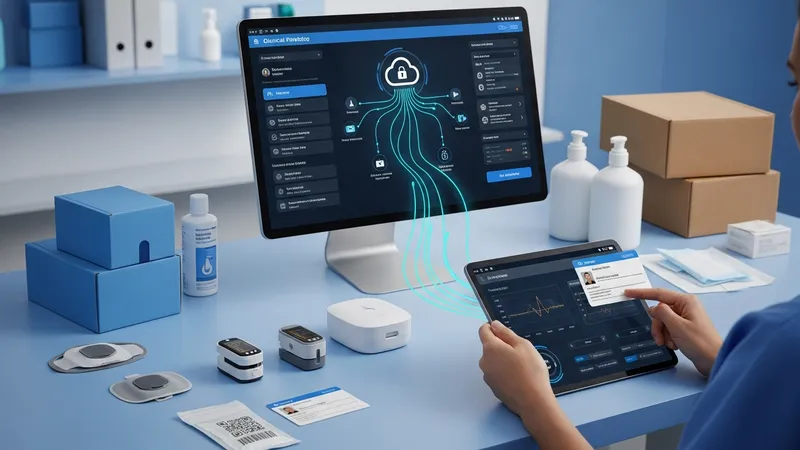
Provisioning and asset management encompass inventory tracking, secure device enrollment, and policies for device return or disposal. Enrollment workflows often assign a device to a patient identifier, document pairing credentials, and record baseline calibration or verification readings. Tracking mechanisms may record serial numbers, firmware versions, and maintenance history to support accountability and troubleshooting. For programs with loaned hardware, logistics for shipping, replacement, and sanitization are practical elements that influence long-term operational costs and device uptime.
Privacy and security controls are central to protecting patient data collected by remote monitoring systems. Common safeguards include unique device authentication, encrypted channels for data in transit, encrypted storage, and role-based access controls for clinician dashboards. Audit logging and incident response plans help detect and address breaches or unauthorized access. Consent processes and clear patient-facing privacy notices that describe what data is collected, how it will be used, and retention periods are often incorporated to support transparency and regulatory compliance.
Quality assurance and maintenance practices help ensure data reliability over time. Firmware management and secure update mechanisms allow devices to receive security patches and performance improvements; however, updates may need staged testing to prevent service interruptions. Routine checks—either automated or manual—can detect drift in sensor accuracy or connectivity degradation. Programs commonly track device failure rates and mean time to repair or replacement as operational metrics that affect program sustainability and patient experience.
Evaluation metrics for monitoring programs span usability, clinical, and economic domains. Usability measures may include adherence rates and patient satisfaction; clinical metrics might monitor hospitalization rates, symptom scores, or time to intervention for alerts; economic evaluations often consider resource use and staffing implications. Interpreting these metrics typically requires contextualizing them within the monitored population and the program’s workflows. Summative evaluations can inform decisions about scaling or modifying the monitoring approach, and continuous monitoring of key indicators supports iterative improvement.